
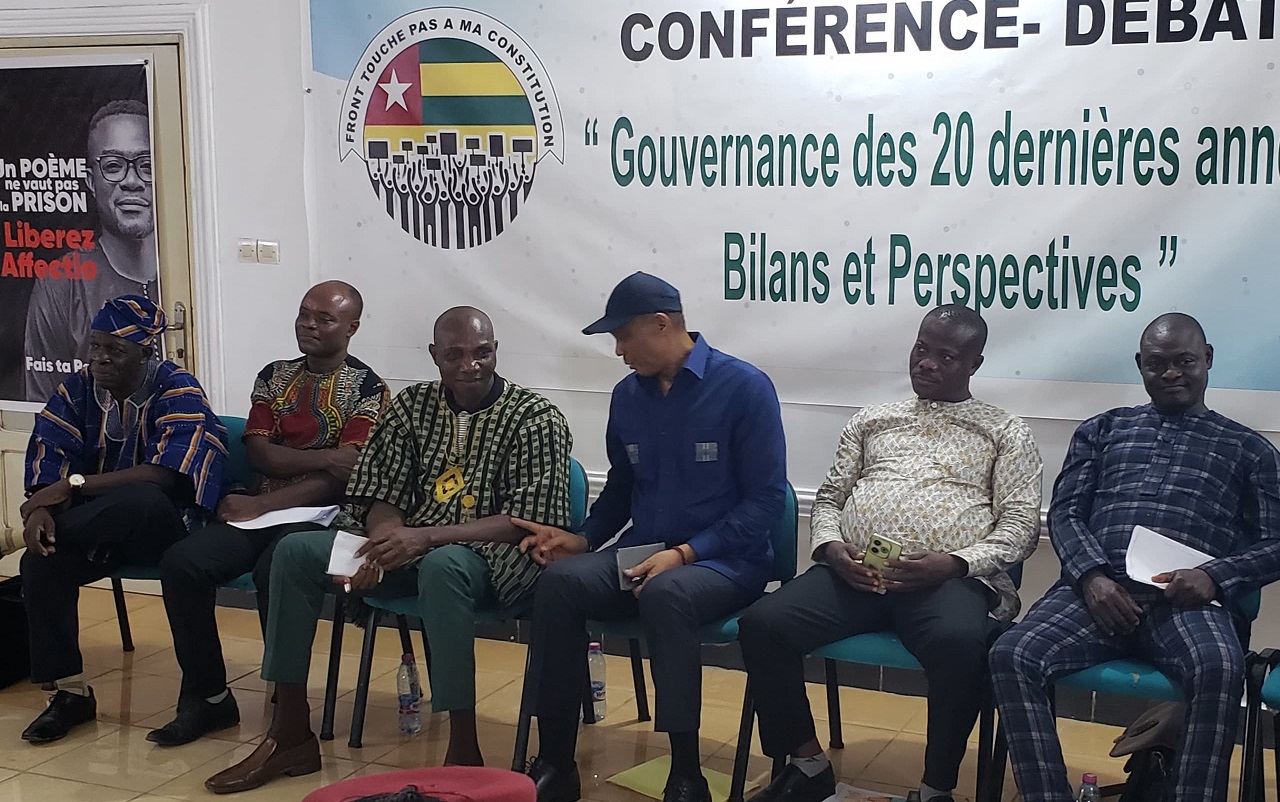
Togo Opposition Denounces Colloquium on ECOWAS Court Ruling
The Manifeste Génération Togo opposition group has denounced an international colloquium scheduled for October 29-30 in Lomé, viewing it as a "grotesque" attempt by academics to circumvent a January 29, 2026, ECOWAS Court of Justice ruling that deemed the establishment of Togo's Fifth Republic an "unconstitutional change of government."
The opposition group expressed strong concern over the upcoming international colloquium, which is set to discuss regional jurisdictions, state sovereignty, and constitutional changes. They interpret this academic event as a deliberate effort to challenge or re-interpret the ECOWAS Court of Justice's significant ruling from January 29, 2026, which characterized the establishment of the Fifth Republic in Togo as an "unconstitutional change of government." The Manifeste Génération Togo argues that academic discussions should not be used to neutralize a judicial decision or avoid its necessary consequences, such as a period of transition. The outcome of this matter, including the colloquium's impact or any official response, is not yet reported.
This situation carries substantial legal significance, highlighting the tension between national political actions and the authority of regional judicial bodies. The ECOWAS Court of Justice's rulings are generally binding on member states, and any perceived attempt to undermine such a decision through academic or political means raises critical questions about the rule of law, judicial independence, and Togo's adherence to its regional legal obligations. For legal practitioners, it underscores the complex interplay between domestic constitutional law and international/regional legal frameworks.
The legal context revolves around the enforceability and interpretation of decisions by the ECOWAS Court of Justice, a regional judicial body whose mandate includes upholding the rule of law and human rights within the Economic Community of West African States. The Court's finding of an "unconstitutional change of government" touches upon fundamental principles of democratic governance and constitutionalism, which are often enshrined in national constitutions and regional protocols. The opposition's stance emphasizes the importance of respecting judicial pronouncements and the potential for political actors to use various platforms to influence public opinion or challenge legal outcomes.
Key parties involved include the Manifeste Génération Togo, the ECOWAS Court of Justice, and the academics organizing the colloquium. Attorneys, particularly those specializing in constitutional law, human rights, or international law in West Africa, should closely monitor the discourse and any subsequent developments arising from this colloquium. The debate surrounding the ECOWAS Court's ruling and its implications for constitutional changes in Togo could establish important precedents for the interpretation and enforcement of regional judicial decisions, impacting political stability and legal certainty in the region. Businesses and investors should be mindful of the potential political and legal ramifications stemming from such constitutional disputes.
How does this affect you?
Get an AI analysis of this article grounded in your jurisdictions, practice areas, and any policy documents you've uploaded to Wansom.
Finish Reading the Full Story and the Expert Analysis.
Get the latest legal & regulatory intelligence in Togo
Wansom is AI and can make mistakes.