
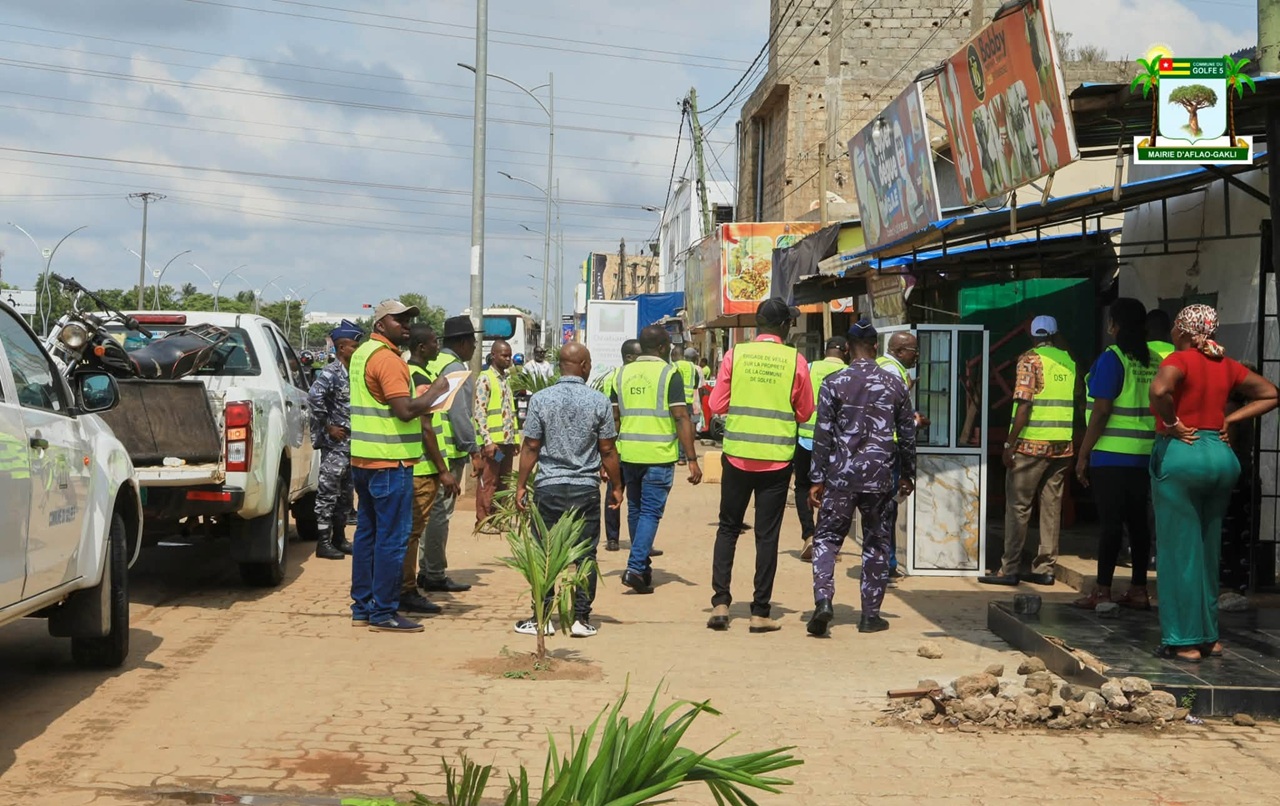
Togo Golfe 5: Mayor Aboka Launches Désencombrement Brigade Veille
Summary
- Mayor Kossi Aboka of Golfe 5 launched a special urban clearing operation on November 2, 2026, on the Boulevard du 30 août, set to end on November 20.
- The operation emphasizes monitoring by a newly formed "brigade de veille" rather than using heavy machinery, a shift from past methods.
- The brigade, led by the 3rd Deputy Mayor, enforces strict prohibitions on merchandise, containers, shacks, beverage services, and other activities on public land.
- This initiative aligns with a government decision to clear priority axes in Grand Lomé, driven by the mayor's philosophy that city beauty is paramount.
- Despite aiming for a cleaner municipality, the brigade has not publicly offered a relocation plan for the many vendors and service providers who will be displaced.
New Urban Cleanliness Initiative in Golfe 5
The absence of a public relocation plan raises significant concerns for those affected by the `Togo Golfe 5 désencombrement brigade veille`.
Mayor Kossi Aboka of Golfe 5 in Lomé initiated a specialized urban clearing operation on Monday, November 2, 2026, focusing on the Boulevard du 30 août. This initiative, termed an "opération spéciale de désencombrement," marks a departure from previous methods associated with Aboka's tenure from 2001 to 2019, when he was known for utilizing heavy machinery during his time with the special delegation of Lomé. This current effort, however, emphasizes continuous monitoring rather than the deployment of bulldozers. The operation is scheduled to conclude on November 20.
To oversee this new approach, a dedicated "brigade de veille sur la propreté des axes prioritaires" (monitoring brigade for the cleanliness of priority axes) has been established. This brigade is led by Koubalo Badjamla, the 3rd Deputy Mayor, and comprises a diverse team. Its members include three local elected officials, the municipal secretary-general, various municipal agents, a representative from grassroots development committees, and two representatives from the Defense and Security Forces. Prior to commencing fieldwork, the brigade convened a briefing session at the Mairie annex located in Djidjolé to coordinate their activities.
Strict Prohibitions and Regulatory Context
The municipal administration of Golfe 5 is acting in accordance with a broader governmental directive aimed at clearing priority thoroughfares across Grand Lomé. Mayor Aboka articulated the underlying principle of this `opération désencombrement`, stating that a city's beauty is its immediate striking feature upon entry, and that municipal revenue generation should not compromise this aesthetic. The `brigade de veille` has been tasked with enforcing a precise list of prohibitions designed to reclaim public spaces and maintain urban order.
These strict regulations target various forms of `occupation domaine public Togo`. Specifically, the `Golfe 5 interdiction commerce trottoirs` includes the placement of merchandise, containers, and shacks on public land. Furthermore, the provision of beverage services, the sale of adulterated fuel, the dumping of gravel and sand on sidewalks, and the operation of vulcanizer services are all explicitly forbidden. This comprehensive list aims to ensure the `libération axes prioritaires` and uphold the `brigade de veille propreté Lomé` mandate.
Socio-Economic Impact and Unaddressed Concerns
While the stated objective of this `désencombrement` initiative is to foster a clean municipality for its residents, the stringent prohibitions are expected to significantly impact the livelihoods of numerous individuals who depend on these activities along the Boulevard du 30 août. Many small businesses and informal vendors rely on these public spaces for their daily income, and the enforcement of these new rules will displace them. The `Maire Aboka opération désencombrement` has not, at this stage, publicly addressed the critical question of where these dislodged traders and service providers are expected to relocate or how their economic well-being will be supported.
The absence of a public relocation plan raises significant concerns for those affected by the `Togo Golfe 5 désencombrement brigade veille`. This situation highlights a potential social challenge accompanying the urban beautification efforts. The operation's temporary nature, concluding on November 20, suggests an immediate push for compliance, but the long-term implications for the affected population remain unclear, potentially leading to future disputes or claims regarding the right to conduct business in public areas.
Practical Implications
Lawyers should advise clients operating businesses or services on public spaces in Golfe 5, Lomé, regarding the ongoing 'désencombrement' operation and the specific prohibitions enforced by the new 'brigade de veille'. This includes assessing compliance risks, potential legal challenges to forced removals, and the lack of public relocation plans for displaced vendors, which could lead to disputes or claims.
Source
How does this affect you?
Get an AI analysis of this article grounded in your jurisdictions, practice areas, and any policy documents you've uploaded to Wansom.
Wansom is AI and can make mistakes.