
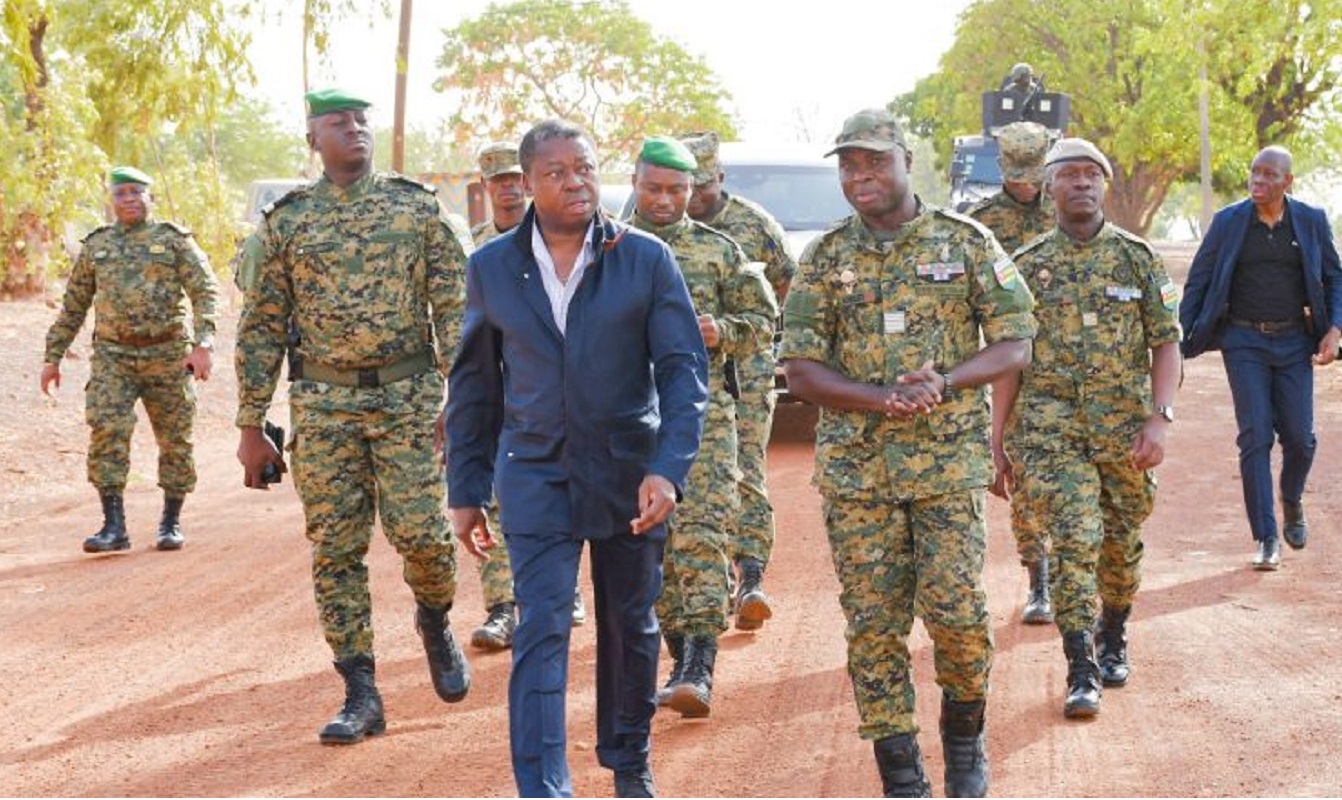
Togo Faure Gnassingbé: Military Reorganization Reshapes Command
Summary
- President Faure Gnassingbé initiated a major reorganization of Togo's defense and intelligence sectors on August 17, 2026.
- Eight decrees formalized numerous strategic appointments and promotions across the military and the national intelligence agency.
- Colonel Tchakpélé Aklesso was promoted to Brigadier General and named Chief of General Staff of the Togolese Armed Forces.
- Colonel Akakpo Ayéwalagni was appointed Director General of the National Intelligence Agency (ANR), with Samarou Essowoè as his deputy.
- The changes aim to strengthen operational capabilities, anticipation, and intelligence coordination, particularly due to security challenges in the Savanes region.
What Happened
A consistent theme throughout this extensive reorganization is the unwavering maintenance of presidential oversight and control over the entire defense and intelligence architecture.
Togo's defense and intelligence sectors underwent a significant overhaul on Monday, August 17, 2026, orchestrated by President of the Council Faure Gnassingbé, who also serves as the supreme chief of the nation's armed forces. This extensive reorganization was formalized through eight distinct decrees, specifically numbered from 2026-159 to 2026-166, which collectively enacted a series of strategic appointments and promotions across key military and intelligence positions. Despite the widespread changes in personnel, the fundamental line of command remains firmly under the President's direct authority.
A central component of this restructuring saw Colonel Tchakpélé Aklesso elevated to the rank of Brigadier General. Following this promotion, General Aklesso was appointed as the new Chief of General Staff of the Togolese Armed Forces (FAT), taking over from General Allahare Dimini, who had held the position since May 2024. Further changes included Brigadier General Mamah Agnidoufey Essomolam's new role as Director General of ANAC-Togo. The leadership of the Army Staff also shifted, with Colonel Kombaté Latiembé, known for his prior command of Operation Koundjoaré, assuming its helm. He succeeds General Kolemagah Kassawa, who had been named Inspector General of the FAT in 2023. The Air Force also saw a change in its Chief of Staff, with Colonel Idrissou Abdou Ahabou stepping into that role.
Beyond the operational commands, a critical appointment was made for the President's immediate circle: Colonel Kilimou Mazama-Esso was named Chief of Staff to the President of the Council, a pivotal role that ensures direct contact and proximity to the President. This position was previously held by Colonel Apédo Kodjo Epké. The intelligence apparatus was not excluded from this sweeping reorganization; Colonel Akakpo Ayéwalagni was designated as the new Director General of the National Intelligence Agency (ANR), with Samarou Essowoè appointed as his Deputy Director General.
Context and Rationale
These high-level military and intelligence appointments unfold against a backdrop of pressing security concerns, particularly within Togo's Savanes region. The strategic reshuffling underscores the administration's commitment to fortifying its defense capabilities in response to evolving threats. The stated objective behind these changes is to establish a command structure that is not only capable of meeting current operational demands but also significantly enhances the nation's capacity for strategic anticipation and intelligence gathering.
The comprehensive nature of the reorganization, encompassing both traditional military branches and the national intelligence agency, reflects a unified approach to national security. It aims to foster greater synergy and coordination across these critical domains. The underlying rationale is to ensure that intelligence insights are seamlessly integrated with military command decisions and air security protocols, thereby creating a more cohesive and responsive security framework. This strategic imperative is designed to allow Togo to proactively address potential challenges and maintain stability in a complex regional environment.
Presidential Authority and Control
A consistent theme throughout this extensive reorganization is the unwavering maintenance of presidential oversight and control over the entire defense and intelligence architecture. While numerous faces have changed in key leadership roles, the fundamental principle guiding these shifts is the reinforcement of coordination under the supreme authority of President Faure Gnassingbé. The decrees, while introducing new leadership, do not alter the ultimate locus of power, ensuring that the President, as the supreme chief of the armed forces, retains direct command.
The appointment of a new Chief of Staff to the President of the Council, a position explicitly noted for its direct contact with the President, further solidifies this centralized control. This role is instrumental in ensuring that presidential directives are effectively communicated and implemented across the defense and intelligence apparatus. The reorganization, therefore, is not merely a rotation of personnel but a strategic recalibration designed to optimize efficiency and responsiveness while cementing the President's enduring influence over national security matters.
Practical Implications
Lawyers advising clients with operations in Togo should monitor these high-level military and intelligence appointments, as they reflect evolving national security priorities and could influence the operational environment or engagement strategies with state authorities, particularly concerning security in the Savanes region.
Source
How does this affect you?
Get an AI analysis of this article grounded in your jurisdictions, practice areas, and any policy documents you've uploaded to Wansom.
Wansom is AI and can make mistakes.