
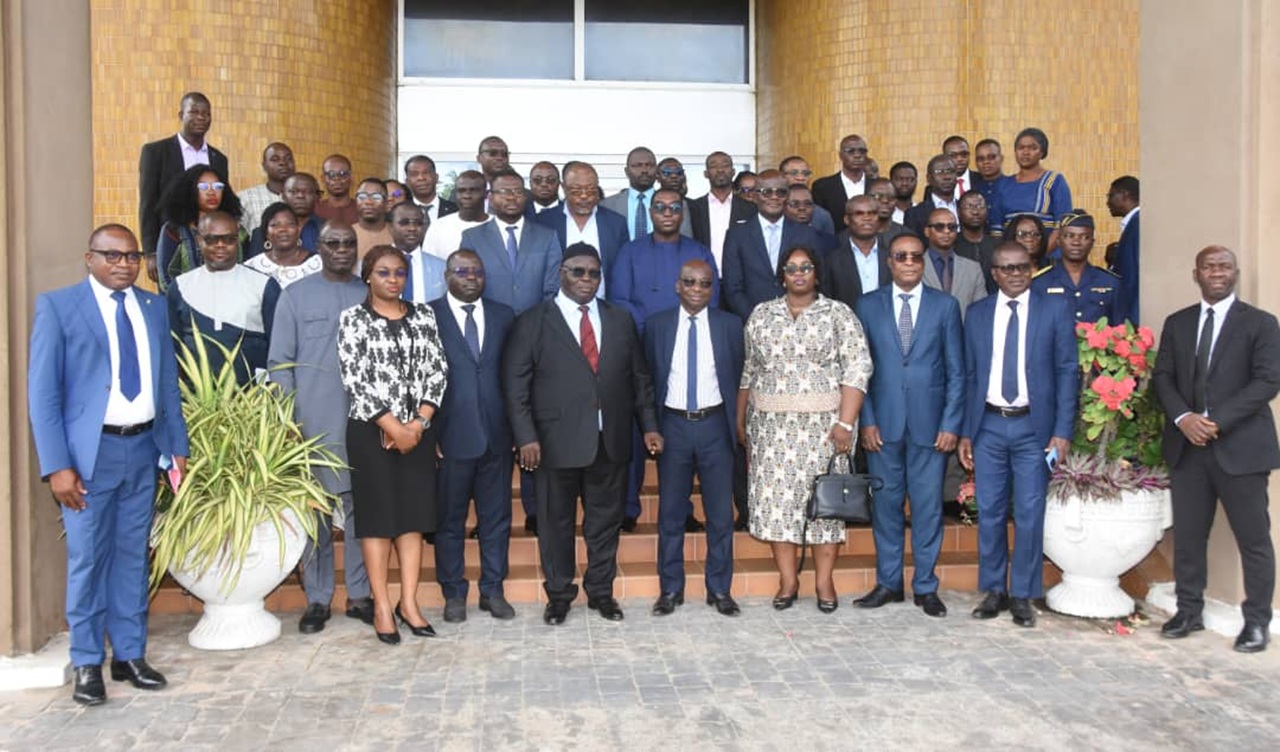
Togo CENTIF: Validates Maritime Crime Money Laundering Risks Report
Summary
- CENTIF-TOGO recently held a workshop to address money laundering risks stemming from maritime crime.
- A new AML/CFT law, aligned with international standards, was promulgated in Togo in March 2026.
- President of the Council Faure Gnassingbé received a pan-African award in July 2026 for his efforts in combating financial crime.
- Togo's strategic location and the Port Autonome de Lomé expose it to illicit activities like drug trafficking and illegal fishing.
- CENTIF emphasizes a risk-based approach, enhanced cooperation, and operational effectiveness to counter maritime financial crime.
What Happened
Lawyers and compliance officers, especially those advising clients engaged in maritime trade, port operations, or related financial services, must critically re-evaluate their existing anti-money laundering and counter-financing of terrorism compliance frameworks.
The National Financial Intelligence Processing Unit of Togo (CENTIF-TOGO) recently convened a significant national workshop on October 22 to disseminate and validate a crucial report. This report specifically addressed the money laundering risks associated with maritime crime, a growing concern for the nation. M. Tchaa Bignossi AQUITEME, who serves as the President of CENTIF-TOGO and the National Correspondent for GIABA, officially opened the proceedings. He delivered remarks on behalf of M. Essowè Georges BARCOLA, the Minister of Finance and Budget, underscoring the collective responsibility in combating illicit financial flows.
During the workshop, the overarching message emphasized that the fight against money laundering, the financing of terrorism, and proliferation financing (LBC/FT/FP) is a shared endeavor. This initiative aligns with the strategic directives of President of the Council Faure Gnassingbé, under whose leadership the battle against financial crimes has become a top governmental priority. The workshop highlighted Togo's proactive stance in addressing the complex issue of Togo CENTIF maritime crime money laundering, reflecting a broader commitment to financial integrity and security.
Togo's Enhanced Anti-Money Laundering Framework
Togo has significantly bolstered its legal and regulatory framework to combat financial crime, culminating in the promulgation of a new anti-money laundering and counter-financing of terrorism (AML/CFT) law in March 2026. This updated legislation is meticulously aligned with the stringent standards set by international bodies such as the Financial Action Task Force (FATF), the Inter-Governmental Action Group against Money Laundering in West Africa (GIABA), and the West African Economic and Monetary Union (UEMOA). The nation's commitment to these global benchmarks was further recognized in July 2026, when President of the Council Gnassingbé received a pan-African award for his contributions to AML/CFT efforts and good financial governance during a major gathering of Compliance Officers.
The country's dedication to maritime security, a critical component of its broader financial integrity strategy, predates these recent legislative advancements. As early as October 15, 2016, Lomé hosted an extraordinary African Union summit that resulted in the adoption of the landmark Lomé Charter, focusing on maritime safety and security. This enduring commitment was reaffirmed by President of the Council Gnassingbé during his official visit to China on October 11, 2026, where he stressed the imperative of securing the Gulf of Guinea. He articulated that maritime security is intrinsically linked to economic security, encompassing the protection of navigation freedom, the prevention of illicit trafficking, and the safeguarding of national maritime territories, all of which are vital to the effectiveness of CENTIF-TOGO anti-money laundering initiatives.
Identifying and Mitigating Maritime Financial Crime Risks
Previous assessments have consistently underscored the necessity for a deeper understanding of financial crime risks within Togo. Both the national risk assessment conducted in 2019 and the GIABA mutual evaluation in 2022 highlighted specific vulnerabilities. Given its strategic geographical position and the significant role of the Port Autonome de Lomé, Togo remains particularly susceptible to various forms of illicit activities. These include drug trafficking, widespread smuggling operations, and illegal fishing, all of which serve as major conduits for the generation and laundering of illicit funds. The focus on criminalité maritime blanchiment capitaux Togo is therefore a direct response to these identified threats.
To address these complex challenges, CENTIF, supported by the National Anti-Corruption Commission (CONAC) and the African Development Bank-funded PAGDSP, undertook a comprehensive sectoral risk assessment specifically targeting maritime crime. This effort was complemented by five detailed typology studies examining financial crime patterns in areas such as corruption, wildlife trafficking, cross-border transport of species, the real estate sector, and trade-based financial crime. M. AQUITEME outlined three critical requirements for effective operational response: first, strengthening the risk-based approach by prioritizing threats and allocating resources to the most exposed sectors; second, consolidating cooperation through systematic information sharing at national, regional, and international levels; and third, ensuring operational effectiveness across all stages, from prevention and detection to investigation, prosecution, and the confiscation of criminal assets, thereby enhancing Togo LBC/FT/FP maritime efforts.
Implications for Compliance and Legal Professionals
The recent legislative updates, particularly the new AML/CFT law enacted in March 2026, coupled with CENTIF-TOGO's intensified focus on maritime crime money laundering, signal a heightened regulatory environment for businesses and legal practitioners in Togo. Lawyers and compliance officers, especially those advising clients engaged in maritime trade, port operations, or related financial services, must critically re-evaluate their existing anti-money laundering and counter-financing of terrorism compliance frameworks. This proactive review is not merely a best practice but a crucial step to ensure full alignment with the updated legal requirements and to effectively navigate the increased scrutiny and enforcement actions anticipated from CENTIF-TOGO.
The emphasis on a risk-based approach, as articulated by CENTIF's leadership, means that sectors identified as high-risk, such as those connected to the Port Autonome de Lomé and susceptible to drug trafficking or illegal fishing, will face more rigorous oversight. Therefore, robust internal controls, comprehensive due diligence procedures, and enhanced reporting mechanisms are imperative. Failure to adapt to these evolving standards could expose entities to significant legal and reputational risks, making diligent adherence to the new AML law 2026 and proactive engagement with the principles highlighted by the GIABA mutual evaluation Togo essential for all stakeholders.
Practical Implications
Lawyers and compliance officers in Togo, especially those advising clients involved in maritime trade, port operations, or related financial services, must review their existing anti-money laundering and counter-financing of terrorism (AML/CFT) compliance frameworks. This is crucial to ensure alignment with the new AML/CFT law enacted in March 2026 and to mitigate increased scrutiny and enforcement by CENTIF-TOGO regarding money laundering risks stemming from maritime crime.
Source
How does this affect you?
Get an AI analysis of this article grounded in your jurisdictions, practice areas, and any policy documents you've uploaded to Wansom.
Finish Reading the Full Story and the Expert Analysis.
Get the latest legal & regulatory intelligence in Togo
Wansom is AI and can make mistakes.