
Togo Council of Ministers: Approves Banking Regulation Law Adoption
Summary
- Togo's Council of Ministers adopted three draft laws on September 7, 2026, including two significant banking sector reforms.
- One law authorizes the ratification of a revised UMOA Banking Commission convention, expanding its oversight to all supervised entities and strengthening depositor protection.
- Another law establishes new national banking regulations, aligning with a uniform UMOA law adopted in June 2023, to modernize the sector and promote financial inclusion.
- These banking reforms, initiated by the BCEAO, aim to enhance the solidity, resilience, and stability of the regional financial system.
- The Council also approved a law for the promotion and protection of persons with disabilities, strengthening their rights and social inclusion.
Key Legislative Actions
Togo's adoption of its national banking regulation law aligns with these regional advancements, aiming to modernize and strengthen its domestic banking legal framework, foster greater financial inclusion, and cultivate an environment more conducive to investment and the financing of the national economy.
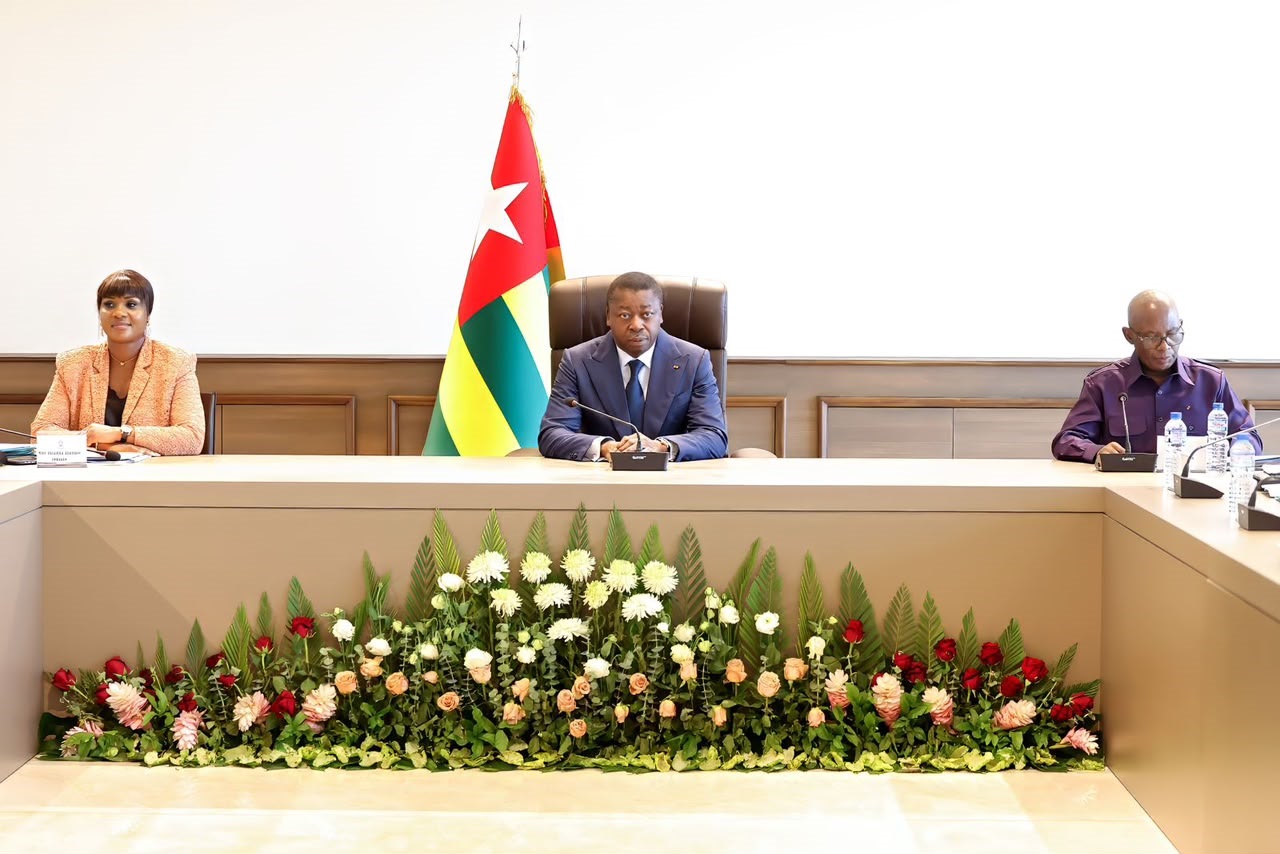
Togo's Council of Ministers convened on Monday, September 7, 2026, under the leadership of Faure Essozimna GNASSINGBE, President of the Council of Ministers. During the session, the Council deliberated on four distinct draft laws, ultimately giving its approval to three of them. In addition to these legislative adoptions, the Council also sanctioned one decree and received a formal communication.
Among the key legislative decisions, two significant measures focused on bolstering the nation's financial sector. The Council adopted a draft law that authorizes the ratification of the convention governing the West African Monetary Union (UMOA) Banking Commission. This move is poised to integrate Togo more deeply into regional financial oversight mechanisms.
Furthermore, a separate draft law specifically addressing banking regulation within the Togolese Republic received approval. This national legislation aims to modernize the domestic framework for financial institutions. The third adopted draft law pertained to the promotion and protection of persons with disabilities, signaling a broader commitment to social inclusion.
Enhanced Banking Supervision
The decision to ratify the convention governing the UMOA Banking Commission stems from a broader reform initiative undertaken by the Central Bank of West African States (BCEAO). This reform targets the legal framework applicable to the banking sector across the West African Monetary Union, specifically revising the convention that established the Banking Commission and its accompanying annex. The updated convention significantly broadens the scope of the Banking Commission's intervention, extending its oversight to encompass all entities subject to its control, moving beyond just traditional credit institutions.
This revised mandate solidifies the Commission's core responsibilities, which include comprehensive supervision, facilitating the resolution of financial institutions facing difficulties, safeguarding the interests of depositors, and contributing actively to the overall stability of the UMOA financial system. For Togo, ratifying this convention is a strategic step to fortify its own banking supervision framework. It will enable the extension of the Banking Commission's control to a wider array of regulated entities, thereby enhancing depositor protection measures and reinforcing mechanisms crucial for maintaining financial stability within the nation.
New Regulatory Framework for Banking
Concurrently, the Council of Ministers approved a draft law dedicated to banking regulation within the Togolese Republic, a move necessitated by the evolving landscape of the West African Monetary Union's banking sector. This sector has experienced considerable transformation, marked by the emergence of new market participants, rapid technological innovation, and an increasing complexity of financial risks. In response to these dynamics, the BCEAO initiated a comprehensive reform of the legal framework governing banking activities, with the overarching goal of enhancing the regional financial system's solidity, resilience, and stability.
As part of this regional effort, the UMOA Council of Ministers adopted a new uniform banking regulation law in June 2023. This landmark legislation established a modernized legal framework designed to cover the entire operational lifecycle of supervised institutions, from their initial licensing through to potential resolution processes. Its scope is notably expanded to include payment institutions, electronic money institutions, financial companies, and banking holdings. The uniform law also strengthens critical mechanisms related to supervision, macroprudential surveillance, depositor protection, and the resolution of banking crises. Togo's adoption of its national banking regulation law aligns with these regional advancements, aiming to modernize and strengthen its domestic banking legal framework, foster greater financial inclusion, and cultivate an environment more conducive to investment and the financing of the national economy.
Commitment to Social Inclusion
Beyond the financial sector, the Council also adopted a draft law focused on the promotion and protection of persons with disabilities. This legislative initiative acknowledges that individuals with disabilities constitute a vital segment of society, contributing significantly to the nation's development through their participation in economic, social, and civic life. Despite their contributions, this demographic frequently encounters substantial challenges, including difficulties in accessing education, healthcare services, employment opportunities, adequate infrastructure, and social provisions. They also often face situations of stigmatization and discrimination.
To address these systemic issues and enhance social inclusion, the government has undertaken a thorough revision of the existing legal framework. The aim is to harmonize national laws with the Convention on the Rights of Persons with Disabilities and to incorporate recommendations specifically made concerning Togo. The newly adopted draft law therefore strengthens provisions across several key areas, including health, education, vocational training, accessibility, mobility, work, employment, social protection, and participation in public and political life. Furthermore, it incorporates specific measures designed to provide enhanced protection for persons with disabilities.
Source
How does this affect you?
Get an AI analysis of this article grounded in your jurisdictions, practice areas, and any policy documents you've uploaded to Wansom.
Finish Reading the Full Story and the Expert Analysis.
Wansom is AI and can make mistakes.