
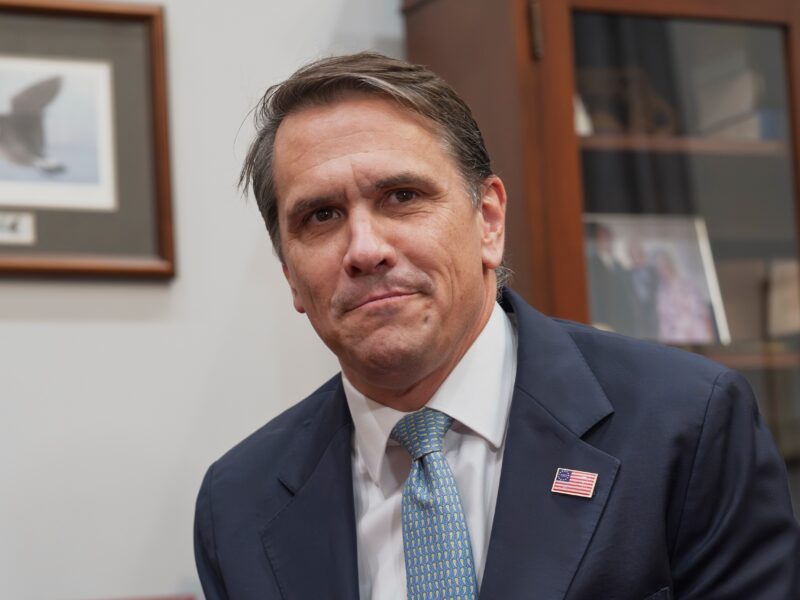
US Senate Advances Confirmation of Todd Blanche as Attorney General
Summary
- The Justice Department rescinded a $1.8 billion government slush fund as part of President Trump's settlement with the IRS.
- Questions remain about other provisions in the agreement, including a provision blocking government investigations into Trump's past tax information.
- The move has significant implications for the Trump administration's settlements and may affect future agreements between government agencies and private interests.
What Happened
The agency claimed that its action was taken 'in good faith discussions' with Senate Republicans and that it 'always welcomes and appreciates productive engagement with all members of Congress.'
The Senate is poised to advance and possibly confirm Todd Blanche as President Donald Trump's next attorney general after a late-night order from the Justice Department satisfied Republican holdouts. The agency rescinded a $1.8 billion government slush fund, but questions remain about other provisions in the president's settlement with the IRS. The move came after weeks of tension between the Trump administration and Senate Republicans, particularly Texas Senator John Cornyn and North Carolina Senator Thom Tillis, who expressed concerns about the 'anti-weaponization' fund and a provision blocking government investigations into Trump's past tax information.
The Justice Department claimed its order resulted from 'good faith discussions' with Blanche's GOP skeptics, but the move left burning questions about other controversial provisions. The agency also did not address the terms of the settlement itself, which stipulate that the agreement can only be modified 'with the written agreement' of all parties involved.
A spokesperson for Cornyn said the Justice Department would issue a 'binding written document' limiting the scope of the settlement to the plaintiffs.
Legal Context
The rescinded slush fund was part of President Trump's settlement with the IRS, which included a provision blocking government investigations into his past tax information. The agreement also stipulated that the 'anti-weaponization' fund would not be established and no funds would be transferred to potential claimants. Blanche has repeatedly cited this claim in defending his refusal to issue a written order rescinding the program.
The Justice Department's order formally rescinded the May 18, 2026, order establishing the slush fund, but left intact other provisions of the settlement. The agency claimed that its action was taken 'in good faith discussions' with Senate Republicans and that it 'always welcomes and appreciates productive engagement with all members of Congress.'
However, the move has raised questions about the retroactive application of releases of claims and modification of agreements.
Why It Matters
The Justice Department's order has significant implications for the Trump administration's settlements, particularly with regards to retroactive application of releases of claims and modification of agreements. Lawyers and compliance officers should watch for potential implications of this development on future settlements.
The controversy surrounding the 'anti-weaponization' fund and the IRS settlement highlights the complex relationships between government agencies, politicians, and private interests. The case serves as a reminder that even seemingly routine administrative actions can have far-reaching consequences.
As the Senate moves forward with Blanche's nomination, lawmakers will need to carefully consider the implications of this development on the Justice Department's role in enforcing federal laws and regulations.
Practical Implications
Lawyers and compliance officers should watch for potential implications of the Justice Department's order on the Trump administration's settlements, particularly with regards to retroactive application of releases of claims and modification of agreements.
Source
Source: Original reporting via CN
How does this affect your business?
Get an AI analysis of this article grounded in your jurisdictions, practice areas, and any policy documents you've uploaded to Wansom.
Wansom is AI and can make mistakes.