
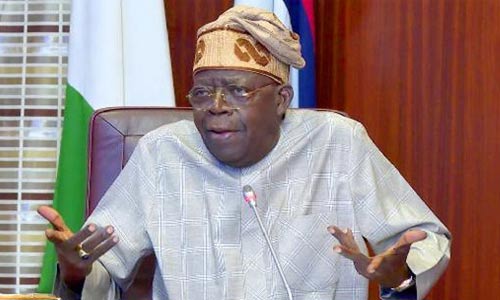
President Tinubu: Submits New $7.7 Billion Loan Request for 2026 Budget
Summary
- President Bola Tinubu has withdrawn an earlier request for $20.5 billion and €1.05 billion in external loans.
- He has subsequently sought approval for a new external borrowing plan totaling $7.7 billion.
- This revised $7.7 billion loan is intended to partially finance Nigeria's 2026 budget deficit.
- The new borrowing request is currently awaiting approval from the Nigerian Senate.
What Happened
Lawyers advising clients on project finance, public sector contracts, or investment in Nigeria should closely monitor the legislative approval process for this revised external borrowing plan.
President Bola Tinubu has recently revised Nigeria's approach to securing international financing, opting to withdraw a substantial earlier request for external loans. This initial proposal, which sought to secure $20.5 billion and an additional €1.05 billion, was originally presented to the National Assembly as part of the 2026–2027 Supplementary External Borrowing Plan. The President Tinubu loan withdrawal signals a strategic shift in the government's borrowing strategy, moving away from the larger, multi-currency package.
Following this withdrawal, President Tinubu has put forward a new, more focused request for external borrowing. This fresh proposal seeks approval for a sum of $7.7 billion. This specific Tinubu $7.7 billion loan request is now awaiting consideration and approval from the Nigerian Senate, indicating a streamlined and potentially more targeted financial strategy for the nation's immediate fiscal needs.
Revised Borrowing Strategy
The initial request, encompassing $20.5 billion and €1.05 billion, was designed to support the country's financial objectives outlined in the 2026–2027 Supplementary External Borrowing Plan. This comprehensive plan aimed to address various funding gaps over a two-year period. However, the subsequent decision to withdraw this extensive package suggests a re-evaluation of the nation's financial priorities or the feasibility of securing such a large, diverse loan portfolio under the original terms.
The new $7.7 billion borrowing plan, presented by President Tinubu, is specifically earmarked to partially finance the 2026 budget deficit. This targeted approach indicates a more immediate and pressing need for funds to cover the government's spending obligations for the upcoming fiscal year. The shift from a broader, multi-year plan to a more concentrated request for the 2026 budget deficit financing highlights the government's focus on addressing short-term fiscal imbalances through its Nigeria external borrowing plan.
Legislative Scrutiny
Any significant external borrowing by the Nigerian government necessitates rigorous oversight and approval from the legislative arm. The National Assembly, comprising both the Senate and the House of Representatives, plays a critical role in scrutinizing and sanctioning such financial undertakings. The initial withdrawal of the larger loan request was communicated to the National Assembly, acknowledging its constitutional mandate in these matters.
Currently, the President's revised request for the $7.7 billion loan is specifically before the Nigerian Senate for borrowing approval. This legislative step is crucial for the government to proceed with securing the funds. The Senate's deliberation and eventual decision on this National Assembly loan approval will determine the availability of this significant capital injection, which is vital for the government's financial operations and its ability to meet its budgetary commitments for 2026.
Fiscal Implications
The outcome of the Nigerian Senate's borrowing approval process for the Tinubu $7.7 billion loan request carries substantial implications for the nation's fiscal stability and economic trajectory. If approved, these funds will contribute directly to partly financing the 2026 budget deficit, thereby influencing the government's capacity to fund ongoing and new projects. This availability of government funds is a critical factor for businesses engaged in public sector contracts, project finance, and infrastructure development across Nigeria.
Lawyers advising clients on project finance, public sector contracts, or investment in Nigeria should closely monitor the legislative approval process for this revised external borrowing plan. The outcome will influence the availability of government funds for various projects and the nation's fiscal stability, which can impact contract performance, payment timelines, and overall economic outlook for clients. A successful approval could stabilize government spending, while delays or rejection might necessitate further fiscal adjustments, potentially affecting the economic environment for businesses and investors.
Practical Implications
Lawyers advising on project finance, public sector contracts, or investment in Nigeria should monitor the legislative approval process for this revised external borrowing plan. The outcome will influence the availability of government funds for various projects and the nation's fiscal stability, which can impact contract performance, payment timelines, and overall economic outlook for clients.
Source
How does this affect you?
Get an AI analysis of this article grounded in your jurisdictions, practice areas, and any policy documents you've uploaded to Wansom.
Wansom is AI and can make mistakes.