
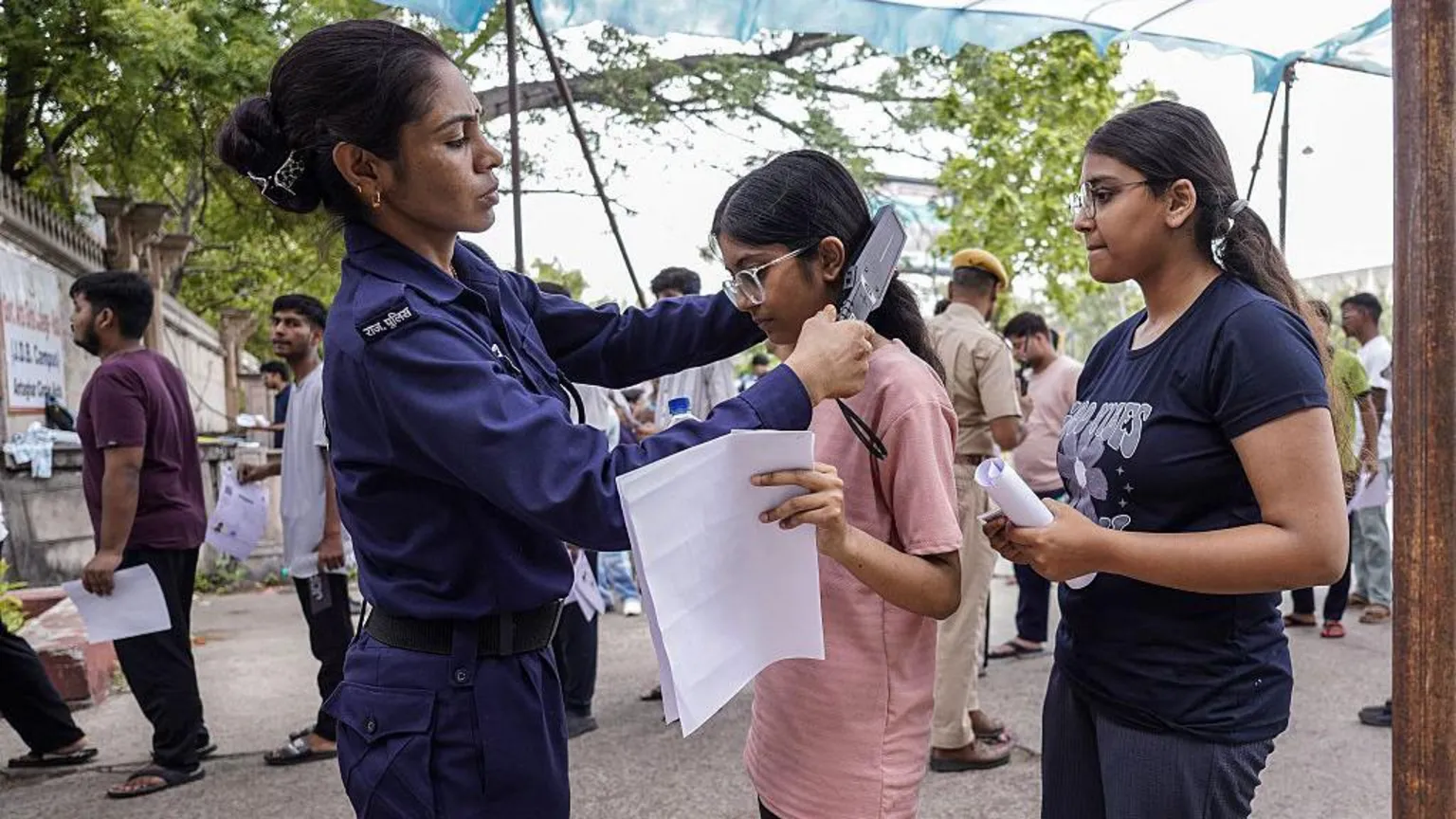
Tight security as Indian students resit medical exam after alleged paper leak
Abstract
The recent cancellation and subsequent resit of a crucial medical entrance examination in India, following widespread allegations of a paper leak, has brought to the forefront the persistent challenges of examination integrity and accountability within the nation's public testing system. This development underscores the critical role of the National Testing Agency (NTA) and highlights the immediate relevance of the newly enacted Public Examinations (Prevention of Unfair Means) Act, 2024. This article delves into the legal framework governing such examinations, the criminal liabilities arising from malpractices, and the recourse available to affected students, providing a comprehensive overview for legal professionals navigating this complex landscape.
Introduction
Millions of aspiring medical students across India recently faced an unprecedented situation as a crucial national examination, the National Eligibility cum Entrance Test (NEET-UG), was cancelled and subsequently rescheduled for a resit under heightened security. This drastic measure was necessitated by widespread allegations that the original question paper had been leaked, compromising the fairness and integrity of the examination process. The incident has not only caused immense distress and uncertainty among students and their families but has also ignited a national debate on the robustness of India's public examination system.
This recurring issue of paper leaks in high-stakes examinations poses significant legal questions concerning administrative accountability, criminal culpability, and the rights of affected candidates. For legal practitioners, understanding the evolving statutory framework, judicial precedents, and the practical implications of such events is paramount. This article aims to dissect the legal ramifications of the alleged paper leak, examining the powers and responsibilities of examination bodies, the punitive measures under new legislation, and the avenues for legal redress available to those impacted.
The controversy surrounding the NEET-UG 2024 and 2026 examinations, in particular, has drawn considerable attention, with the Supreme Court of India actively involved in addressing various petitions. The incident serves as a stark reminder of the vulnerabilities within the examination ecosystem and the urgent need for stringent legal and administrative reforms to safeguard the future of millions of young aspirants.
Background
The conduct of major national entrance examinations in India, including the NEET-UG for undergraduate medical admissions, falls under the purview of the National Testing Agency (NTA). Established in 2017 as an autonomous body under the Ministry of Education, the NTA is registered under the Societies Registration Act, 1860, with a mandate to conduct transparent, efficient, and international-standard tests. Its objective is to assess candidates' competency for admission and recruitment purposes, thereby promoting merit and equity in higher education.
In response to a growing number of examination malpractices and paper leaks, the Indian Parliament enacted the Public Examinations (Prevention of Unfair Means) Act, 2024. This landmark legislation, which came into effect on June 21, 2024, aims to curb cheating and uphold the integrity of public examinations. The Act broadly defines "unfair means" to include various malpractices such as leaking question papers or answer keys, assisting candidates during exams, tampering with computer networks, and impersonation.
Prior to this specific legislation, the authority of examination bodies and the state to cancel examinations due to widespread malpractice has been affirmed by the Supreme Court of India. In cases such as *Gohil Vishvaraj Hanubhai & Others vs State of Gujarat & Others*, the Court underscored the paramount importance of maintaining the purity of examination processes, recognizing the state's power to take decisive action in the face of serious allegations of large-scale malpractice. This judicial stance provides the foundational legal basis for administrative decisions to cancel and re-conduct examinations when their integrity is compromised.
Analysis
The alleged paper leak in the NEET-UG examination has triggered a multi-faceted legal response, engaging both criminal and administrative law. Investigations into the NEET-UG 2024 controversy revealed that at least 155 students directly benefited from a paper leak, although the Supreme Court initially found no evidence of a widespread systemic failure. However, the 2026 NEET examination was ultimately cancelled following investigations that uncovered significant overlaps between a pre-circulated guess paper and the actual question paper, leading to arrests, including individuals associated with the NTA.
The Public Examinations (Prevention of Unfair Means) Act, 2024, now provides a robust legal framework to address such criminal acts. Under this Act, offenses related to paper leaks are cognizable, non-bailable, and carry severe penalties. Individuals found guilty of leaking papers or tampering with answer sheets face a minimum jail term of three years, extendable to five years, along with a fine of up to Rs 10 lakh. Examination service providers, if found to have knowledge of an offense and fail to report it, can be fined up to Rs 1 crore. Furthermore, senior officials involved in or allowing such offenses face imprisonment from three to ten years and a fine of Rs 1 crore. The Central Bureau of Investigation (CBI) has already made arrests in connection with the NEET-UG paper leak cases, indicating the application of these stringent provisions. However, historical data suggests a dismal conviction rate in paper leak cases in India, posing a challenge for effective deterrence.
From the perspective of affected students, the legal landscape primarily involves seeking redress through writ petitions before the High Courts or the Supreme Court under Articles 226 and 32 of the Constitution, respectively. Students have consistently approached the Supreme Court seeking various reliefs, including the cancellation of the examination and demands for re-tests. While the judiciary acknowledges the emotional and academic stakes for millions of students, it also considers the "cascading effects" of cancelling an entire examination. Courts generally uphold administrative decisions to cancel exams in cases of widespread malpractice, provided the decision is reasonable and based on substantial evidence, even if individual hearings for all affected candidates are not feasible. The Supreme Court has, in the context of the NEET controversy, stressed the need for accountability within the NTA and directed the implementation of reforms to strengthen security and transparency.
The legal challenges often revolve around proving the extent of the leak and whether it constitutes a "systemic breach" sufficient to vitiate the entire examination. The judiciary's role is to review the decision-making process of the administrative body, ensuring it is not arbitrary or disproportionate. The new Act aims to bolster the investigative and prosecutorial powers, potentially leading to more convictions and, hopefully, a stronger deterrent effect against future malpractices.
Conclusion
The recent NEET-UG paper leak and subsequent re-examination underscore the critical need for robust legal and administrative mechanisms to safeguard the integrity of India's public examination system. For legal practitioners, this evolving landscape presents significant opportunities and challenges. Attorneys may be called upon to advise students on their rights to a fair examination, represent them in challenging administrative decisions, or pursue compensation for damages incurred due to cancellations and delays. Simultaneously, there will be a demand for legal expertise in defending individuals or entities accused under the stringent provisions of the Public Examinations (Prevention of Unfair Means) Act, 2024.
The effective implementation of the 2024 Act, coupled with the Supreme Court's emphasis on NTA's accountability and systemic reforms, will be crucial in restoring public trust in these vital examinations. Practitioners should closely monitor judicial pronouncements, particularly from the Supreme Court, which continues to shape the interpretation and application of laws concerning examination malpractice. The long-term implications will depend on whether the new legal framework can effectively deter organized crime syndicates involved in paper leaks and ensure that the sincere efforts of millions of students are fairly rewarded, free from the shadow of corruption.
Citations
- 1.Public Examinations (Prevention of Unfair Means) Act, 2024
- 2.Gohil Vishvaraj Hanubhai & Others vs State of Gujarat & Others
- 3.National Testing Agency (NTA) – Structure, Reforms & NEET Controversy - RICE IAS
- 4.National Testing Agency (NTA) - BYJU'S
- 5.National Testing Agency - Wikipedia
- 6.Explained: How the National Testing Agency (NTA) functions? - The Times of India
- 7.Explained: How the National Testing Agency (NTA) functions? - EducationWorld
- 8.Public Examinations (Prevention of Unfair Means) Act, 2024 - Wikipedia
- 9.Public Examinations (Preventions Of Unfair Means) Act, 2024
- 10.Explained: What's in the new Public Examinations Bill, aimed at stopping cheating in exams? - The Indian Express
- 11.New Law Against Exam Leak Amid NEET Mess: Jail Term, Fine Upto A Crore - NDTV
- 12.NEET 2024 paper leak case: SC maintains 'no retest' judgment; whips NTA and says avoid 'flip-flops' to serve students' interests - The Economic Times
- 13.Supreme Court refuses to cancel 2024 NEET UG exam due to insufficient evidence of “systemic” leak
- 14.2024 NEET controversy - Wikipedia
- 15.Can a State Cancel an Examination Due to Allegations of Malpractice? Supreme Court Confirms Authority | The Law Observer
- 16.NEET-UG 2024 paper leak case: What Supreme Court said during hearing | India News
- 17.NEET paper leak: Why India's exam fraudsters rarely end up convicted
- 18.2026 NEET controversy - Wikipedia
- 19.NEET paper leak: Delhi court allows CBI to quiz 3 accused in jail - The Hindu
- 20.Supreme Court Stresses Accountability as NTA Outlines Post-NEET Leak Reforms
- 21.HOW FAR WILL THE CANCELLATION OF EXAMS AFFECT THE FUTURE OF A STUDENT?
- 22.NEET: How exam cancellations impact students' mental health, wallets & more
How does this affect your business?
Get an AI analysis of this article grounded in your jurisdictions, practice areas, and any policy documents you've uploaded to Wansom.
Wansom is AI and can make mistakes.