
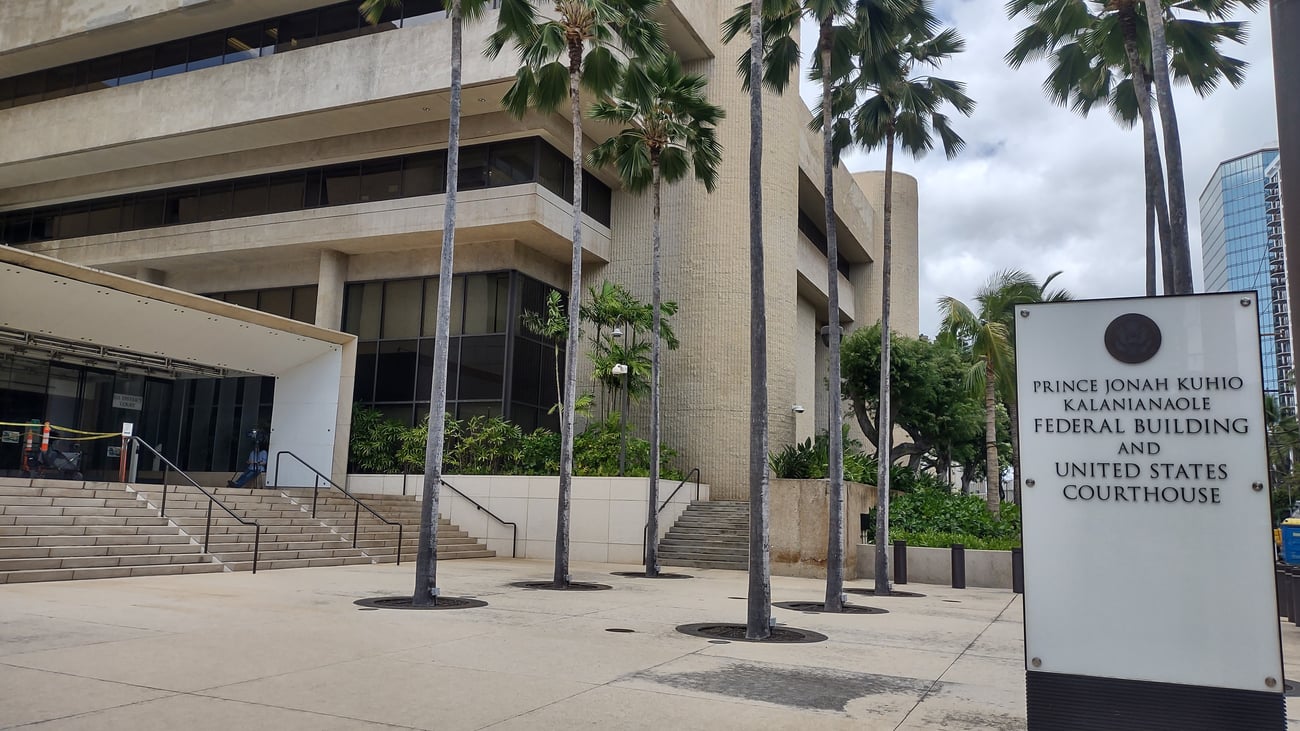
Hawaii Court: Tiffany Lam PacMar Racketeering Claims Survive Dismissal
Summary
- U.S. District Judge Leslie Kobayashi denied Tiffany Lam's request to dismiss racketeering claims brought by PacMar Technologies.
- Lam, wife of former CEO Martin Kao, sought dismissal based on a pending state court arbitration appeal and Kao's federal criminal convictions.
- The court found no final judgment regarding the arbitration due to ongoing appeals, precluding its use for *res judicata*.
- Kao's criminal convictions could not preclude the civil lawsuit because PacMar Technologies was not a party to those criminal proceedings.
- The ruling allows the PacMar Technologies racketeering lawsuit against Lam to proceed in Hawaii federal court.
Racketeering Claims Advance in Hawaii Federal Court
The ruling by Judge Kobayashi underscores the stringent requirements for establishing preclusion through prior judgments or convictions, particularly the necessity of a final determination and direct party involvement for *res judicata* or collateral estoppel to apply.
A federal judge in Hawaii has ruled that racketeering claims against Tiffany Lam, the wife of former PacMar Technologies CEO Martin Kao, cannot be dismissed based on her husband's criminal convictions or a state court appeal that remains unresolved. U.S. District Judge Leslie Kobayashi denied Lam's motion for summary judgment, allowing the lawsuit brought by defense contractor PacMar Technologies to proceed. The company, previously known as Martin Defense Group, alleges a complex scheme involving Lam, Kao, and others.
The lawsuit contends that the defendants engaged in a two-pronged scheme: fraudulently obtaining Paycheck Protection Program (PPP) loans and making illegal campaign contributions. PacMar Technologies further claims that company funds were then illicitly used to conceal these activities. Central to these allegations is the Society of Young Women Scientists and Engineers, a Hawaii LLC registered in November 2019, which PacMar asserts was utilized to disguise the movement of money. Tiffany Lam, listed as "Jennifer Lam" in the LLC's articles of organization, is accused of funneling funds through this entity, disguised as scholarship donations, as part of the alleged cover-up.
Defendant's Arguments for Early Dismissal
Tiffany Lam sought to have the PacMar Technologies racketeering lawsuit dismissed by arguing that key issues had already been resolved in prior legal proceedings. Her defense primarily rested on two points: a related arbitration award confirmed by a Hawaii state court in a separate case involving another company linked to Martin Kao, and Kao's own federal criminal convictions. Lam contended that these prior outcomes, particularly Kao's guilty pleas, had already established the underlying facts relevant to PacMar's claims against her, thereby precluding the current civil action.
Martin Kao has indeed pleaded guilty to multiple federal fraud and money laundering charges in one criminal case, and to conspiracy, illegal campaign contributions, and false-statement charges in a distinct case in Washington, D.C. His appeals concerning these federal convictions are currently pending before the Ninth Circuit. Lam's strategy aimed to leverage these existing judicial and arbitral findings to secure an early dismissal of the civil racketeering claims against her, asserting that the factual basis of the current lawsuit had already been adjudicated.
Court Rejects Preclusion Based on Non-Final Arbitration
Judge Kobayashi, an appointee of Barack Obama, was not persuaded by Lam's arguments for dismissal. Regarding the state court arbitration award, the judge highlighted its lack of finality. The Hawaii Intermediate Court of Appeals had already vacated the state court's final judgment and portions of its orders confirming the arbitration award. Furthermore, Kao has petitioned the Hawaii Supreme Court to overturn the remaining parts of the award. Given these ongoing appeals, Judge Kobayashi concluded that no final ruling existed upon which to base a preclusive effect.
In her decision, Judge Kobayashi explicitly stated that "Appealability is what permitted Kao to take his appeal; it is not a substitute for finality." This underscores the critical requirement for a definitive, non-appealable judgment for doctrines like *res judicata* to apply. Lam herself acknowledged this legal hurdle in a supplemental brief, conceding that she was "aware of no Hawaii decision holding a partially vacated confirmation order final for res judicata while a discretionary appeal of the affirmed portions remains pending." This lack of a final, unassailable judgment proved fatal to her argument concerning the arbitration award.
Criminal Convictions and Case Pause Denied
Lam's attempt to use Martin Kao's criminal convictions to block the civil lawsuit also failed. She acknowledged that legal precedent typically allows a defendant to use another's conviction to preclude a lawsuit only if the party being blocked—in this instance, PacMar Technologies—was actively involved in the earlier criminal proceedings. Since PacMar was not a party to Kao's prosecution, Judge Kobayashi ruled that his guilty pleas held no preclusive effect against the company, regardless of what they established against Kao personally. This decision reinforces the strict requirement for identity of parties when applying collateral estoppel or *res judicata*.
Additionally, Lam requested that the entire case be paused until the Hawaii Supreme Court resolved the ongoing arbitration dispute. Judge Kobayashi denied this request, noting that Lam could not provide a clear timeframe for how long such a pause might last. The judge also found that Lam failed to demonstrate any hardship beyond the ordinary burdens associated with defending a lawsuit, which was insufficient grounds to halt the proceedings. Consequently, the Tiffany Lam PacMar racketeering claims survive Hawaii, allowing the lawsuit to move forward.
Significance of the Ruling
The ruling by Judge Kobayashi underscores the stringent requirements for establishing preclusion through prior judgments or convictions, particularly the necessity of a final determination and direct party involvement for *res judicata* or collateral estoppel to apply. This decision highlights the high bar defendants face when seeking early dismissal of civil racketeering claims based on related but non-final legal proceedings or criminal convictions where the plaintiff was not a party. The court's emphasis on finality and party identity ensures that civil litigants cannot easily circumvent a full hearing of their claims.
Ultimately, the federal court's decision ensures that the PacMar Technologies racketeering lawsuit against Tiffany Lam will proceed, allowing the company to pursue its allegations in court. This outcome serves as a significant precedent for similar cases, reinforcing that a defendant cannot rely on an unresolved state court appeal or a spouse's criminal convictions to automatically dismiss civil claims, especially when the plaintiff was not involved in those prior actions.
Practical Implications
This ruling underscores the high bar for defendants seeking early dismissal of civil racketeering claims based on prior criminal convictions or non-final arbitration appeals, particularly concerning the strict requirements for *res judicata* and collateral estoppel regarding party identity and judgment finality. Lawyers should advise clients that related legal proceedings may not automatically preclude subsequent civil actions if these conditions are not met.
Source
How does this affect you?
Get an AI analysis of this article grounded in your jurisdictions, practice areas, and any policy documents you've uploaded to Wansom.
Finish Reading the Full Story and the Expert Analysis.
Wansom is AI and can make mistakes.