
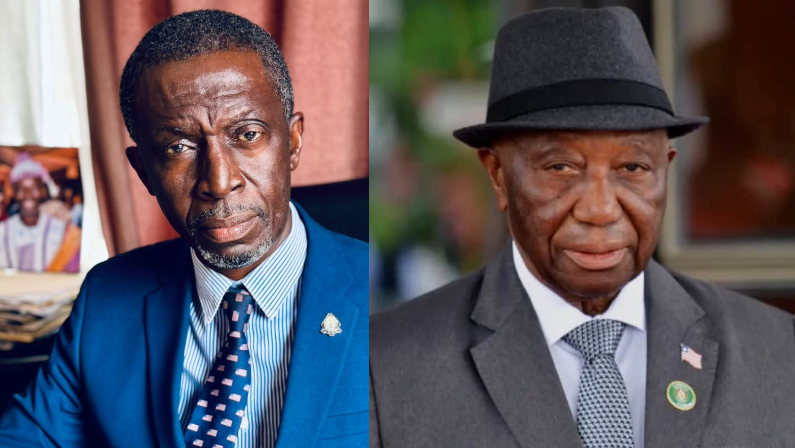
Liberia: Tiawan Gongloe Advises Boakai Tolerate Public Criticism
Summary
- Human rights lawyer Tiawan Gongloe has advised Liberia President Boakai to tolerate public criticism, reminding him of his own past as a vocal critic of the previous government.
- Gongloe emphasized that criticism is the "soul of democracy" and highlighted Liberia's long history of citizens challenging those in power.
- He cited a 2024 Liberia Supreme Court nomination ruling where President Boakai's appointments to tenured positions were revoked for violating due process, illustrating the importance of judicial scrutiny.
- Gongloe argued that criticism acts as a democratic safety valve, helping governments identify issues and preventing leaders from being isolated by 'yes-men'.
- He concluded by stating that "Criticism is not the enemy of democracy. Silence is," urging the President to listen and address public concerns.
Advocating for Open Discourse
Criticism is not the enemy of democracy. Silence is.
Prominent human rights lawyer and former Solicitor General, Tiawan Saye Gongloe, has publicly urged President Joseph Nyuma Boakai to embrace and tolerate public criticism. In a recent commentary titled "Why Complain About Criticism, Mr. President? Did You Not Criticize President Weah Too?", Gongloe reminded the current Liberian leader that he himself was a vocal opponent of the previous administration. During his time in opposition, President Boakai openly condemned issues such as insecurity, violent crime, drug trafficking, and what he perceived as the Weah government's failure to adequately protect its citizens.
Gongloe underscored that the legitimacy of criticism remains constant, regardless of who holds presidential power. He emphasized that if criticism was valid when Boakai was an opposition figure, it cannot suddenly become illegitimate now that he occupies the highest office. The seasoned legal expert characterized criticism as the very "soul of democracy," highlighting Liberia's extensive history of citizens challenging those in authority.
He cited numerous historical figures who bravely questioned established systems, including Albert Porte and Tuan Wreh, who confronted the Tubman administration. Gongloe also referenced Togba-Nah Tipoteh, Gabriel Baccus Matthews, Amos Sawyer, Dew Mayson, Oscar Quiah, and various student leaders who challenged the Tolbert government. Furthermore, he noted that Liberians continued to speak out, often at significant personal risk, throughout the authoritarian regimes of Samuel Doe and Charles Taylor, demonstrating a deep-rooted tradition of Liberia freedom of expression.
Judicial Checks and Balances
In his commentary, Gongloe drew a direct link between the importance of public criticism and the necessity of judicial scrutiny, citing a significant 2024 Liberia Supreme Court nomination ruling. This ruling found that President Boakai's nominations to several tenured positions, which were already occupied, had violated the due-process rights of the incumbents.
As a result of this judicial review, the Supreme Court ordered the revocation of these nominations. Gongloe pointed to this specific case as a clear illustration of why both public criticism and judicial oversight are crucial for ensuring Boakai government accountability. The decision underscores the judiciary's role in upholding the rule of law and safeguarding established legal processes against executive actions, providing a tangible example of checks and balances in action.
The Indispensable Role of Dissent
Gongloe elaborated on the vital function of criticism within a democratic society, asserting that it serves as democracy's greatest safety valve. He recalled the late Nagbe Sloh's observation on ELBC, stating that in a democracy, "you talk your own and I talk my own," alongside the late Joe Mulbah's adage that "jaw-jaw is better than war-war." This perspective suggests that verbal and intellectual engagement is preferable to armed conflict, providing a peaceful mechanism for resolving societal disagreements.
He argued that constructive criticism helps governments identify blind spots and understand issues they might otherwise overlook, particularly when leaders are surrounded by officials who are reluctant to offer dissenting opinions. Gongloe shared his personal experience, noting that he has criticized many governments and bears the "physical evidence" of these encounters, a memory he expects to carry for life. He continues to offer critiques while also proposing solutions, acknowledging that he faces criticism from both political factions: partisans of the Congress for Democratic Change (CDC) fault him for commending the Unity Party (UP) government, while some UP members label him a CDC sympathizer when he criticizes their administration. He concluded that this dynamic is simply "democracy" in action, where peaceful disagreement helps officials understand public sentiment.
In his final advice to the President, Tiawan Gongloe advises Boakai tolerate criticism, urging him to "Let the people talk. Don’t complain. Listen! Correct what is wrong. Explain where the government disagrees." He powerfully concluded that "Criticism is not the enemy of democracy. Silence is," branding silence as a particularly dangerous adversary to democratic principles.
Practical Implications
This article highlights the ongoing judicial oversight of executive actions in Liberia, particularly regarding presidential appointments, as evidenced by the Supreme Court's recent ruling. Lawyers should be aware of the precedent for challenging executive decisions that may violate due process and the importance of advocating for freedom of expression in governance.
Source
How does this affect you?
Get an AI analysis of this article grounded in your jurisdictions, practice areas, and any policy documents you've uploaded to Wansom.
Finish Reading the Full Story and the Expert Analysis.
Get the latest legal & regulatory intelligence in Liberia
Wansom is AI and can make mistakes.