
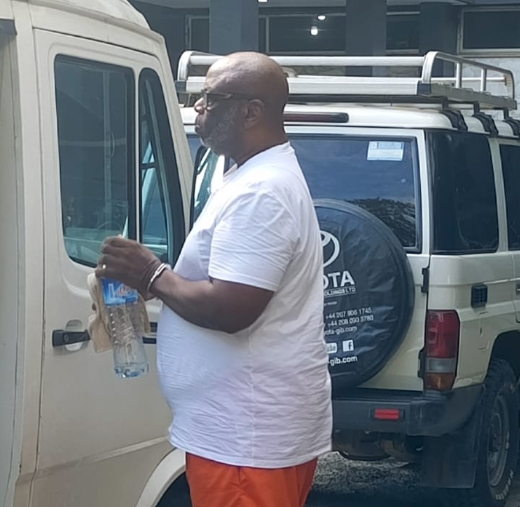
Peter Bon Jallah Acquittal Motion Rejected Liberia: Trial Continues
Summary
- A Liberian court rejected Peter Bon Jallah's motion for judgment of acquittal in his statutory rape, gang rape, and kidnapping trial.
- Judge Wesseh Alphonsus Wesseh, Sr. ruled that the prosecution's evidence was not "wholly insufficient" to establish guilt, requiring a defense response.
- Jallah, 63, who denies the allegations, must now present his defense, potentially taking the witness stand in his bench trial.
- The court cited *Republic of Liberia v. Robert A. Smith (1976)* for the acquittal standard and noted that indictment defects should be challenged pre-trial.
- Defense arguments challenging victim inconsistencies, crime scene evidence, and medical/DNA findings were deemed premature for an acquittal at this stage.
Court Rejects Acquittal Bid in High-Profile Trial
The court's decision underscores the high evidentiary bar required for a judgment of acquittal in Liberia, signaling that trials will proceed unless the prosecution's case is utterly without merit.
Criminal Court "E" for Montserrado County has denied a motion seeking the acquittal of 63-year-old Peter Bon Jallah, who faces serious charges including Gang Rape, Statutory Rape, and Kidnapping involving a 16-year-old male. The ruling, delivered on Wednesday, September 30, by Assigned Circuit Judge Wesseh Alphonsus Wesseh, Sr., determined that the prosecution's evidence presented thus far was not "wholly insufficient" to warrant an early termination of the case. This decision mandates that Mr. Jallah, who has consistently denied the allegations and opted for a bench trial, must now proceed with presenting his defense.
The rejection of the motion clears the path for the trial to advance into a critical phase, where Mr. Jallah is expected to take the witness stand. The prosecution had previously presented a total of twelve witnesses, including the alleged victim, police investigators, medical personnel, and a Rwandan forensic expert who testified regarding DNA analysis. The court's finding indicates that the evidence adduced by the prosecution provides sufficient grounds for the proceedings to continue, requiring a response from the defense.
Evidentiary Challenges and Judicial Discretion
The defense team had mounted a robust argument for immediate acquittal, citing several points of contention. They highlighted alleged inconsistencies within the victim's account and raised questions surrounding a purported crime scene on Camp Johnson Road, noting that police investigators, as testified by Officer Lindsey Gould, were reportedly unable to identify or locate the alleged location. The defense contended that the uncertainty surrounding this site should lead to the victim's testimony concerning it being stricken from the record, thereby creating reasonable doubt. Furthermore, they pointed to the absence of a woman the victim claimed to have encountered at this location.
Challenges were also leveled against the prosecution's medical and forensic evidence. Defense lawyers argued that a medical nurse who testified about lacerations and bruises observed in the alleged victim's anus did not conclusively state that these injuries were caused by rape. Similarly, the defense utilized the testimony of the Rwandan forensic expert to argue that the DNA examination could not establish penetration or independently classify the alleged offenses as statutory rape or gang rape. Additionally, the defense highlighted alleged differences between the victim's testimony and the police charge sheet regarding the dates and locations of the alleged sexual encounters at Mr. Jallah's Airfield residence. However, Judge Wesseh declined to resolve these disputes over credibility and evidentiary weight at this preliminary stage of the trial.
Legal Standard and Procedural Directives
In his ruling, Judge Wesseh emphasized that a judgment of acquittal may only be granted when the evidence presented is "wholly insufficient" to establish guilt. This standard aligns with established legal precedent, specifically citing the Supreme Court's decision in Republic of Liberia v. Robert A. Smith, 25 LLR 207 (1976). The court deemed the defense's motion "premature," particularly given the prosecution's indication that it might present rebuttal witnesses after the defense concludes its case. This procedural stance underscores the court's commitment to allowing both sides to fully present their arguments before a final determination.
The judge also addressed the defense's arguments concerning alleged defects and inconsistencies within the indictment itself. Citing Potter v. Republic, 1 LLR 67, and Logan v. Republic, 33 LLR 434 (1985), Judge Wesseh clarified that any objections regarding a defective indictment should have been raised through a motion to dismiss prior to the commencement of the trial. This directive reinforces the importance of adhering to proper criminal procedure in Liberia, ensuring that procedural challenges are made at the appropriate juncture. The court concluded that the prosecution's evidence, as it stands, provides sufficient grounds to require the defense to present its case before a final judgment can be rendered.
Implications for the Ongoing Trial
The court's decision underscores the high evidentiary bar required for a judgment of acquittal in Liberia, signaling that trials will proceed unless the prosecution's case is utterly without merit. For Peter Bon Jallah, this means the legal battle is far from over; he must now prepare to present his own witnesses and potentially offer his testimony to counter the prosecution's narrative. The ruling effectively confirms that the prosecution has established a prima facie case, compelling the defense to respond to the allegations in full.
This development sets the stage for a more protracted and detailed examination of the evidence, moving beyond the initial challenges to the prosecution's foundational case. The emphasis on the "wholly insufficient" standard and the directive regarding pre-trial motions for indictment defects provide important guidance for legal practitioners in Liberia, highlighting the court's expectation for thorough preparation and adherence to procedural timelines. The trial will now continue, with all eyes on the defense's upcoming presentation.
Practical Implications
Defense lawyers in Liberia should note the high evidentiary bar for motions for judgment of acquittal, as courts will proceed if prosecution evidence is not 'wholly insufficient.' This ruling also reinforces the need to challenge indictment defects pre-trial.
Source
How does this affect you?
Get an AI analysis of this article grounded in your jurisdictions, practice areas, and any policy documents you've uploaded to Wansom.
Finish Reading the Full Story and the Expert Analysis.
Get the latest legal & regulatory intelligence in Liberia
Wansom is AI and can make mistakes.