
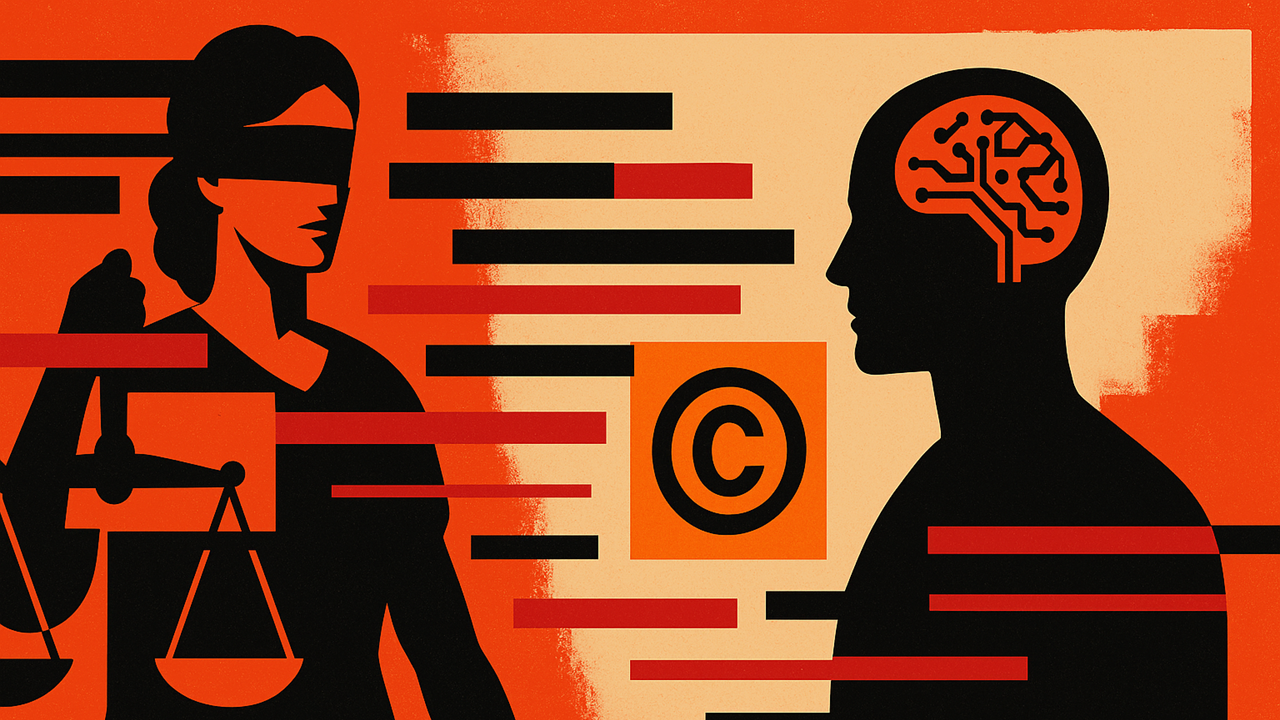
Third Circuit: Thomson Reuters ROSS AI Fair Use Opinion Unsealed
Summary
- The Third Circuit Court of Appeals unsealed its opinion in the Thomson Reuters v ROSS case.
- This ruling is the first by a federal appeals court to address fair use for copyrighted material used in AI training.
- The court explicitly stated its intention to limit the reach of its decision.
- The Third Circuit characterized the case as "No More Than An Ordinary Copyright Case."
What Happened
This particular Third Circuit AI copyright decision holds significant weight as it marks the first instance a federal appeals court has directly addressed the application of fair use principles to copyrighted material used for training artificial intelligence systems.
The United States Court of Appeals for the Third Circuit recently unsealed its opinion in the closely watched case of Thomson Reuters v ROSS. This legal dispute centered on allegations that ROSS Intelligence utilized copyrighted material belonging to Thomson Reuters to train its artificial intelligence systems. The core legal question before the appellate court was whether such use constituted fair use under copyright law.
In its ruling, the Third Circuit characterized the matter as "No More Than An Ordinary Copyright Case." This framing by the court itself suggests an attempt to contextualize a potentially groundbreaking decision within established legal principles, despite the novel technological context. The unsealing of the Thomson Reuters v ROSS opinion now provides public insight into the court's reasoning on this complex issue.
A Novel Legal Precedent
This particular Third Circuit AI copyright decision holds significant weight as it marks the first instance a federal appeals court has directly addressed the application of fair use principles to copyrighted material used for training artificial intelligence systems. The burgeoning field of AI development heavily relies on access to vast datasets, which frequently include copyrighted works, making the legality of copyrighted material AI training a critical concern for innovators and content creators alike.
The absence of prior federal appellate guidance on this specific intersection of AI and intellectual property meant that lower courts and industry participants operated in a largely uncharted legal territory. Consequently, the Thomson Reuters ROSS AI fair use Third Circuit ruling establishes an initial, albeit carefully framed, precedent for how courts may evaluate such cases moving forward. This decision begins to shape the "AI training copyright fair use precedent" landscape, offering a first look at judicial interpretation at the appellate level.
The Court's Deliberate Limitation
Despite the groundbreaking nature of being the first federal appeals court to tackle this issue, the Third Circuit explicitly sought to limit the reach of its decision. This deliberate judicial restraint indicates an awareness of the broad implications that a sweeping ruling could have on the rapidly evolving AI industry and intellectual property law. By characterizing the case as "No More Than An Ordinary Copyright Case," the court signaled an intent to apply existing copyright doctrines without creating entirely new legal frameworks specifically for AI.
This approach means that while the Thomson Reuters v ROSS opinion provides some clarity, its narrow scope suggests that future cases involving different facts or AI training methodologies might lead to varied outcomes. The court's caution underscores the complexity of determining the legality of copyrighted material AI training, particularly when balancing innovation with the rights of content creators. The explicit limitation serves as a reminder that this area of law is still very much in its nascent stages of development.
Why It Matters
The unsealed Thomson Reuters ROSS AI fair use Third Circuit decision, despite its stated limitations, is a pivotal development for anyone involved in AI development, intellectual property law, or content creation. As the first federal appellate court to weigh in on the use of copyrighted material for AI training, the ruling provides an initial benchmark for assessing compliance risks and guiding development strategies. It signals that courts are beginning to grapple with these complex issues, even if they prefer to do so incrementally.
For the legal community, understanding the nuances of this "Third Circuit AI copyright decision" is crucial for advising clients on the evolving landscape of AI and copyright. While the court aimed to treat it as an "ordinary copyright case," the underlying technology and its implications are far from ordinary. The ruling initiates a critical dialogue on how traditional copyright principles, including fair use, will adapt to the challenges posed by advanced AI systems and their data requirements.
Practical Implications
Lawyers advising clients on AI development and data sourcing must analyze this Third Circuit opinion to understand the evolving legal landscape of fair use for copyrighted material in AI training, particularly its stated limitations, to assess compliance risks and guide development strategies.
Source
How does this affect you?
Get an AI analysis of this article grounded in your jurisdictions, practice areas, and any policy documents you've uploaded to Wansom.
Finish Reading the Full Story and the Expert Analysis.
Get the latest legal & regulatory intelligence in United States
Wansom is AI and can make mistakes.