
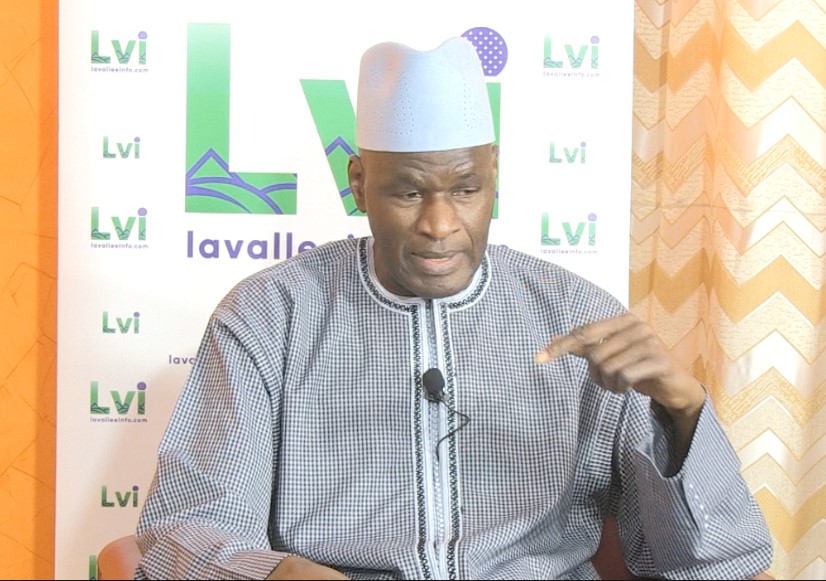
Thierno Lo Denonce L'Opacité Des Fonds Politiques Au Sénégal
Summary
- Thierno Lo, former Minister of Tourism and currently president of the Alliance for Peace and Development (APD), has reignited the debate on political funds in Senegal.
- He emphasizes the need for transparent management of public resources and strict application of laws to prevent abuse of power.
- The debate must now extend to the state's patrimony, including built assets, land, water capture zones, and public markets.
- Thierno Lo demands that public lands transferred to private hands be examined and forced evictions investigated.
What Happened
Le problème viendrait, selon lui, d'hommes utilisant leur position pour obtenir des avantages non prévus par les textes.
Thierno Lo, former Minister of Tourism and currently president of the Alliance for Peace and Development (APD), has reignited the debate on political funds in Senegal by highlighting the need for transparent management of public resources and strict application of laws to prevent abuse of power. His statement comes after Aliou Ngouye Ndiaye's comments sparked controversy, but also relaunched a long-overdue discussion on the topic. The attention surrounding this issue has led Thierno Lo to question the opacity that has surrounded the use of these funds for years. He emphasizes that the President is not the owner of public funds, but rather their custodian, as defined by the Constitution, laws, regulations, and presidential oath. This distinction is crucial in understanding that authorized spending by the government does not automatically become legal.
Legal Context
The debate on political funds must now extend to the state's patrimony. Thierno Lo cites examples such as the built assets of the state, land, water capture zones, and certain public markets. He demands that public lands transferred to private hands be examined, as well as forced evictions that occurred while privileged individuals obtained property titles. In his analysis, he distinguishes this issue from what he calls 'The System', which refers to the rules, procedures, administrative code, control bodies, and mechanisms necessary for state functioning. The problem lies in individuals using their positions to obtain benefits not foreseen by the texts.
Why It Matters
Thierno Lo's position highlights the need for a transparent management of public resources and strict application of laws to prevent abuse of power. He draws parallels between the privileges enjoyed by some individuals and the difficulties faced by students, farmers, street vendors, and parts of the youth population. Thierno Lo emphasizes that Senegal has important instruments at its disposal, such as development banks, textile industries, agricultural machinery factories, cooperatives, ISRA, SODEVA, ONCAD, the National School of Administration (ENA), the École Supérieure d'Économie Appliquée (ESEA), technical high schools, and university. He demands that the management of these assets be examined and responsibilities established in accordance with the law.
Practical Implications
Cette prise de position souligne la nécessité d'une gestion transparente des ressources publiques et d'une application stricte des lois pour éviter l'abus de pouvoir. Les professionnels du droit devraient surveiller les mesures prises par le gouvernement pour mettre en œuvre ces réformes.
Source
Source: Original reporting via Xalima
How does this affect you?
Get an AI analysis of this article grounded in your jurisdictions, practice areas, and any policy documents you've uploaded to Wansom.
Wansom is AI and can make mistakes.