
Thembisile Hani: Water Supply Court Admission Details 57.3 ML Daily Shortfall
Summary
- The Thembisile Hani Local Municipality admits to severe water supply issues, with residents experiencing frequent and prolonged outages.
- A 2021 SAHRC investigation found the municipality in violation of residents' right to basic water access.
- Municipal manager Dumisani Mahlangu's affidavit revealed a daily water shortfall of 57.3 ML, with key bulk suppliers like the City of Tshwane failing to meet contracted volumes.
- The DA has launched a Mpumalanga High Court case to declare a breach of constitutional duty and demand a comprehensive water-delivery plan.
- The municipality attributes the crisis to insufficient bulk supply, ageing infrastructure, theft, population growth, and reduced water sources, while outlining plans for upgrades and new schemes.
Thembisile Hani's Water Crisis Deepens
The severity of the challenge was formally acknowledged in a responding affidavit by municipal manager Dumisani Mahlangu, submitted during a High Court case initiated last year by the Democratic Alliance (DA).
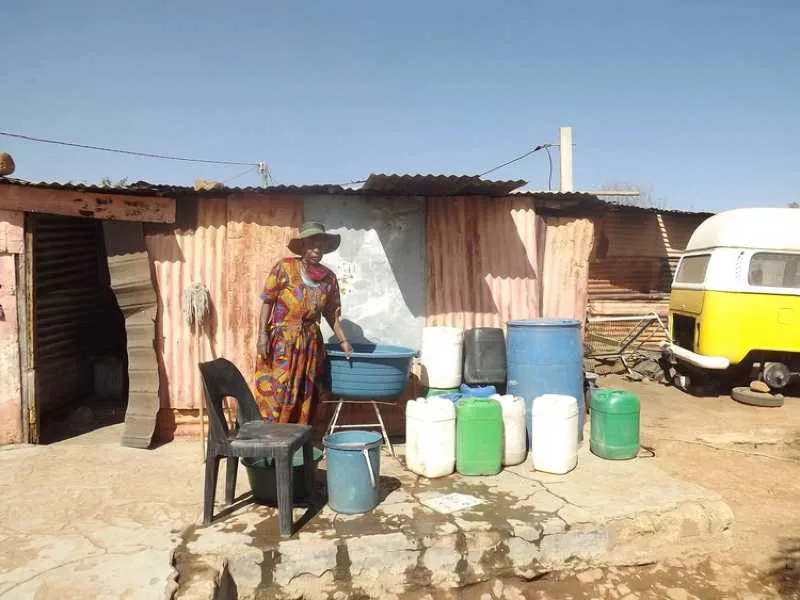
Residents across the Thembisile Hani Local Municipality in Mpumalanga frequently endure prolonged periods without access to running water, with some reporting weekly outages lasting for days. For instance, a resident from Thembalethu village, Hlengiwe Mtsweni, highlighted spending approximately R300 monthly to purchase water from street vendors, while Sphiwe Ntuli of Tweefontein F village noted receiving water only once a week for a mere two hours. This dire situation led the South African Human Rights Commission (SAHRC) to conclude in 2021 that the municipality was failing in its constitutional obligation to provide basic water supply, following an SAHRC right to water investigation.
The severity of the challenge was formally acknowledged in a responding affidavit by municipal manager Dumisani Mahlangu, submitted during a High Court case initiated last year by the Democratic Alliance (DA). Mahlangu's affidavit confirmed a significant decline in both the volume and reliability of the water supply. The municipality, which is ANC-led, lacks sufficient independent water sources and relies on bulk water contracts with other municipalities and water boards. While Rand Water supplies slightly more than its contracted 30 megalitres (ML) daily, the municipality's 2024/25 annual report indicates a daily water demand of 99 ML. Despite contracted bulk sources theoretically providing 51.6 ML per day, the municipality only receives an average of 41.7 ML daily, resulting in a substantial daily shortfall of 57.3 ML, underscoring the critical Thembisile Hani water supply court admission.
Legal Challenges and Intergovernmental Disputes
The persistent water scarcity has prompted legal action, with DA councillor Joseph Sibanyoni approaching the Mpumalanga High Court in Middelburg. Sibanyoni seeks a declaration that the Thembisile Hani Local Municipality has breached its constitutional duty to provide water and an order for the submission of a comprehensive water-delivery plan, detailing infrastructure status, including boreholes and tankers, and a delivery schedule. No court date has been set for this matter. Sibanyoni alleges that most of the municipality's 32 wards lack consistent water, forcing residents to depend on sporadic tanker deliveries, purchased water, or simply going without.
The municipality's legal response, while acknowledging water challenges, denied any constitutional violation, claiming the court case was politically motivated ahead of upcoming local government elections. A significant contributor to the shortfall is the failure of contracted suppliers to meet their obligations. The City of Tshwane, for example, contracted to supply 16.6 ML daily, provides only 0.35 ML. Similarly, the Dr JS Moroka Local Municipality in Mpumalanga, meant to supply 5 ML, delivers a mere 0.02 ML. This disparity highlights a critical City of Tshwane water supply dispute and broader intergovernmental dispute basic services issue.
In 2023, Thembisile Hani Municipality sought SAHRC intervention in a dispute with the City of Tshwane. Following failed mediation, a formal intergovernmental dispute was launched on October 13, 2025. According to Dumisani Mahlangu's water affidavit, no response was received, leading to the dispute's referral to Minister of Cooperative Governance and Traditional Affairs Velenkosini Hlabisa. Tshwane spokesperson Lindela Mashigo confirmed the city's inconsistent supply, attributing it to the Bronkhorstspruit Water Treatment Works (WTW) operating below capacity for years with frequent breakdowns. A contractor is reportedly being appointed to refurbish the works and restore its capacity, while Dr JS Moroka Local Municipality did not respond to inquiries regarding its supply failures.
Municipal Strategy and Future Prospects
Beyond the insufficient bulk water supply, municipal manager Mahlangu identified several other factors exacerbating the water crisis in his affidavit. These include ageing water infrastructure, prevalent theft and vandalism, increased demand due to population growth, and reduced water extraction from existing sources. Despite these challenges, Mahlangu asserted that household access to potable water has expanded, and the municipality has been actively repairing and expanding its borehole network.
The municipality is focusing on several initiatives to address the long-standing issues. These include upgrades to bulk supply infrastructure, efforts to reduce water losses, and the expansion of borehole capacity. The Bundu WTW is currently undergoing upgrades. A significant project, the Loskop Regional Bulk Water Scheme, is anticipated to add 20 ML of water per day by November 2027, although it was originally slated for completion by the end of 2024. Longer-term plans for the Thembisile Hani Local Municipality water supply include securing additional supplies from Rand Water and Magalies Water, aiming to alleviate the severe shortages experienced by its residents.
Practical Implications
This case provides insight into the legal challenges and potential liabilities faced by municipalities regarding constitutional duties for basic service delivery, particularly when inter-municipal dependencies are involved. Lawyers should note the precedent for high court intervention and the complexities of intergovernmental dispute resolution in such matters, advising municipal clients on compliance and risk mitigation strategies.
Source
Source: Original reporting via GroundUp
How does this affect you?
Get an AI analysis of this article grounded in your jurisdictions, practice areas, and any policy documents you've uploaded to Wansom.
Finish Reading the Full Story and the Expert Analysis.
Wansom is AI and can make mistakes.