
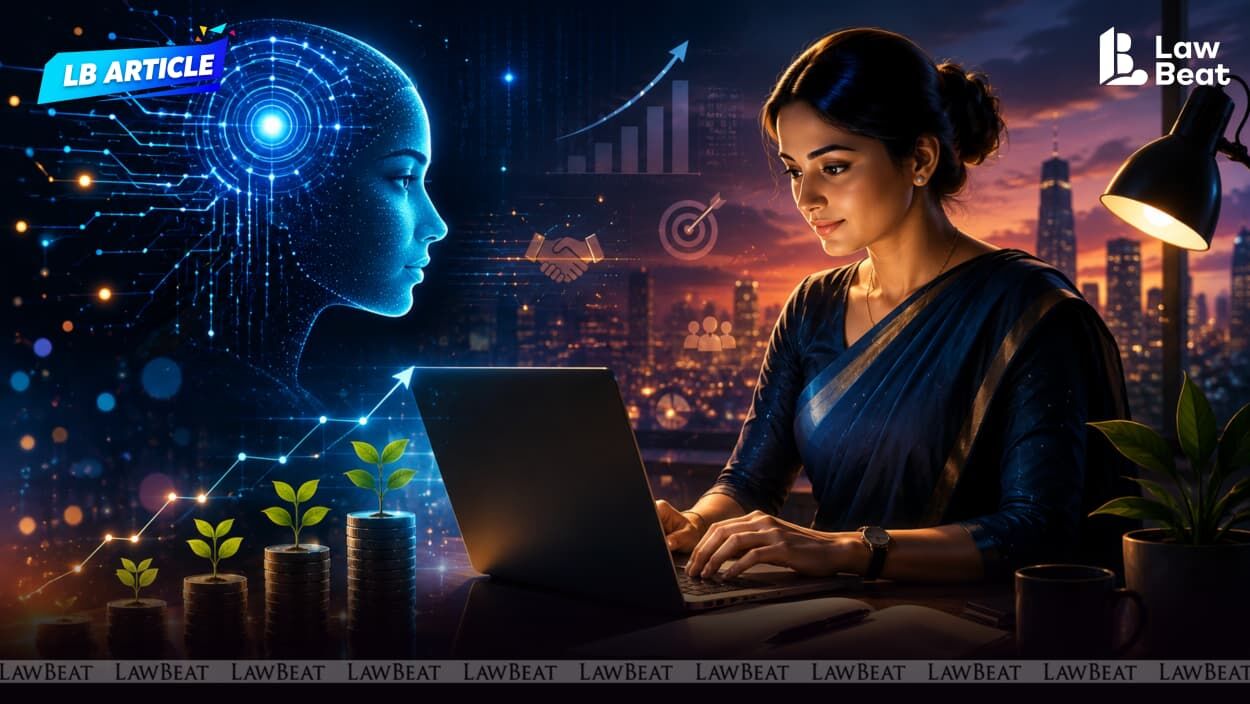
IN: AI's Positive Impact on Gender Equality: Expanding Women's Financial Access
Summary
- AI, when responsibly designed, can significantly expand women's access to credit, entrepreneurship, and flexible work opportunities.
- One billion women globally lack banking access, a problem AI addresses by analyzing mobile payment data for loan eligibility instead of traditional collateral.
- AI-driven hiring algorithms can be adjusted to reduce bias, leading to fairer job selection for women who previously faced discrimination.
- Digital platforms empower women homemakers to run small businesses via smartphones, fostering entrepreneurship.
- The positive impact of AI on gender equality depends entirely on human direction and the implementation of appropriate guidelines.
Reframing AI's Role in Gender Equality
Technology, when guided by human intent and appropriate guidelines, can serve as a powerful tool to advance gender equality in the workplace and beyond.
Artificial intelligence is frequently presented as a potential threat to women's employment, often leading to concerns that the technology could displace jobs, perpetuate discrimination, or exclude women lacking access to smart devices. Indeed, research from the International Labour Organization (ILO) projects that by 2025, women's jobs will be nearly twice as vulnerable to the effects of generative AI compared to men's positions. This perspective, while rooted in valid fears, offers an incomplete and potentially discouraging view of AI's broader impact.
However, a more nuanced examination reveals that AI and digital technologies also hold significant potential to advance gender equality in the workforce. When developed and governed responsibly, these tools can expand women's access to crucial resources such as credit, foster entrepreneurship, facilitate flexible work arrangements, enable fairer hiring practices, and provide essential information. This alternative viewpoint suggests that women are not merely passive recipients or potential victims of technological advancement, but can also be active users, creators of new businesses, and beneficiaries of these innovations.
Expanding Economic Access and Entrepreneurship
Globally, a staggering one billion women remain entirely disconnected from the formal banking sector, lacking both bank accounts and access to credit. This widespread financial exclusion stems not from technological limitations, but from long-standing systemic issues: traditional financial institutions often require collateral like property ownership, extensive formal employment histories, or co-signers—criteria many women worldwide cannot meet. AI, however, is beginning to dismantle these barriers.
Machine learning algorithms can analyze daily transactions, such as mobile payment records, to assess creditworthiness, rather than relying on property ownership. This innovative approach has enabled millions of women who previously could not secure conventional bank loans to now access financing. Furthermore, digital platforms have empowered women homemakers, who might have faced societal disapproval for earning money, to establish and operate small businesses directly from their smartphones, leveraging e-commerce and reselling websites to reach broader markets.
Enhancing Employment Equity and Flexibility
Beyond financial services, AI offers promising avenues for creating more equitable employment opportunities. In hiring processes, algorithms can be adjusted to mitigate biases that often affect human interviewers. Controlled tests have demonstrated that women who previously encountered discrimination during traditional interviews are now being successfully applied for and selected for jobs when AI-driven hiring tools are properly calibrated. This algorithmic debiasing represents a significant step towards a fairer recruitment landscape.
Moreover, digital technologies are facilitating the growth of remote and flexible employment options, which can be particularly beneficial for women seeking to balance professional and personal responsibilities. AI-powered tools also enhance access to vital information—be it financial, agricultural, or medical—through vernacular voice-based AI, ensuring that critical knowledge is accessible to a wider demographic, regardless of literacy levels or language barriers.
The Imperative of Responsible Design
It is crucial to acknowledge that technology itself is not inherently neutral, fair, or universally beneficial. Its positive impact is entirely contingent on how it is designed, deployed, and governed. The examples of AI's beneficial applications for women are not guarantees of widespread positive outcomes, but rather demonstrations of what is possible when human intention guides technological development responsibly. The true potential of AI as a tool to address the gender gap in work and finance hinges on establishing appropriate guidelines and directing its capabilities toward equitable ends.
Ultimately, the debate surrounding gender, technology, and the evolving nature of work requires a comprehensive perspective. Focusing solely on the risks or exclusively on the benefits would present an incomplete picture. A balanced understanding, which recognizes both the challenges and the transformative potential of AI, particularly when designed with gender equality in mind, is essential for harnessing its power to create a more inclusive and equitable future.
Source
How does this affect you?
Get an AI analysis of this article grounded in your jurisdictions, practice areas, and any policy documents you've uploaded to Wansom.
Finish this article free. Just your email for instant unlock.
Wansom is AI and can make mistakes.