
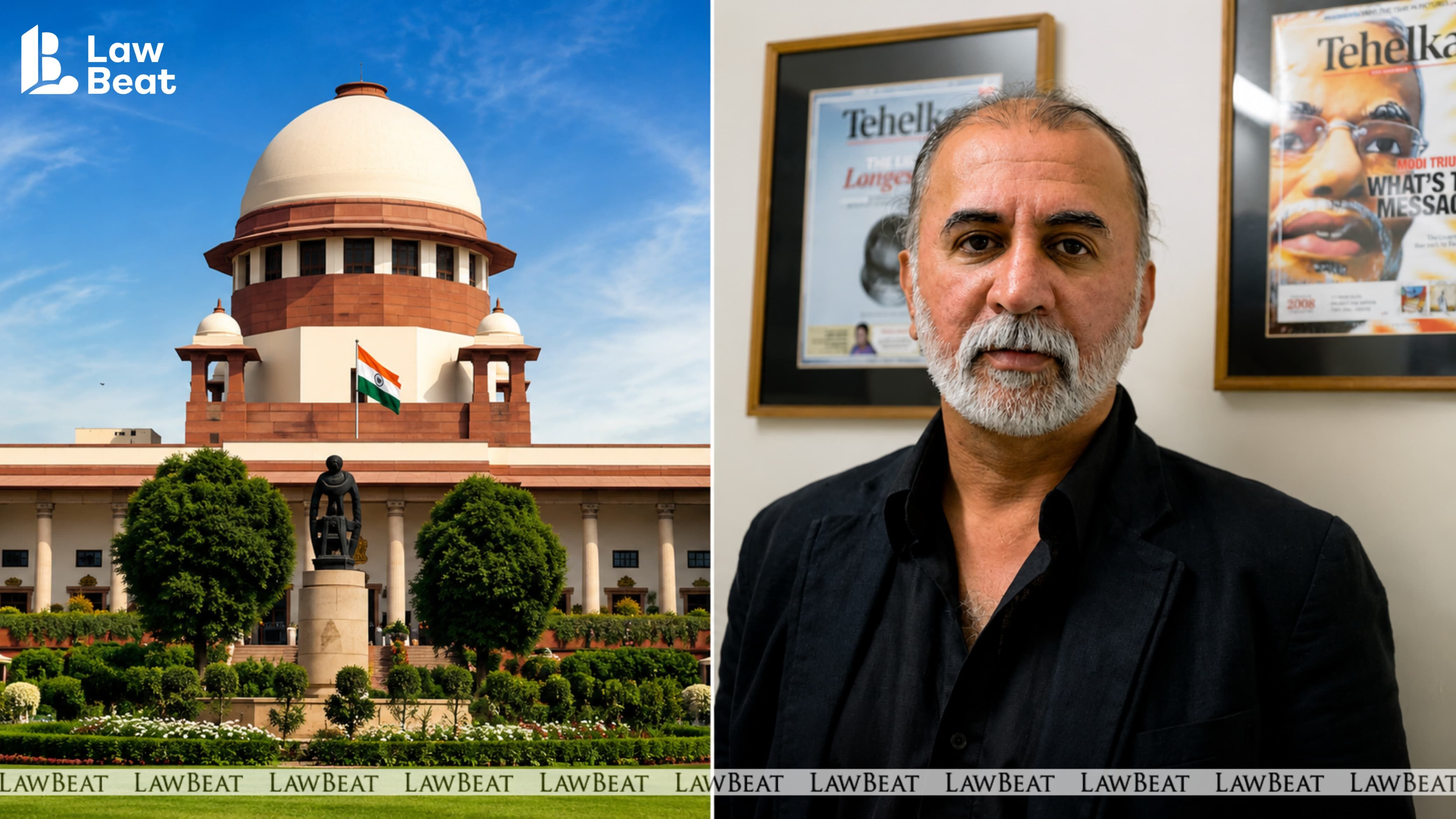
Supreme Court: Tarun Tejpal Sentence Appeal Maintainability Debated
Summary
- Tarun Tejpal has appealed his 10-year rigorous imprisonment sentence to the Supreme Court.
- The Goa government challenged the appeal's maintainability, arguing Tejpal must first surrender or seek exemption.
- Tejpal's counsel contended that the Bombay High Court had granted him four weeks to surrender, making immediate surrender unnecessary.
- The Supreme Court is also considering the Goa government's plea to enhance Tejpal's sentence.
- The case stems from a 2013 sexual assault accusation, with the Bombay High Court overturning a prior acquittal on August 6.
Supreme Court Considers Tarun Tejpal's Sentence Appeal
This case offers critical insight into the Supreme Court's interpretation of surrender requirements for criminal appeals, particularly when a lower court has granted time to surrender.
The Supreme Court recently heard an appeal filed by Tarun Tejpal challenging the 10-year rigorous imprisonment sentence handed down by the Bombay High Court. This sentence was imposed after the High Court overturned his earlier acquittal in the 2013 rape case. The proceedings saw Senior Advocate Kapil Sibal representing Tejpal, while Solicitor General Tushar Mehta appeared on behalf of the Goa government, presenting arguments before a Bench led by Justice Alok Aradhe.
A central point of contention emerged immediately as Solicitor General Mehta questioned the maintainability of Tejpal's appeal. Mehta asserted that for the appeal to proceed, Tejpal was obligated either to provide a certificate confirming his surrender or to formally seek an exemption from the surrender requirement. He presented these as the only two viable options for the appellant.
In response, Senior Advocate Sibal countered Mehta's submission, highlighting that the Bombay High Court itself had granted Tejpal a four-week period to surrender, and this protective order remained in effect. Sibal argued that it would be illogical for Tejpal to surrender first and then seek relief from the Supreme Court when the High Court's order explicitly permitted him to delay surrender until the stipulated period concluded. He further stated that while Tejpal was prepared to surrender and undergo imprisonment if the Supreme Court declined to stay the sentence, he questioned the necessity of surrender as a precondition given the High Court's existing relief. Justice Aradhe ultimately noted that the matter constituted a criminal appeal and indicated that the Court would issue an order, with Sibal requesting the case be listed for August 31.
Legal Arguments on Surrender and Maintainability
The debate over the appeal's maintainability delved into critical aspects of criminal procedure and Supreme Court rules. Solicitor General Tushar Mehta referenced the Supreme Court's precedent in `Mayuram Subramanian Srinivasan v. CBI`, arguing that any suspension of sentence or relief granted by a lower court for a limited duration could only be extended at the discretion of the higher court. He further contended that Section 389 of the Code of Criminal Procedure (CrPC) and Order XXI Rule 13A of the Supreme Court Rules operate independently and must be interpreted on their own terms, suggesting a distinct procedural requirement for the apex court.
Kapil Sibal, representing Tejpal, maintained that his client's plea was a standard criminal appeal, not a bail application, and that the relief previously granted by the High Court continued to be valid. He emphasized that the High Court's directive allowing four weeks to surrender meant that Tejpal was not in immediate breach of any order. Sibal also touched upon the complainant's allegations and their alleged inconsistency with CCTV footage, asserting that justice should prevail.
Mehta interjected to clarify that the matter was not a Special Leave Petition (SLP), implying a different procedural pathway, to which Sibal responded that the proceedings originated from the Court's criminal appellate jurisdiction. This exchange underscored the procedural nuances and the differing interpretations of the legal requirements for an appeal to be heard by the Supreme Court, particularly concerning the timing of surrender.
Background of the 2013 Sexual Assault Case
The current Supreme Court proceedings are the latest development in a case that originated in November 2013. At that time, a junior employee of Tehelka magazine accused Tarun Tejpal, the publication's founder, of sexually assaulting her inside a hotel elevator at a Goa resort during the annual Thinkfest event. Tejpal was subsequently prosecuted under various provisions of the Indian Penal Code.
After a lengthy trial, Tejpal was acquitted by the trial court in 2021. However, this acquittal was later overturned by the Goa Bench of the Bombay High Court on August 6. The High Court found Tejpal guilty and sentenced him to 10 years of rigorous imprisonment. Alongside the conviction and sentence, the High Court also directed the 63-year-old journalist to surrender to the Goa Police within a four-week timeframe.
In a related development, the Goa government has also approached the Supreme Court with its own petition. This separate plea seeks an enhancement of the 10-year rigorous imprisonment sentence that was awarded to Tejpal by the Bombay High Court, indicating a desire for a more severe penalty in the 2013 sexual assault case.
Significance for Criminal Appeals and Surrender Norms
The Supreme Court's eventual decision on the Tarun Tejpal Supreme Court sentence appeal maintainability holds significant implications for the interpretation of surrender requirements in criminal appeals. This case offers critical insight into the Supreme Court's interpretation of surrender requirements for criminal appeals, particularly when a lower court has granted time to surrender. The arguments presented by both sides highlight a crucial legal tension: whether a higher court's procedural requirements for hearing an appeal supersede or are influenced by a lower court's granted grace period for surrender.
Legal practitioners will closely observe how the Supreme Court reconciles the provisions of Section 389 CrPC with its own procedural rules, especially when a High Court has already provided a window for an appellant to surrender. The outcome will clarify the precise moment an appellant must comply with surrender mandates to ensure their appeal is deemed maintainable at the apex court level, setting a precedent for similar situations in the future.
Practical Implications
This case offers critical insight into the Supreme Court's interpretation of surrender requirements for criminal appeals, particularly when a lower court has granted time to surrender. Lawyers should note the arguments regarding the maintainability of appeals and the application of Section 389 CrPC concerning sentence suspension.
Source
How does this affect you?
Get an AI analysis of this article grounded in your jurisdictions, practice areas, and any policy documents you've uploaded to Wansom.
Wansom is AI and can make mistakes.