
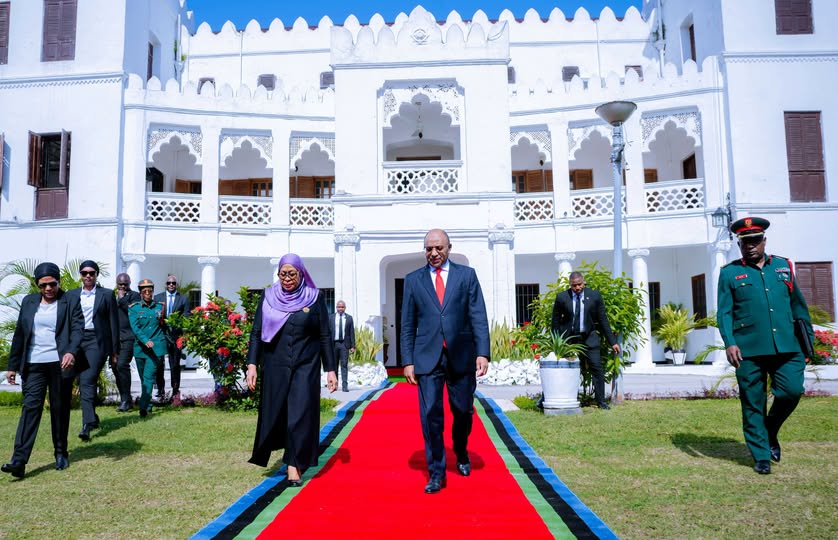
Zanzibar Mainland Union Grievances Resolution: President Hassan's Push
Summary
- President Samia Suluhu Hassan is marking one year into her second term, with a focus on resolving Union grievances.
- Significant progress is being made through dialogue, negotiated agreements, and economic cooperation between Zanzibar and Mainland Tanzania.
- Key issues under discussion include the movement of goods, business taxation, and electricity costs.
- These efforts aim to strengthen relations and foster greater economic integration within the Tanzania Union.
A Period of Renewed Focus
The progress achieved in resolving these specific grievances carries profound implications for the long-term stability and economic growth of the Tanzania Union.
As President Dr. Samia Suluhu Hassan commemorates the one-year mark of her second term in office, the political landscape of Tanzania is notably characterized by a dedicated push to address and resolve long-standing Union grievances between Zanzibar and Mainland Tanzania. This period signifies a strategic commitment from the highest levels of government to engage with complex historical issues that have, at times, strained the relationship between the two constituent parts of the Union. The administration's proactive stance aims to foster greater cohesion and mutual understanding.
The current environment presents a critical opportunity to thoroughly assess the efficacy of various approaches, including sustained dialogue, the negotiation of specific agreements, and enhanced economic cooperation, in shaping the evolving dynamics of this crucial relationship. These methods are being deployed to systematically dismantle barriers and build bridges, ensuring that the Union operates on principles of fairness and shared prosperity. The outcomes of these ongoing efforts are anticipated to have a lasting impact on the governance and economic integration of the nation.
Addressing Core Economic and Regulatory Challenges
Central to the ongoing discussions are several pivotal issues that directly impact the economic vitality and regulatory environment across the Union. A significant area of focus is the movement of goods between Zanzibar and the Mainland. The efficiency and regulatory framework governing this inter-island trade are crucial for both Zanzibari businesses seeking access to the larger Mainland market and Mainland enterprises looking to engage with Zanzibar's unique economy. Resolving bottlenecks and inconsistencies in this domain is paramount for fostering seamless commercial activity.
Furthermore, the taxation of businesses represents another critical grievance being addressed. Discrepancies in tax policies or administrative procedures between the two entities can create complexities for investors and entrepreneurs, potentially hindering economic development and fair competition. Efforts to harmonize or clarify these taxation frameworks are essential for creating a predictable and attractive business climate. Alongside these, the costs associated with electricity supply are under scrutiny, given their direct impact on operational expenses for industries and the daily lives of citizens in both Zanzibar and the Mainland, highlighting the need for equitable and sustainable energy solutions.
Implications for Union Stability and Growth
The progress achieved in resolving these specific grievances carries profound implications for the long-term stability and economic growth of the Tanzania Union. Successful negotiation and implementation of agreements concerning the movement of goods, business taxation, and electricity costs are expected to cultivate a more robust, transparent, and equitable operational environment for all stakeholders. This strategic engagement, driven by dialogue and a commitment to economic cooperation, is designed to reinforce the foundational principles of the Union.
The current phase, coinciding with President Hassan's second term, underscores a renewed determination to tackle historical challenges through practical and mutually beneficial solutions. The resolutions emerging from these discussions are not merely about rectifying past issues; they are poised to establish a resilient framework for future collaboration, potentially reshaping the economic and regulatory landscape for businesses and citizens across the entire Union, thereby strengthening national unity and collective prosperity.
Practical Implications
Lawyers and compliance officers should closely monitor ongoing dialogue and negotiated agreements between Zanzibar and Mainland Tanzania, particularly concerning the movement of goods, taxation, and electricity costs, as these discussions may lead to significant regulatory changes impacting inter-island business operations and compliance requirements for clients.
Source
How does this affect you?
Get an AI analysis of this article grounded in your jurisdictions, practice areas, and any policy documents you've uploaded to Wansom.
Wansom is AI and can make mistakes.