
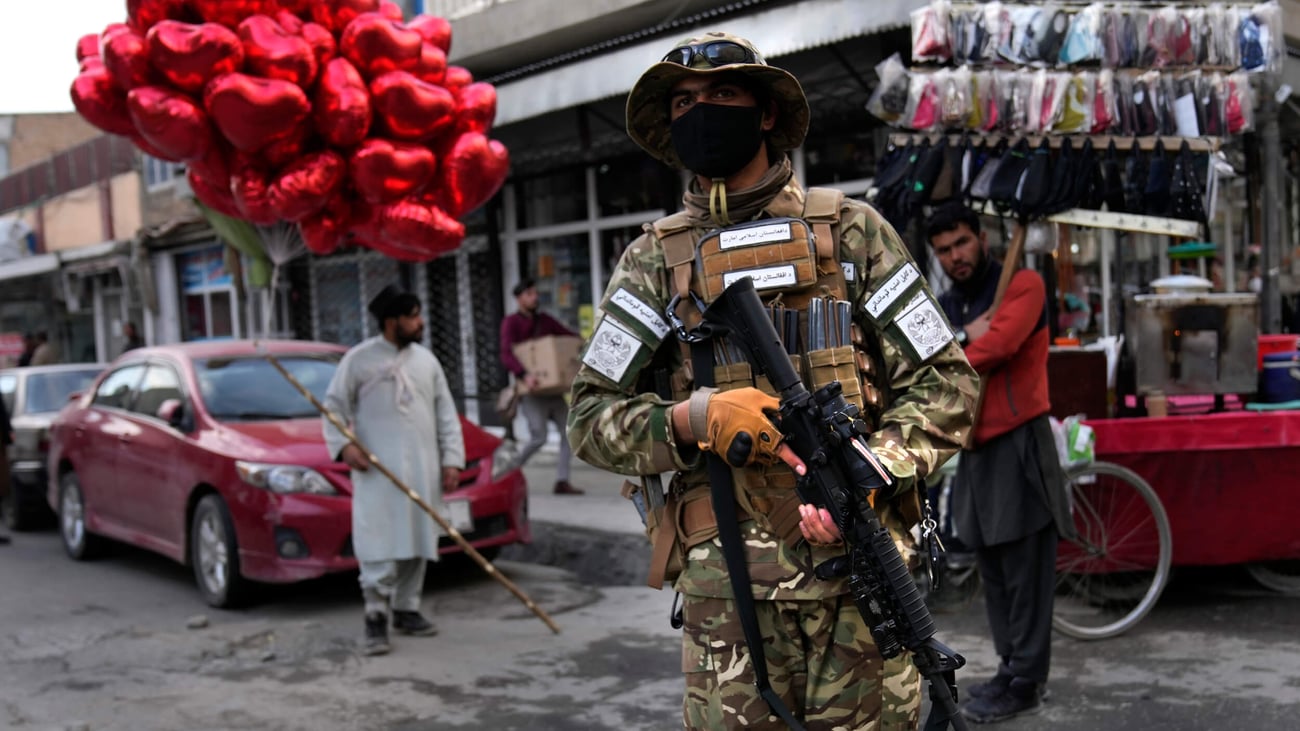
Taliban Afghanistan: Enacts New Protest Ban Law, Extends Detention
Summary
- The Taliban government has implemented a new police law that bans all forms of protest across Afghanistan.
- Human Rights Watch criticized the law as a "ruthless effort to suppress all dissent" by the authorities.
- The legislation extends the period for detention without charge from three days to 10 days, or longer with a court order.
- Amnesty International labeled the new law as a "sweeping assault on human rights," highlighting the protest ban as particularly egregious.
- The law also permits police to use force to compel repentance from suspects and allows officers to use anger during interactions.
New Restrictions on Dissent
This comprehensive legislation, which includes a sweeping ban on all forms of public demonstration, signifies a profound escalation in the Taliban's efforts to quash any opposition.
The Taliban government has enacted a new police law that explicitly prohibits all forms of public demonstration across Afghanistan, drawing sharp condemnation from international human rights organizations. This 84-page legislation, published by the Justice Ministry, outlines significant changes to law enforcement practices nationwide, with a specific provision stating that "all types of protests are banned." Human Rights Watch (HRW) swiftly criticized the measure, characterizing it as a "ruthless effort to suppress all dissent" by the ruling authorities.
Elaine Pearson, HRW's Asia director, emphasized that this move represents "another step in the Taliban’s ruthless effort to suppress all dissent," asserting that the Taliban authorities fear any opposition and are consequently escalating their repressive tactics. The announcement of this protest ban was made public this month, though the Afghan government has not responded to requests for comment regarding the new regulations.
Broader Legal Changes and Human Rights Concerns
Beyond the prohibition on demonstrations, the new police law introduces several other provisions that raise significant human rights concerns. Notably, the legislation extends the permissible period for detention without charge from three days to 10 days, with the possibility of further extension through a court order. This change comes after the intelligence agency recently detained two United Nations employees for 11 days without providing any reason for their apprehension.
The comprehensive legislation also addresses the use of force by police against prisoners. While it stipulates that officers cannot use weapons such as sticks or wires to strike detainees without a court order, it simultaneously permits the use of force to compel a suspect to repent. Furthermore, the law explicitly allows officers to use anger during interrogations. These provisions are particularly alarming in a country where corporal punishment is already a common practice for a range of offenses. Amnesty International has described the entire police law as "another sweeping assault on human rights in Afghanistan," identifying the protest ban as one of its "most egregious provisions."
Implications for Civil Liberties
This comprehensive legislation, which includes a sweeping ban on all forms of public demonstration, signifies a profound escalation in the Taliban's efforts to quash any opposition. While protests have been infrequent during the Taliban administration's five years in power, the new law formalizes and intensifies the suppression of dissent. The move follows a tragic incident in June where, according to a group of U.N. experts, at least two individuals were killed when security forces allegedly opened fire on a women's rights protest in the western city of Herat.
The formalization of a protest ban, coupled with extended detention periods and ambiguous rules on the use of force, underscores a significant deterioration of civil liberties and due process in Afghanistan. These Afghanistan police law changes contribute to a climate of fear and further restrict the already limited freedoms of expression and assembly, exacerbating concerns about Afghanistan human rights violations under the current regime.
Practical Implications
This development signals a significant deterioration of civil liberties and due process in Afghanistan, necessitating heightened due diligence for any businesses or organizations with operations, investments, or personnel in the country, particularly regarding human rights compliance and risk assessments for potential arbitrary detention or restrictions on freedom of expression.
Source
Source: Based on reporting by AFP.
How does this affect you?
Get an AI analysis of this article grounded in your jurisdictions, practice areas, and any policy documents you've uploaded to Wansom.
Finish this article free. Just your email for instant unlock.
Wansom is AI and can make mistakes.