
Justice Thomas: Farmwork Precedent Views Shaped Judicial Philosophy
Summary
- U.S. Supreme Court Justice Clarence Thomas stated that his childhood farmwork experiences shaped his views on legal precedents.
- His remarks were made during an April 2026 appearance in Texas, later featured on a podcast hosted by U.S. Senator Ted Cruz.
- Justice Thomas, the Court's most senior and conservative member, has frequently urged the Supreme Court to reconsider prior decisions.
- He used an analogy of a 'crooked row' in plowing to illustrate his belief in correcting flawed legal rulings rather than perpetuating them.
- This perspective, reported by Bloomberg Law, highlights his judicial philosophy on stare decisis and the potential for re-evaluating established law.
What Happened
His question implies a strong inclination toward rectifying such errors rather than perpetuating them simply for the sake of consistency.
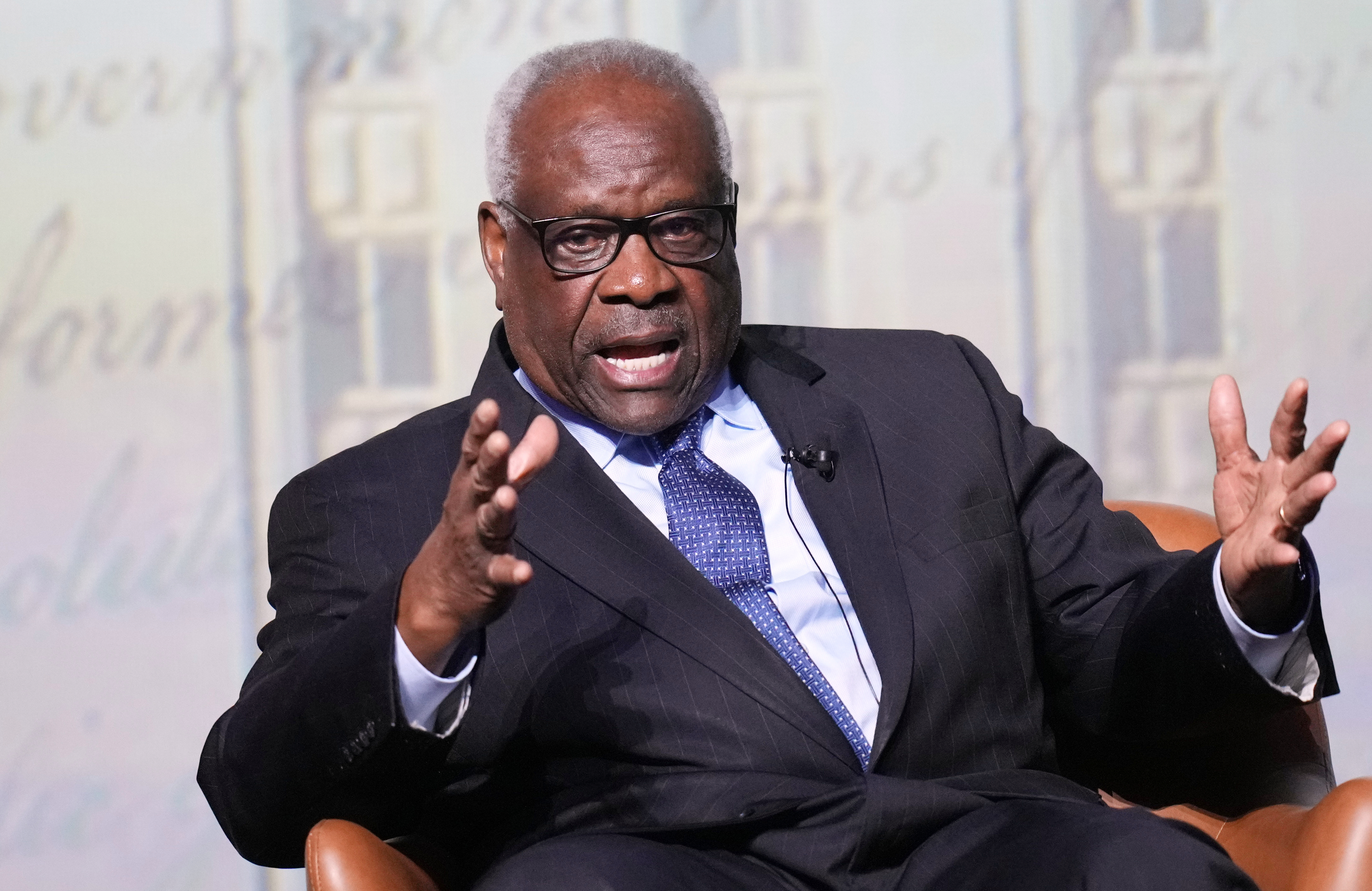
U.S. Supreme Court Justice Clarence Thomas recently offered a unique insight into the origins of his judicial philosophy regarding legal precedent. During an April 2026 appearance in Texas, later featured on a podcast hosted by U.S. Senator Ted Cruz, R-Texas, Justice Thomas revealed that his early experiences with farmwork profoundly shaped his approach to established legal decisions. This candid discussion, reported by Bloomberg Law, highlights a deeply personal foundation for his long-held views on the reconsideration of Supreme Court precedent.
Justice Thomas, who was raised by his grandparents in rural Georgia, explained that the practical lessons learned from working the land guided his thinking throughout his 35 years on the nation's highest court. At 78 years old, his perspective on the doctrine of stare decisis — the principle of adhering to prior rulings — is particularly influential, given his prominent role and tenure as the Court's most senior and conservative member. His remarks suggest a direct correlation between the meticulous nature of agricultural labor and his judicial inclination to scrutinize and potentially correct past legal interpretations.
Judicial Philosophy on Precedent
Justice Thomas has consistently distinguished himself among modern justices for his pronounced willingness to advocate for the Supreme Court's reconsideration of its prior decisions. According to Bloomberg Law, he has urged the re-evaluation of established precedents perhaps more frequently than any other contemporary member of the Court. This stance is a cornerstone of his judicial philosophy, signaling a belief that adherence to precedent should not preclude correcting what he perceives as fundamental errors in law.
His long tenure on the Supreme Court has provided ample opportunity for him to articulate and apply this philosophy. The interview with Senator Cruz underscored that this isn't merely an abstract legal theory for Justice Thomas, but a deeply ingrained principle informed by his formative years. His approach to Clarence Thomas stare decisis suggests a dynamic view of legal interpretation, where the pursuit of accuracy and constitutional fidelity can outweigh the desire for strict continuity with past rulings.
The Farmwork Analogy
To illustrate his point, Justice Thomas recounted a specific lesson from his childhood, referencing his grandfather's instruction on properly plowing a field. This agricultural metaphor serves as a powerful analogy for his judicial reasoning. He posed a rhetorical question that encapsulates his perspective on legal errors: “What if that first row is crooked? Do you keep going, pretending that it’s straight? Or do you go back and make it straight?”
This vivid imagery directly translates to his Justice Thomas farmwork precedent views. For Justice Thomas, a 'crooked row' in legal terms represents a flawed or incorrect prior decision. His question implies a strong inclination toward rectifying such errors rather than perpetuating them simply for the sake of consistency. This personal anecdote provides a clear window into the practical, results-oriented mindset that underpins Justice Thomas's judicial philosophy.
Why It Matters
Justice Thomas's articulation of his farmwork-inspired views on precedent holds significant weight for the legal community. As the Supreme Court's most senior and conservative justice, his willingness to openly discuss the potential for revisiting established law signals a continued openness to fundamental shifts in jurisprudence. Lawyers strategizing cases that challenge existing legal frameworks should take note of this perspective, as it indicates a potential pathway for significant legal evolution.
His remarks, made during an interview with U.S. Senator Ted Cruz and covered by Bloomberg Law, reinforce the understanding that Justice Thomas's judicial philosophy is not static. The connection he draws between the practicalities of farmwork and the complex doctrine of stare decisis offers a unique lens through which to understand his consistent advocacy for Supreme Court precedent reconsideration, underscoring the deeply personal roots of his approach to legal interpretation.
Practical Implications
This article offers insight into Justice Thomas's judicial philosophy on stare decisis, signaling a willingness to reconsider established precedents. Lawyers should note this perspective when strategizing cases that challenge existing legal frameworks, as it indicates a potential for significant shifts in Supreme Court jurisprudence.
Source
How does this affect you?
Get an AI analysis of this article grounded in your jurisdictions, practice areas, and any policy documents you've uploaded to Wansom.
Finish this article free. Just your email for instant unlock.
Wansom is AI and can make mistakes.