
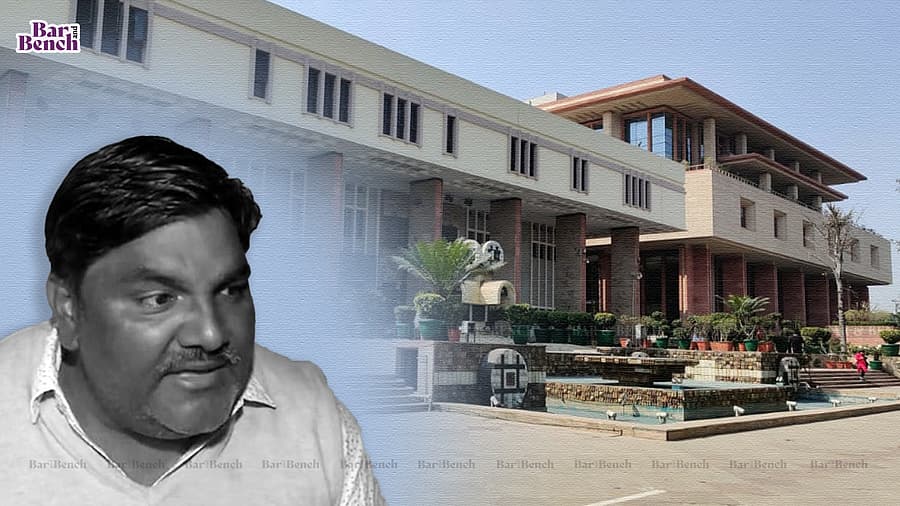
Delhi High Court: Issues Notice On Tahir Hussain Appeal In Ankit Sharma Murder
Summary
- The Delhi High Court has sought a response from Delhi Police on former AAP councillor Tahir Hussain's appeal against his life sentence.
- Hussain was convicted for the murder of IB officer Ankit Sharma during the 2020 Delhi Riots.
- Justices Prathiba M Singh and Vikas Mahajan issued notice for the appeal, which is scheduled for December 2.
- The Karkardooma Court had convicted Hussain and four others on July 13 under multiple IPC sections, including murder.
- Ankit Sharma's father, Ravinder Kumar, filed the FIR, accusing Hussain and associates of violence from his office.
High Court Review Initiated
The Delhi High Court's decision to hear the Tahir Hussain life sentence appeal in the Ankit Sharma murder case Delhi Riots underscores the ongoing legal scrutiny surrounding the 2020 communal violence.
The Delhi High Court has formally requested a response from the Delhi Police regarding an appeal lodged by former Aam Aadmi Party (AAP) councillor Tahir Hussain. This legal challenge targets his conviction and the life sentence imposed for the murder of Intelligence Bureau (IB) officer Ankit Sharma, an incident that occurred amidst the widespread Delhi Riots of 2020. A division bench, comprising Justices Prathiba M Singh and Vikas Mahajan, issued a notice to the police concerning Hussain's appeal, which seeks to overturn the trial court's original judgment.
The High Court has scheduled the next hearing for December 2. On this date, Hussain's appeal will be heard concurrently with similar appeals filed by other individuals who were also convicted in connection with the same case. The tragic events unfolded on February 25, 2020, when Ankit Sharma disappeared as the national capital was gripped by communal unrest. His father, Ravinder Kumar, filed the First Information Report (FIR) related to his son's death the following day.
In his complaint, Ravinder Kumar specifically accused Tahir Hussain, who was then a councillor, and his associates. Kumar alleged that they were involved in pelting stones, deploying petrol bombs, and firing from Hussain's office during the riots. The body of the IB officer was subsequently discovered in a nearby drain, an event that solidified Ravinder Kumar's suspicions against Hussain and his alleged accomplices.
The Trial Court's Verdict
The Karkardooma Court delivered its verdict on July 13, finding Tahir Hussain guilty of Ankit Sharma's murder. Alongside Hussain, four other individuals—Nazir, Asim, Javed, and Anas—were also convicted in the case. The trial court held these five individuals responsible for various offenses under the Indian Penal Code (IPC).
Specifically, they were found guilty under Section 302 for murder, Section 188 for disobedience to an order promulgated by a public servant, and Section 153A for promoting enmity between different groups. Further charges included Section 147 for rioting, Section 148 for rioting armed with a deadly weapon, and Section 149 for being part of an unlawful assembly. The convictions also encompassed Section 365, pertaining to kidnapping or abducting with the intent to secretly and wrongfully confine a person.
Significance of the Appeal
The Delhi High Court's decision to hear the Tahir Hussain life sentence appeal in the Ankit Sharma murder case Delhi Riots underscores the ongoing legal scrutiny surrounding the 2020 communal violence. This high-profile appeal, involving a former public official and the death of an Intelligence Bureau officer, is poised to draw considerable attention to how the Delhi High Court reviews convictions stemming from complex riot-related incidents. The proceedings will meticulously examine the evidence presented at trial, the procedural adherence, and the appropriateness of the sentencing, particularly concerning the application of Sections 302, 188, and 153A IPC.
The involvement of Justices Prathiba M Singh and Vikas Mahajan in this Delhi High Court Tahir Hussain conviction review highlights the judiciary's role in ensuring justice in cases that have significant public and social implications. The Karkardooma Court Tahir Hussain conviction, now under appellate review, represents a critical juncture for all parties involved. The outcome of this appeal could offer important precedents for future cases arising from the Delhi Riots, influencing how similar criminal matters are argued and adjudicated.
Practical Implications
Criminal defense lawyers and prosecutors in India should monitor this appeal for insights into how the Delhi High Court reviews convictions in high-profile, riot-related murder cases, as it could influence future arguments regarding evidence, procedure, and sentencing in similar complex criminal matters.
Source
How does this affect you?
Get an AI analysis of this article grounded in your jurisdictions, practice areas, and any policy documents you've uploaded to Wansom.
Finish Reading the Full Story and the Expert Analysis.
Wansom is AI and can make mistakes.