
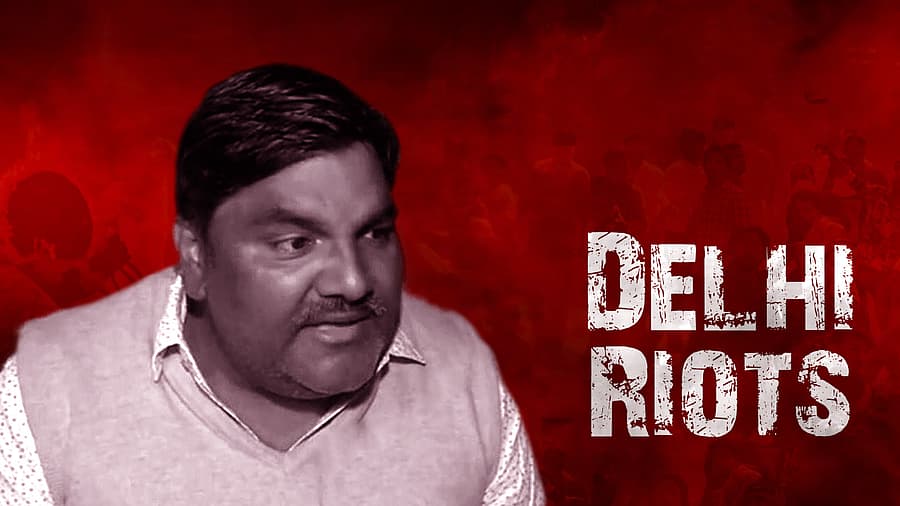
Tahir Hussain Ankit Sharma Murder Appeal Delhi HC: Conviction Challenged
Summary
- Former AAP councillor Tahir Hussain has appealed his conviction and life sentence for the murder of IB officer Ankit Sharma during the 2020 Delhi Riots.
- The appeal, filed in the Delhi High Court, alleges the investigation was tainted from the outset and aimed to implicate him to satisfy public anger.
- Specific claims include an ante-dated FIR, delayed material investigation until after his arrest, planted witnesses, and manipulated genuine eyewitness statements.
- The original FIR was lodged by Ankit Sharma's father, Ravinder Kumar, who accused Hussain and his associates of violence during CAA protests.
- Hussain was convicted by Additional Sessions Judge Parveen Singh of the Karkardooma Court on July 13.
High Court Challenge
Central to Tahir Hussain's appeal is the assertion that the investigation leading to his conviction was fundamentally flawed and compromised from its inception.
Former Aam Aadmi Party (AAP) councillor Tahir Hussain has formally lodged an appeal with the Delhi High Court, seeking to overturn his conviction and life sentence. The conviction stems from the murder of Intelligence Bureau (IB) officer Ankit Sharma, an incident that occurred amidst the widespread Delhi Riots of 2020. This significant legal challenge, known as the Tahir Hussain Ankit Sharma murder appeal Delhi HC, is anticipated to be heard by a division bench of the High Court in the coming week, marking a crucial development in the high-profile case.
Hussain's legal team is presenting a robust challenge to the verdict delivered by Additional Sessions Judge Parveen Singh of the Karkardooma Court, which found him guilty in the Ankit Sharma murder case Delhi HC. The appeal represents a critical juncture in the ongoing legal proceedings surrounding the tragic events of the 2020 riots, bringing the Tahir Hussain conviction challenge Delhi High Court into sharp focus. The outcome could significantly influence arguments in other cases involving allegations of procedural irregularities or public pressure, making it a closely watched criminal appeal.
Allegations of a Tainted Probe
Central to Tahir Hussain's appeal is the assertion that the investigation leading to his conviction was fundamentally flawed and compromised from its inception. He contends that the entire process was orchestrated with the specific intent of implicating him, primarily to appease public outrage following the Delhi Riots 2020 IB officer murder appeal. This claim of a criminal appeal tainted investigation Delhi forms a cornerstone of his defense, suggesting a deliberate manipulation of the legal process rather than an impartial search for truth.
The appeal document meticulously details several serious procedural irregularities. It alleges that the First Information Report (FIR) was both backdated and improperly timed, suggesting a deliberate manipulation of initial records to fit a predetermined narrative. Furthermore, Hussain's legal submission states that no substantive investigative work was conducted until March 6, 2020, a date notably after his arrest in an unrelated case, raising questions about the thoroughness and impartiality of the initial probe. The defense also claims that witnesses were fabricated, genuine eyewitness statements were altered to suit the prosecution's case, and crucially, the individuals truly responsible for Ankit Sharma's death have not been apprehended or brought to justice, pointing to a potentially incomplete investigation.
Background of the Case
The charges against Tahir Hussain originated from an FIR filed on February 26, 2020, by Ravinder Kumar, the father of the deceased IB officer, Ankit Sharma. Kumar's complaint detailed the violent unrest that erupted during protests against the Citizenship Amendment Act (CAA) at Chand Bagh Pulia. In his statement, Ravinder Kumar specifically accused then-councillor Tahir Hussain and his associates of engaging in acts of violence, including stone-pelting, the deployment of petrol bombs, and firing from Hussain's office premises, directly linking him to the escalating conflict.
Ankit Sharma was reported missing on February 25, 2020, and his body was subsequently discovered in a nearby drain. This grim discovery led Ravinder Kumar to suspect Hussain and his associates were responsible for his son's death, prompting the formal complaint. Following a comprehensive trial, Additional Sessions Judge (ASJ) Parveen Singh of the Karkardooma Court ultimately delivered the conviction against Tahir Hussain on July 13, finding him guilty of the murder. This Karkardooma Court Tahir Hussain conviction is now the subject of the ongoing challenge in the Delhi High Court, where his legal team seeks to demonstrate the alleged flaws in the original investigation and trial.
Practical Implications
Criminal defense lawyers should monitor the Delhi High Court's proceedings in this high-profile appeal for potential precedents regarding the standard of review for convictions based on contested evidence, allegations of tainted investigations, and manipulated witness statements. The outcome could influence arguments in other cases involving procedural irregularities or public pressure.
Source
How does this affect you?
Get an AI analysis of this article grounded in your jurisdictions, practice areas, and any policy documents you've uploaded to Wansom.
Wansom is AI and can make mistakes.