
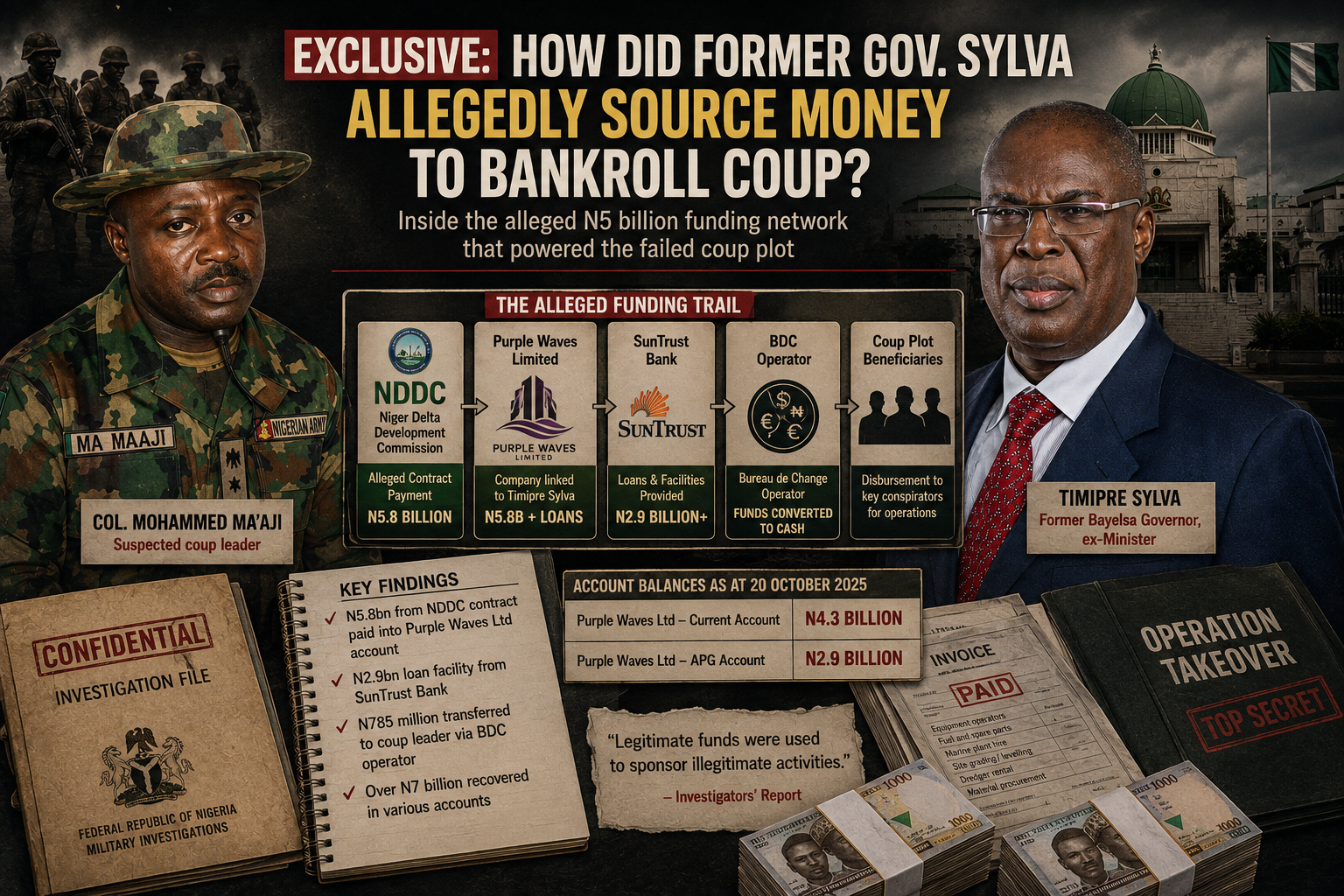
Bayelsa State Governor Sylva: Alleged Coup Funding Investigation NG
Summary
- Former Bayelsa State Governor Sylva allegedly raised funds for the failed coup against President Tinubu's administration.
- The investigation raises concerns about potential breaches of campaign finance regulations and anti-corruption laws in Nigeria.
- If proven true, this could have significant implications for those involved and highlight the need for greater transparency and accountability in Nigerian politics.
What Happened
According to sources close to the investigation, Sylva allegedly used his network of connections and wealth to mobilize significant resources for the plot.
In a shocking revelation, investigators have uncovered evidence suggesting that former Bayelsa State Governor Sylva was involved in raising funds for the failed coup against President Tinubu's administration. According to sources close to the investigation, Sylva allegedly used his network of connections and wealth to mobilize significant resources for the plot. The exact amount of money raised by Sylva remains unclear, but investigators believe it was substantial enough to significantly impact the outcome of the attempted coup.
The failed coup, which occurred last year, was a major security breach that left many Nigerians concerned about the stability of the country's democracy. While the plot ultimately failed, the involvement of a former governor in such a scheme raises serious questions about the role of politics and corruption in Nigeria's governance system.
Legal Context
Nigeria's campaign finance regulations are designed to prevent the misuse of funds for electoral purposes. However, the alleged involvement of Sylva in raising money for the failed coup raises concerns about potential breaches of these laws. If proven true, this could have significant implications for anti-corruption efforts in Nigeria and highlight the need for stricter enforcement of campaign finance regulations. The investigation into Sylva's activities is ongoing, but the revelation has already sparked calls for greater transparency and accountability in Nigerian politics.
The case also underscores the importance of compliance with anti-money laundering laws in Nigeria. As the country continues to grapple with issues related to corruption and governance, it is essential that those involved in raising funds for political purposes do so within the bounds of the law. The consequences of non-compliance can be severe, including fines, penalties, and even imprisonment.
Why It Matters
The alleged involvement of Sylva in the failed coup has far-reaching implications for Nigeria's democracy and governance system. If proven true, it could indicate a breach of campaign finance regulations or other money laundering schemes, which would have significant consequences for those involved. The case also highlights the need for greater transparency and accountability in Nigerian politics, as well as stricter enforcement of anti-corruption laws.
Lawyers and compliance officers should take note of this development, as it may indicate a potential breach of campaign finance regulations or other money laundering schemes. This could have significant implications for those involved and underscores the importance of compliance with anti-money laundering laws in Nigeria.
Practical Implications
Lawyers and compliance officers should watch for potential implications on anti-corruption laws, as this development may indicate a breach of campaign finance regulations or other money laundering schemes.
Source
How does this affect your business?
Get an AI analysis of this article grounded in your jurisdictions, practice areas, and any policy documents you've uploaded to Wansom.
Wansom is AI and can make mistakes.