
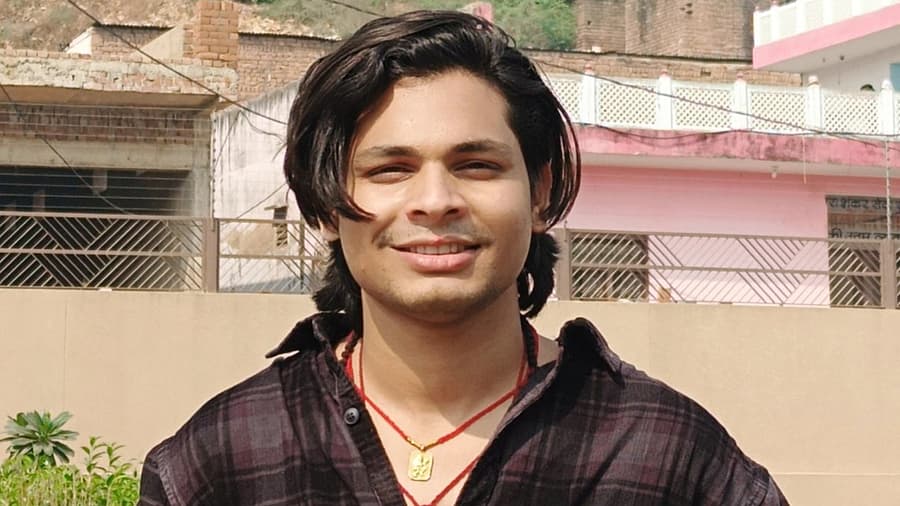
Swatantra Bhardwaj: Political Arrest Claim Delhi Made in Bail Plea
Summary
- Right-wing influencer Swatantra Bhardwaj claims his arrest by Delhi Police was politically motivated.
- Bhardwaj is accused of assaulting a student-activist's father during Cockroach Janta Party protests in July.
- His counsel presented video evidence to a Delhi court, alleging the complainant attacked Bhardwaj, but police took no action.
- Bhardwaj was initially arrested under the SC/ST Act, with a POCSO FIR registered against him only after his September 4 arrest.
- The case involves a bail application hearing before Additional Sessions Judge Saurabh Pratap Singh Laler.
What Happened
His legal counsel, Umesh Sharma, presented a contrasting narrative, arguing that it was the complainant who initiated the attack against Bhardwaj, rather than the other way around.
Right-wing influencer Swatantra Bhardwaj recently asserted before a Delhi court that his arrest by the Delhi Police was politically motivated. Bhardwaj, who is currently incarcerated, stands accused of assaulting the father of a student-activist during protests organized by the Cockroach Janta Party (CJP) at Jantar Mantar in July. His legal counsel, Umesh Sharma, presented a contrasting narrative, arguing that it was the complainant who initiated the attack against Bhardwaj, rather than the other way around.
During the proceedings, Sharma informed Additional Sessions Judge (ASJ) Saurabh Pratap Singh Laler that a video exists which clearly depicts the complainant assaulting Bhardwaj, causing him to fall. Despite this alleged visual evidence, the Delhi Police has reportedly taken no action against the complainant in connection with the incident. This claim forms a central pillar of Bhardwaj's defense, suggesting a biased approach by law enforcement in the handling of the case.
Legal Context and Arrest Timeline
The Delhi court was conducting an in-camera hearing for Swatantra Bhardwaj's bail application when these assertions were made. Bhardwaj's legal representative detailed the sequence of events leading to his client's incarceration. Initially, Bhardwaj was arrested under an FIR registered pursuant to the provisions of the Scheduled Castes and Scheduled Tribes (Prevention of Atrocities) Act, commonly known as the SC/ST Act. Subsequently, a separate First Information Report (FIR) was lodged against him under the Protection of Children from Sexual Offences (POCSO) Act.
Sharma further elaborated on the timeline of police engagement, noting that a notice for questioning was issued to Bhardwaj on June 27, to which he complied by appearing on June 29. Following this initial questioning, Bhardwaj was permitted to leave. However, his counsel contended that after certain "political developments," Bhardwaj was arrested on September 4. Critically, the FIR under the POCSO Act was registered only *after* his arrest, a point highlighted by his defense as potentially significant in the context of the alleged political motivations behind the action.
Challenging Police Action
The defense strategy employed by Swatantra Bhardwaj in the Delhi court underscores a critical aspect of high-profile cases involving political activists: the direct challenge to the police narrative and the assertion of political interference. By presenting a video purportedly showing the complainant as the aggressor and alleging Delhi Police political arrest allegations, Bhardwaj's counsel aims to discredit the basis of the charges against him. This approach seeks to shift the focus from the initial assault accusation to the circumstances surrounding his arrest and the subsequent registration of multiple FIRs, including the SC/ST Act and POCSO charges.
The case, heard by ASJ Saurabh Pratap Singh Laler, exemplifies the complexities faced by individuals alleging political motivations behind their arrests, particularly when multiple serious charges are involved. The timing of the POCSO FIR, registered post-arrest, and the claim of "political developments" preceding the September 4 arrest, are central to the argument that the legal process has been influenced by external factors. This situation highlights the intricate legal battles that can unfold when activists like Swatantra Bhardwaj face accusations amidst a backdrop of public protest and political contention in Delhi.
Practical Implications
Lawyers handling high-profile cases involving political activists should note the defense strategy of alleging political motivation for arrest and presenting counter-evidence of complainant aggression. This case highlights the complexities of navigating multiple FIRs (SC/ST Act, POCSO) and challenging police action in politically charged environments.
Source
How does this affect you?
Get an AI analysis of this article grounded in your jurisdictions, practice areas, and any policy documents you've uploaded to Wansom.
Finish Reading the Full Story and the Expert Analysis.
Get the latest legal & regulatory intelligence in India
Wansom is AI and can make mistakes.