
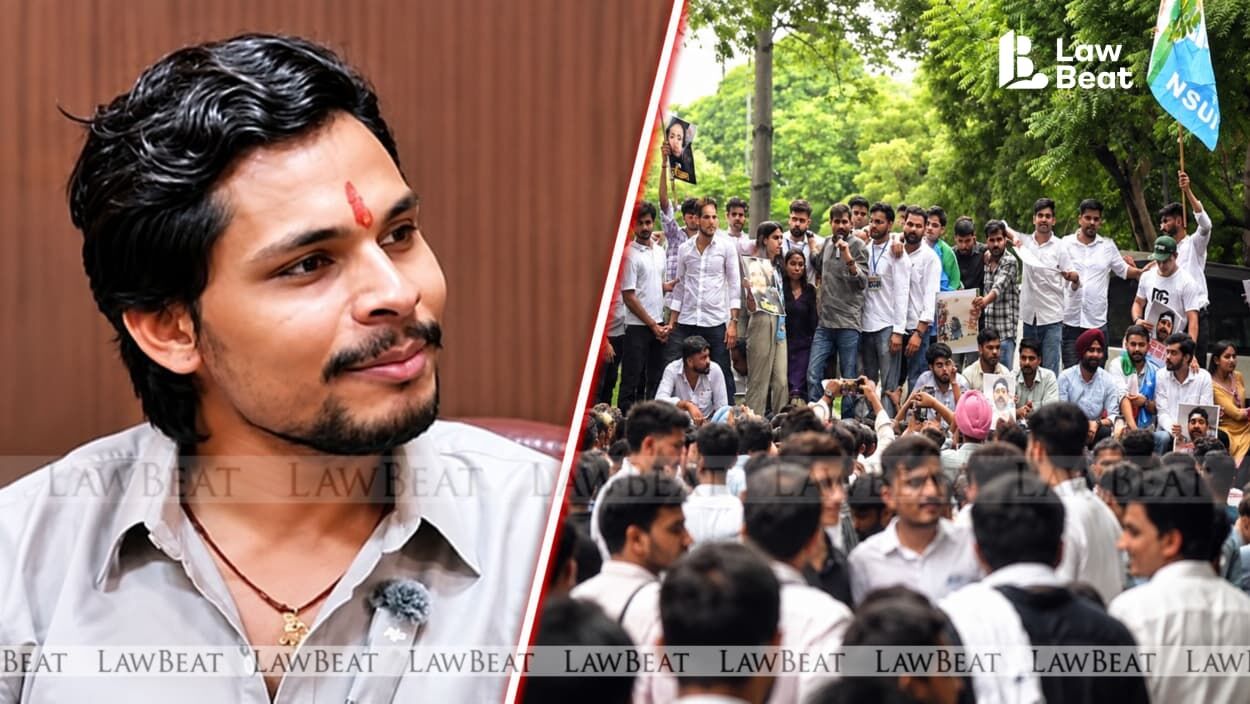
Patiala House Court: Reserves Swatantra Bhardwaj Bail Plea Order Delhi
Summary
- A Delhi court has reserved its order on Swatantra Bhardwaj's bail plea concerning an alleged assault during a Jantar Mantar protest.
- Bhardwaj faces charges under the Bharatiya Nyaya Sanhita and the SC/ST Act, following his arrest and subsequent judicial remand.
- His prior habeas corpus petition challenging his custody was dismissed by the Delhi High Court, which questioned its maintainability given existing judicial orders.
- The High Court clarified that challenges to the legality of an FIR or remand order should be made before the competent court, not via habeas corpus.
- The case highlights the application of new legal sections alongside established anti-atrocity laws in an ongoing criminal proceeding.
Court Reserves Order in Jantar Mantar Assault Case
The Delhi High Court, however, had previously underscored that challenging existing judicial remand orders requires a direct appeal to the competent court, rather than a habeas corpus petition, when such orders authorize custody.
The Patiala House Court in Delhi has concluded arguments and reserved its decision on the bail application submitted by Swatantra Bhardwaj, who is implicated in an alleged assault during a protest at Jantar Mantar. This significant development in the Jantar Mantar assault case bail proceedings saw Additional Sessions Judge (ASJ) Saurabh Pratap Singh Laler preside over the hearing, which was conducted in camera. The court's ruling on Swatantra Bhardwaj's bail plea order Delhi is highly anticipated and is expected to be delivered on the following day. The matter specifically pertains to an incident involving an alleged attack on the father of a minor demonstrator during the aforementioned protest.
Allegations, Arrest, and Statutory Provisions
Bhardwaj's legal troubles began with his detention in Bulandshahr on September 4, followed by his arrest by the Delhi Police Crime Branch. He was subsequently presented before the Patiala House Court, which initially granted a single day of police custody. Following this, a Duty Magistrate ordered one day of judicial custody, and the relevant court later extended this to a 14-day judicial remand. The First Information Report (FIR No. 0062/2026) in this matter initially cited allegations of simple hurt.
However, based on a supplementary statement recorded during the investigation, the scope of the FIR was broadened to incorporate provisions of the Scheduled Castes and Scheduled Tribes (Prevention of Atrocities) Act. The charges now include allegations of simple hurt and the use of casteist slurs, invoking Sections 115, 125, and 126 of the Bharatiya Nyaya Sanhita, alongside Sections 3(1)(r) and 3(1)(s) of the Scheduled Castes and Scheduled Tribes (Prevention of Atrocities) Act. The case garnered public attention after a video emerged where Bhardwaj reportedly discussed the Jantar Mantar incident, though Delhi Police had previously stated the victim's injuries were minor and the matter was handled lawfully.
High Court's Stance on Custody Challenges
Prior to the current bail application, Swatantra Bhardwaj had sought relief from his arrest and ongoing detention by filing a habeas corpus petition before the Delhi High Court. His legal representatives contended that the specific FIR forming the basis of his arrest had been quashed by the Supreme Court in proceedings related to FIRs against NEET paper-leak protesters. However, the Delhi High Court ultimately rejected this habeas corpus plea. The State informed the High Court that the particular FIR under which Bhardwaj was arrested had not, in fact, been quashed by the Supreme Court.
A Division Bench, comprising Justices Navin Chawla and Ravinder Dudeja, also raised questions regarding the maintainability of the habeas corpus petition itself, given the existence of judicial orders authorizing Bhardwaj's custody. The Bench clarified that if there were objections to the legality of the FIR or the remand order, the appropriate legal recourse would be to challenge the specific judicial order before the competent court. The High Court recorded confirmation from the SHO of Parliament Street Police Station that the FIR in question remained active, leading to the dismissal of the habeas corpus petition.
Legal Implications and Application of New Laws
This case provides a pertinent illustration of how new legislative frameworks, specifically the Bharatiya Nyaya Sanhita Sections 115, 125, and 126, are being applied in conjunction with established statutes like the SC/ST Act Sections 3(1)(r) and 3(1)(s) in an assault case. The ongoing proceedings for Swatantra Bhardwaj's bail plea in the Patiala House Court are a direct continuation of the criminal process initiated under these combined legal provisions.
Furthermore, the Delhi High Court's earlier ruling on Bhardwaj's habeas corpus petition offers crucial guidance on procedural matters for challenging custody. The court's emphasis on the proper channels for disputing judicial remand orders, rather than resorting to habeas corpus when such orders are in place, serves as an important precedent for legal practitioners. This highlights the judiciary's approach to ensuring that challenges to detention follow established legal pathways, particularly when judicial oversight has already been exercised.
Practical Implications
This case offers a practical example of how the new Bharatiya Nyaya Sanhita sections are being applied in conjunction with the SC/ST Act in an assault case. It also highlights the Delhi High Court's procedural stance on the maintainability of habeas corpus petitions when judicial remand orders exist, guiding lawyers on the appropriate avenues for challenging custody.
Source
How does this affect you?
Get an AI analysis of this article grounded in your jurisdictions, practice areas, and any policy documents you've uploaded to Wansom.
Finish Reading the Full Story and the Expert Analysis.
Get the latest legal & regulatory intelligence in India
Wansom is AI and can make mistakes.