
Supreme Court: Voter Private Complaint for False Affidavit Allowed
Summary
- The Supreme Court has ruled that voters can file private criminal complaints against candidates for submitting false election affidavits.
- Complaints under Section 125A of the Representation of the People Act do not need to comply with the restrictions of Section 195 CrPC.
- This decision overturns a Karnataka High Court ruling that had quashed a complaint against MLA Dr. Shailendra Beldale regarding a false residential address disclosure.
- The Court reasoned that Section 195 CrPC's limitations apply only to explicitly listed offenses, which do not include Section 125A.
- This ruling significantly enhances candidate accountability by expanding avenues for voter-initiated legal action concerning election affidavit disclosure compliance.
What Happened
This landmark ruling significantly bolsters candidate accountability in elections by empowering individual voters to directly challenge inaccuracies or omissions in election affidavits.
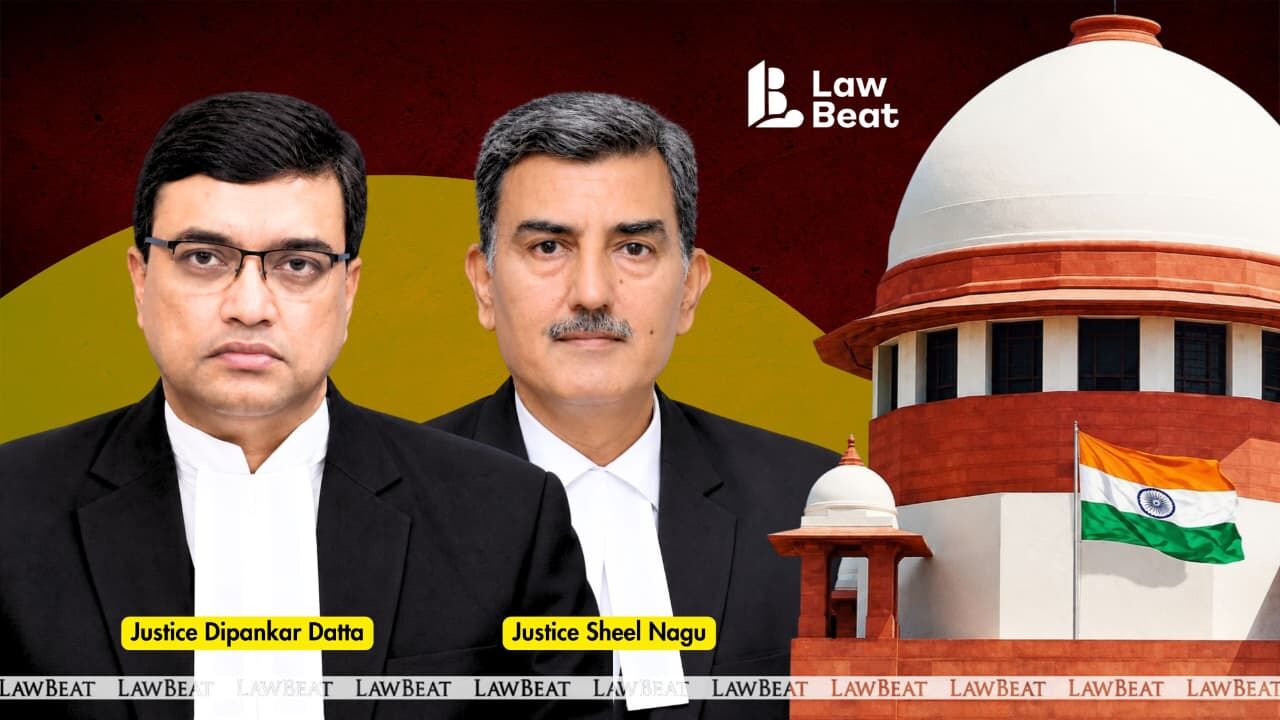
The Supreme Court has recently clarified that ordinary citizens are empowered to initiate private criminal complaints against political candidates who submit false election affidavits. This significant ruling, delivered by a bench comprising Justices Dipankar Datta and Sheel Nagu, establishes that such complaints, brought under Section 125A of the Representation of the People Act (RoP Act), do not fall under the restrictive purview of Section 195 of the Code of Criminal Procedure (CrPC). This decision effectively broadens the scope for voter-initiated accountability regarding election affidavit disclosure compliance.
The apex court's pronouncement came in response to an appeal filed by Rajkumar Madki. Madki had challenged a March 7, 2025, judgment from the Karnataka High Court, which had previously quashed his complaint against Dr. Shailendra Beldale, an MLA elected from the Bidar South constituency in 2023. Madki's original complaint, lodged under Section 200 CrPC before an Additional Chief Metropolitan Magistrate in Bengaluru, alleged that Dr. Beldale had provided inaccurate information regarding his residential address within the affidavit accompanying his nomination papers.
The Karnataka High Court had taken the position that any offense under Section 125A of the RoP Act should be subject to the requirements outlined in Section 195(1) CrPC. Consequently, the High Court concluded that only the Election Commission possessed the authority to initiate a complaint for such an offense. Furthermore, the High Court had suggested that a voter's appropriate recourse was to file an election petition, rather than pursuing a private criminal complaint, asserting that the initiation of criminal proceedings was exclusively a matter for the Election Commission. The Supreme Court, however, identified the question of Section 125A's compliance with Section 195(1) as a substantial legal issue of public importance that had not been previously addressed by the Court.
Legal Context
At the heart of this legal interpretation lies Section 125A of the Representation of the People Act, 1951, which specifically outlines penalties for candidates who either provide false information, deliberately conceal material facts, or fail to furnish mandatory details within their nomination papers or election affidavits. Conversely, Section 195 of the Code of Criminal Procedure, 1973, imposes limitations on courts' ability to take cognizance of certain categories of offenses. This provision mandates that a court cannot acknowledge these specific crimes unless a written complaint is formally filed by the designated public authority, rather than through a standard police report or a private complaint. The Bharatiya Nagarik Suraksha Sanhita (BNSS), which came into force on July 1, 2024, includes Section 215, serving as the equivalent provision to the former Section 195 CrPC.
The Supreme Court bench meticulously examined the text of Section 195 CrPC, noting that it explicitly restricts a court from taking cognizance only of those offenses specifically enumerated within its provisions. Since Section 125A of the RoP Act is not among the offenses listed in Section 195 CrPC, the Court determined that these restrictions could not be extended to Section 125A by implication. The Justices posed a rhetorical question: "Should we read into Section 195, CrPC a prohibition in respect of Section 125A of the RoP Act also, apart from those expressly included?" They reasoned that if Parliament had intended for prosecutions concerning furnishing false information by a candidate in an affidavit under Section 125A to be initiated solely by a public servant, it could have amended Section 195 CrPC to explicitly include this provision. The Court ultimately concluded that this legislative omission was a deliberate choice. Furthermore, the Court relied on the non-obstante clause within Section 125A, which states that the prescribed penalty operates "notwithstanding anything contained in any other law for the time being in force," and observed that no other enactment stipulates that a complaint concerning an offense under Section 125A can be lodged only by a public servant.
Why It Matters
This landmark ruling significantly bolsters candidate accountability in elections by empowering individual voters to directly challenge inaccuracies or omissions in election affidavits. The Supreme Court's clear stance that the procedural hurdles of Section 195 CrPC do not apply to offenses under Section 125A of the RoP Act removes a substantial barrier that previously limited the avenues for redress. This means that a voter who identifies a false affidavit disclosure by a candidate can now pursue a private criminal complaint without needing the Election Commission or another public servant to initiate the proceedings.
The decision underscores the importance of transparent election affidavit disclosure compliance and reinforces the principle that candidates are held to a high standard of honesty in their declarations. By affirming the maintainability of a voter's private complaint false affidavit, the Supreme Court has expanded the mechanisms for ensuring the integrity of the electoral process. This ruling serves as a crucial reminder to political candidates that any misrepresentation or concealment of facts in their nomination papers or affidavits can lead to direct legal action initiated by the electorate, thereby enhancing overall candidate accountability election.
Practical Implications
Lawyers advising political candidates must emphasize the heightened risk of private criminal complaints for false or concealed information in election affidavits, as the Supreme Court has clarified that the restrictions of Section 195 CrPC do not apply to offenses under Section 125A of the RoP Act, thereby expanding avenues for voter-initiated accountability.
Source
How does this affect you?
Get an AI analysis of this article grounded in your jurisdictions, practice areas, and any policy documents you've uploaded to Wansom.
Finish Reading the Full Story and the Expert Analysis.
Get the latest legal & regulatory intelligence in India
Wansom is AI and can make mistakes.