
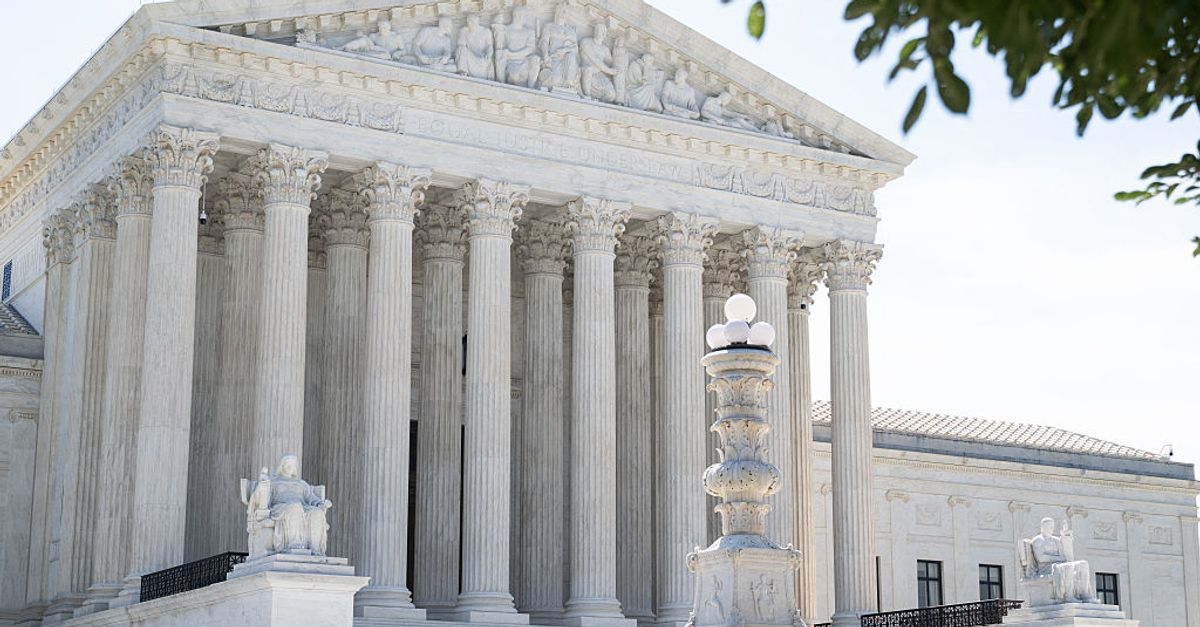
Supreme Court: Reviews Trump Mail-In Ballot Rule Injunction
Summary
- California, joined by 22 states and D.C., urged the Supreme Court to uphold an injunction against parts of a Trump administration mail-in ballot rule.
- The federal judge's ruling in Boston prohibits the implementation of specific U.S. Postal Service directives on mail-in ballots.
- The dispute stems from a presidential executive order issued nearly six months ago, which outlined new federal agency responsibilities for mail-in voting.
- Key provisions of the order include DHS creating citizen lists for states, the Attorney General prioritizing investigations of state officials, and USPS restrictions on mailing ballots to unlisted voters.
- The Supreme Court's decision will determine the immediate enforceability of these federal requirements and their impact on election administration for the upcoming November elections.
Supreme Court Considers Mail-In Ballot Injunction
The Supreme Court's decision regarding this injunction on the Trump administration's mail-in ballot rule carries significant weight for the administration of elections across the country.
The nation's highest court is currently reviewing a federal judge's order that has temporarily blocked key provisions of a U.S. Postal Service (USPS) rule concerning mail-in ballots. This development follows an urgent appeal made on Wednesday by California, supported by 22 other states and the District of Columbia, to maintain the injunction. The states are advocating for the Supreme Court to uphold the ruling issued by a federal judge in Boston, which prevents the Trump administration from implementing specific aspects of the controversial USPS directive.
California's Deputy Solicitor General, Ian Fein, underscored the gravity of the situation in a 40-page filing submitted to the justices. Fein asserted that the USPS's actions represent an "unprecedented experiment with our Nation’s most cherished franchise—the right to vote—is unlawful." This legal maneuver is the latest chapter in an ongoing legal challenge against the Trump administration's efforts to impose new restrictions on mail-in voting procedures ahead of the upcoming November elections.
Executive Order's Provisions Spark Controversy
The current dispute, which began nearly six months ago, originated with an executive order signed by President Donald Trump. This order mandated that federal agencies undertake several steps related to mail-in voting. The first provision of the executive order directs the Department of Homeland Security (DHS) to compile lists of all adult U.S. citizens within each state. These lists are then to be transmitted to the respective states at least 60 days before any federal election.
A second contentious provision instructs the U.S. Attorney General to prioritize the investigation and, where appropriate, the prosecution of state and local officials. This directive specifically targets officials who are found to issue federal ballots to individuals deemed ineligible to vote in a federal election. Furthermore, the executive order's third provision imposes requirements on states to furnish the USPS with lists of voters to whom they intend to send mail ballots. Concurrently, it prohibits the Postal Service from delivering ballots to any voter not included on these designated "enrolled" lists.
Implications for Election Administration
The Supreme Court's decision regarding this injunction on the Trump administration's mail-in ballot rule carries significant weight for the administration of elections across the country. Should the injunction be lifted, the federal government would gain immediate authority to enforce these new requirements, potentially altering established state-level voting procedures just months before a federal election. The mandate for DHS to create and distribute voter lists, coupled with the Attorney General's directive for investigations, introduces a new layer of federal oversight into what has traditionally been a state-managed process.
This ongoing legal battle highlights the tension between federal directives and state autonomy in election management. The outcome will determine the immediate enforceability of federal requirements concerning voter lists and the potential for federal investigations into state officials, directly impacting how states prepare for and conduct mail-in voting. The ruling will shape the landscape for election officials and voters alike, influencing the accessibility and integrity of the voting process.
Practical Implications
Lawyers advising state election officials, political campaigns, or voting rights organizations should closely monitor the Supreme Court's decision regarding the injunction on the Trump administration's mail-in ballot rules. This ruling will determine the immediate enforceability of new federal requirements for voter lists and potential investigations into state officials, directly impacting election administration and compliance strategies.
Source
How does this affect you?
Get an AI analysis of this article grounded in your jurisdictions, practice areas, and any policy documents you've uploaded to Wansom.
Finish Reading the Full Story and the Expert Analysis.
Get the latest legal & regulatory intelligence in United States
Wansom is AI and can make mistakes.