
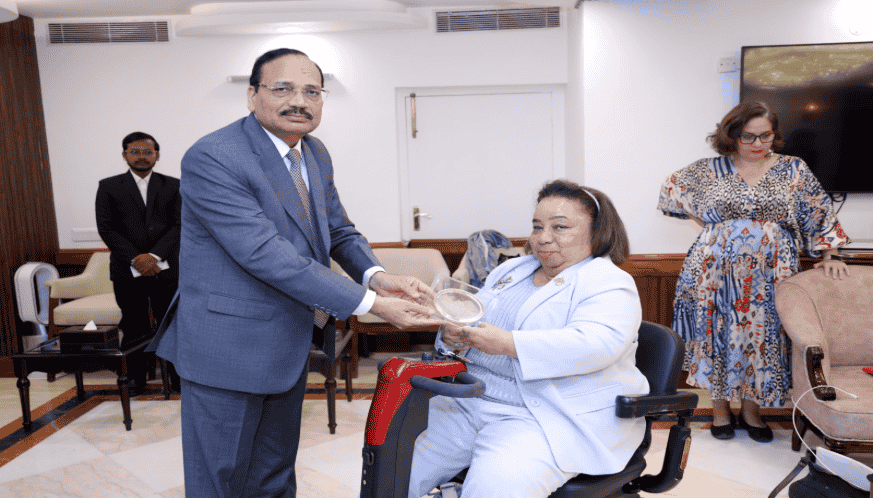
Supreme Court to Form Permanent Committee on Disability Rights
The Supreme Court of India, under the direction of Chief Justice Surya Kant, recently announced the establishment of a permanent committee on disability rights and instructed the Supreme Court Legal Services Committee (SCLSC) to form panels of lawyers and sign language interpreters, specifically to support advocates with disabilities and enhance access to justice.
This significant development underscores the Indian judiciary's proactive commitment to upholding and advancing disability rights, moving beyond mere compliance to actively foster an inclusive legal environment. For legal practitioners, businesses, and the public, it signals a heightened judicial focus on accessibility, non-discrimination, and the effective implementation of disability-centric legislation. The initiative is poised to improve legal aid services for persons with disabilities and promote greater representation and support for legal professionals with disabilities, thereby strengthening the overall framework of social justice in India.
Legally, this initiative is rooted in the constitutional mandate of equality and access to justice enshrined in Articles 14, 21, and 39A of the Indian Constitution, which guarantee fundamental rights and the provision of free legal aid. It further operationalizes the principles of the Rights of Persons with Disabilities Act, 2016, which prohibits discrimination and mandates reasonable accommodation, and aligns with India's obligations under the UN Convention on the Rights of Persons with Disabilities (UNCRPD). The Supreme Court, as the apex judicial body, exercises its inherent powers and administrative oversight to ensure the effective functioning of the legal system and the protection of fundamental rights, with the SCLSC playing a crucial role in delivering legal services under the Legal Services Authorities Act, 1987.
The key parties involved in this development include the Chief Justice of India, Justice Surya Kant, the Supreme Court of India, and the Supreme Court Legal Services Committee (SCLSC), which is tasked with implementing the directives. The announcement was made in the context of a meeting between CJI Kant and UN Special Rapporteur Heba Hagrass, highlighting the international dimension and best practices influencing this domestic legal reform. Ultimately, the primary beneficiaries are persons with disabilities seeking legal recourse and legal professionals with disabilities who will receive enhanced support and opportunities within the legal system.
Practitioners should closely monitor the formation and operationalization of this permanent committee and the SCLSC panels, as it will likely lead to increased litigation, policy advocacy, and regulatory scrutiny concerning disability rights and accessibility across various sectors. Attorneys should advise clients, particularly corporations and public bodies, to proactively review their compliance with the Rights of Persons with Disabilities Act, 2016, ensuring their infrastructure, services, and employment practices are fully accessible and non-discriminatory. Furthermore, legal professionals with disabilities should explore the support mechanisms offered by the new panels, while all attorneys should prepare for a more robust enforcement landscape for disability rights in India.
How does this affect you?
Get an AI analysis of this article grounded in your jurisdictions, practice areas, and any policy documents you've uploaded to Wansom.
Finish Reading the Full Story and the Expert Analysis.
Get the latest legal & regulatory intelligence in India
Wansom is AI and can make mistakes.