
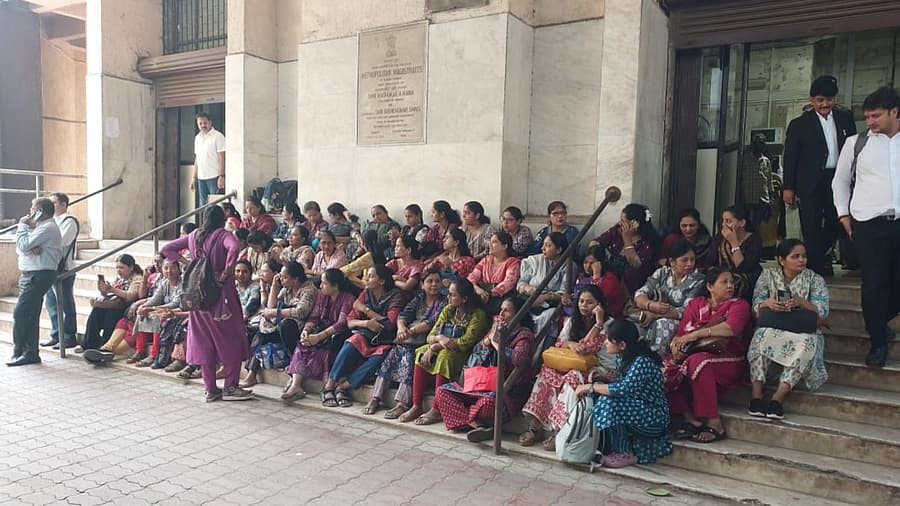
Bombay High Court: Maharashtra Court Staff Strike Suspended
Summary
- Court employees across Maharashtra have temporarily suspended their indefinite strike, which began on November 17.
- The strike, initiated over demands for a revised pay hike, was halted after an online meeting with Bombay High Court judges.
- Four employee associations jointly announced the suspension, citing assurances from the judges and a commitment to justice administration.
- The final resolution of the dispute is contingent on upcoming talks with the State government, including a meeting with Chief Minister Devendra Fadnavis on November 26.
- The associations warned that the strike has not been permanently called off and could resume if a satisfactory agreement is not achieved.
Maharashtra Court Staff Strike Suspended
While the immediate disruption to court proceedings has been averted, the employee associations have made it clear that the underlying dispute remains unresolved, with the possibility of renewed action if a satisfactory agreement is not reached.
Judicial employees across Maharashtra's district and magistrate courts have temporarily halted their indefinite strike, which began on November 17. This statewide agitation, initiated due to demands for a revised pay hike, saw a temporary suspension following an online meeting held on Wednesday with an administrative committee of Bombay High Court judges. The decision marks a significant, albeit provisional, reprieve for the state's judicial system, which had been experiencing disruptions.
The joint communication announcing the suspension was issued by a coalition of employee organizations. These included the Maharashtra State Court Employees Sanghatana (Class-C), the Maharashtra State Judicial Stenographers Association, the State Judicial Bailiffs Employees Sanghantana, and the Class-D Employees Sanghatana. Their collective action to suspend the India court staff agitation indicates a willingness to engage in further dialogue, prompted by the Bombay High Court intervention court strike.
Judicial Intervention and Assurances
The virtual meeting, which took place on Wednesday afternoon, was formally addressed to the Registrar General of the Bombay High Court. Key judicial figures, including Justices AS Gadkari, GS Kulkarni, BP Colabawalla, and Suman Shyam, participated in the discussions. The presence of these judges underscored the High Court's administrative concern regarding the ongoing disruption to justice delivery.
Office-bearers from the striking associations stated that their decision to put the strike on hold was a direct response to the requests and assurances provided by the judges. Their primary motivation was to ensure the uninterrupted administration of justice across the state's judicial system, acknowledging the critical role courts play in public life. This gesture highlights the impact of judicial leadership in de-escalating the immediate crisis.
Path Forward and Lingering Uncertainty
Despite this temporary halt, the employee associations have clarified that the Maharashtra judicial employees strike pay hike dispute has not been permanently resolved. They emphasized that the final resolution hinges on forthcoming discussions with the State government. A crucial step in this process is an assured official meeting with Chief Minister Devendra Fadnavis, scheduled for November 26, where the core demands are expected to be addressed.
While the immediate disruption to court proceedings has been averted, the employee associations have made it clear that the underlying dispute remains unresolved, with the possibility of renewed action if a satisfactory agreement is not reached. This conditional suspension means that while court operations can resume for now, the long-term stability of the judicial workforce's situation is still pending the outcome of these high-level negotiations, making the Devendra Fadnavis court staff meeting a critical juncture.
Practical Implications
Lawyers should note that court operations in Maharashtra's district and magistrate courts are temporarily resuming. This impacts case scheduling, filing deadlines, and general access to justice, requiring practitioners to confirm court functionality and adjust their litigation strategies accordingly. However, the dispute is not fully resolved, so continued monitoring for potential future disruptions is advisable.
Source
How does this affect you?
Get an AI analysis of this article grounded in your jurisdictions, practice areas, and any policy documents you've uploaded to Wansom.
Finish Reading the Full Story and the Expert Analysis.
Get the latest legal & regulatory intelligence in India
Wansom is AI and can make mistakes.