
Supreme Court: Terminated Employee Cannot Seek Reinstatement Via Civil Suit
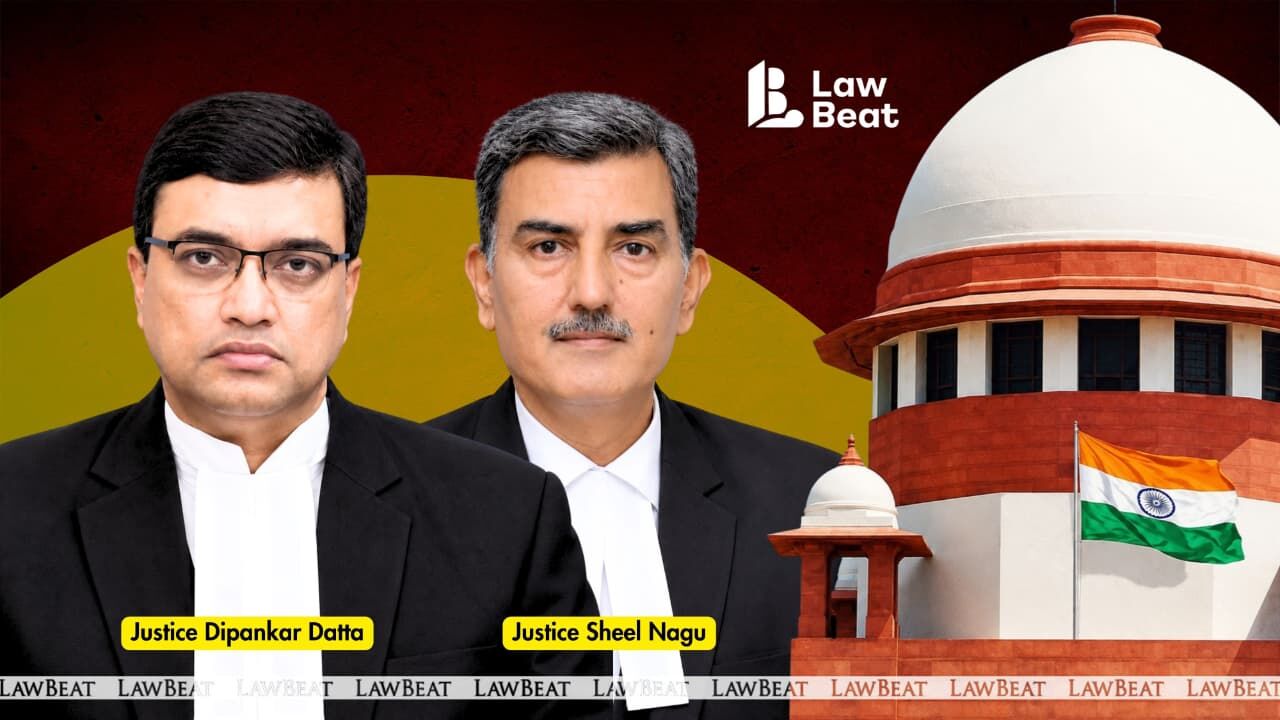
Home / Top Stories / Supreme Court Judgments Terminated Employee Cannot Seek Reinstatement Through Civil Suit: Supreme Court X Supreme Court rules employees cannot seek reinstatement through civil suits. The Supreme Court held that reinstatement cannot be sought by specifically enforcing a contract of personal service under Section 14(1)(b) of the Specific Relief Act, but damages can be claimed. The Supreme Court has held that an employee cannot seek reinstatement in service through a civil suit when such relief would amount to specifically enforcing a contract of personal service, which is barred under the Specific Relief Act . A Bench of Justices Dipankar Datta and Sheel Nagu, however, clarified that an employee whose service has been terminated can maintain a civil suit seeking damages. Court made the observation while dealing with an appeal filed by Shiv Charan Das, whose services with Tata Communications Ltd had been terminated. Why did Supreme Court reject the claim for reinstatement? Das had approached the Court of the Civil Judge, Bhopal, Madhya Pradesh, seeking reinstatement in service after his termination by Tata Communications. The company, however, filed an application under Order VII Rule 11 of the Code of Civil Procedure (CPC), seeking rejection of the plaint. Order VII Rule 11 of the CPC empowers courts to reject a plaint at the threshold if it fails to meet fundamental legal and procedural requirements. The trial court accepted the application and rejected the plaint, holding that Section 14(1)(b) of the Specific Relief Act , 1963, barred the grant of reinstatement in such a case. Section 14(1)(b) of the Specific Relief Ac states that a contract cannot be specifically enforced if it runs into minute or numerous details, depends on the personal qualifications or volition of the parties, or is otherwise nature-bound so that the court cannot enforce its material terms. The Madhya Pradesh High Court upheld the trial court's order, prompting Das to approach the Supreme Court. The Supreme Court agreed with the high court that reinstatement could not be claimed in the civil suit. "We are of the view that since a contract of personal service cannot be specifically enforced, the relief of reinstatement in service could not have been claimed by the appellant; to that extent, the high court is right," the Bench said. Could Das still pursue his case? The Supreme Court said he could, if he chose to seek damages instead of reinstatement. The Bench noted that had Das originally sought damages, his suit would have been maintainable and the plaint would not have been liable to rejection. Das's counsel then submitted that since the application for rejection of the plaint had been allowed, the appellant did not get an opportunity to seek amendment of the plaint. The Supreme Court took note of this submission and revived the suit, giving Das four weeks to seek amendment of the plaint under Order VI Rule 17 of the CPC. "Be that as it may, while setting aside the impugned orders of the trial court and the High Court and reviving the appellant’s suit, we dispose of the appeal granting liberty to the appellant to seek amendment of the plaint by filing an application under Order VI Rule 17, CPC within four weeks from date," the bench said. Court clarified that if the proposed amendment is limited to changing the prayer clause by replacing the relief of reinstatement with a claim for damages, along with the necessary averments in the plaint to support such a claim, the trial court may allow the amendment. "As and when the application for amendment is allowed, the defendant(s) shall be granted time to file written statement/additional written statement. Upon the pleadings being exchanged, the suit shall be taken to its logical conclusion by the trial court in accordance with law," the Bench said. The Supreme Court also made it clear that the relief granted to Das was subject to the four-week deadline. If he does not file an application
How does this affect you?
Get an AI analysis of this article grounded in your jurisdictions, practice areas, and any policy documents you've uploaded to Wansom.
Finish Reading the Full Story and the Expert Analysis.
Get the latest legal & regulatory intelligence in India
Wansom is AI and can make mistakes.