
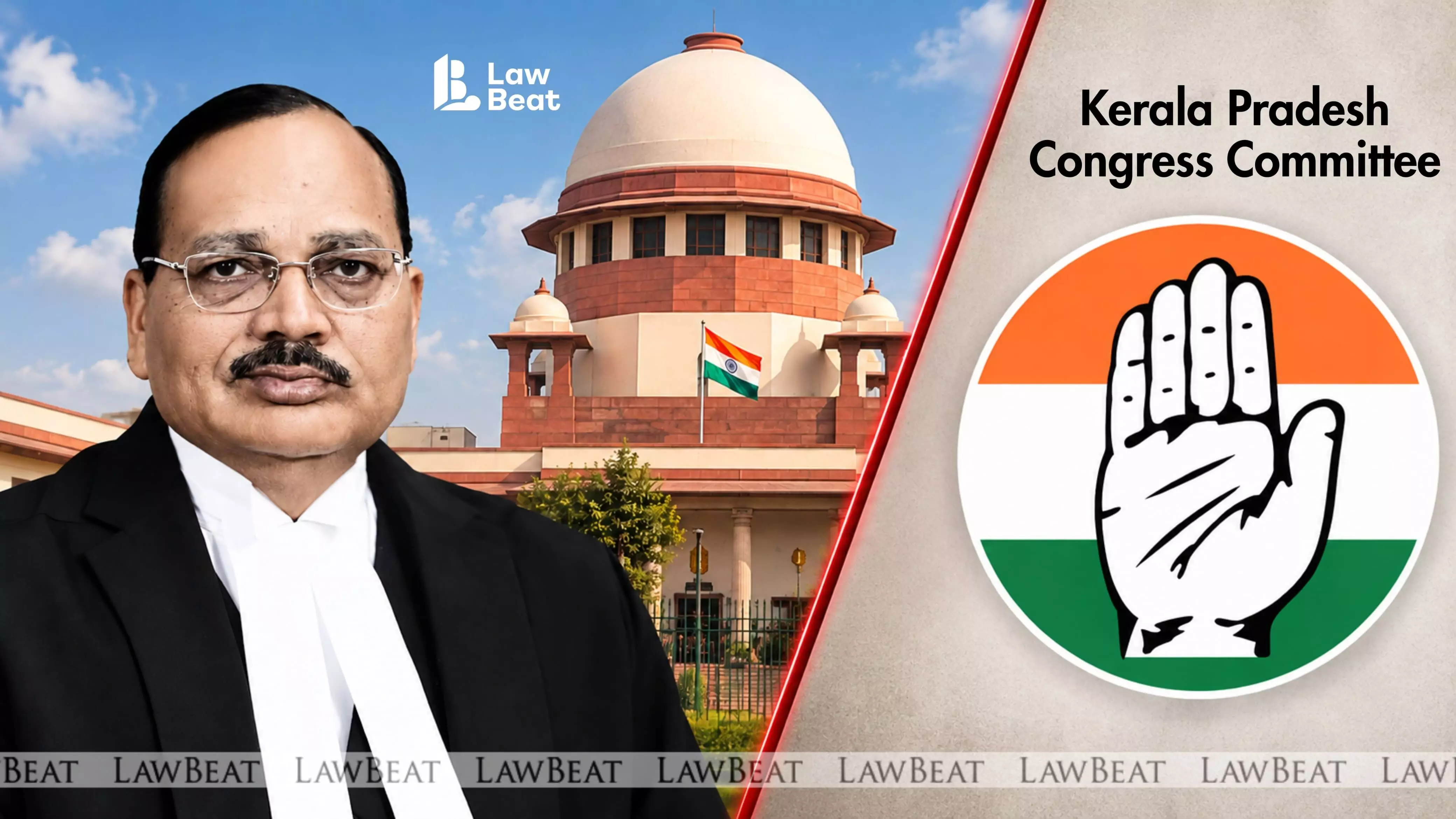
Supreme Court Suo Motu Kerala Congress: Registers Writ for CJI Resignation Call
Summary
- The Supreme Court has initiated a suo motu writ petition against the Kerala Congress.
- This action follows a Kerala Congress social media post demanding the resignation of Chief Justice of India Surya Kant.
- Advocate Vineet Jindal's October 13 representation prompted an examination into potential criminal contempt.
- Jindal's representation also sought inquiries into an October 12 demonstration and court security.
- The Court's independent action underscores its concern over perceived attacks on judicial authority.
What Prompted the Court's Action
This suo motu action by the Supreme Court against the Kerala Congress carries substantial implications for judicial integrity India and the broader landscape of political discourse.
The Supreme Court of India has taken significant action by registering a writ petition on its own motion, known as suo motu, against the Kerala Congress. This unusual step by the nation's highest court follows a controversial social media post by the political party that explicitly called for the resignation of Chief Justice of India (CJI) Surya Kant. The Court's decision to initiate proceedings independently underscores its concern regarding public statements that could be perceived as undermining judicial authority.
This development was catalyzed by a representation submitted on October 13 by Advocate Vineet Jindal. His communication to the Chief Justice of India urged an examination into whether the Kerala Congress's demand for CJI Surya Kant's resignation constituted criminal contempt of court. Beyond the specific post, Jindal's representation also requested a separate investigation into a demonstration that occurred on October 12, as well as a broader inquiry into the security protocols governing the Court's premises. The confluence of these events appears to have prompted the Supreme Court's direct intervention.
Legal Framework and Suo Motu Proceedings
The Supreme Court's decision to register an India Supreme Court writ petition suo motu signifies that it has taken cognizance of the matter without requiring a formal petition from an external party. This inherent power allows the Court to act on its own initiative when it perceives a serious issue, particularly one that impacts the administration of justice or the public interest. In this instance, the Court has chosen to address the allegations of criminal contempt directly, highlighting the gravity with which it views the Kerala Congress's actions.
Criminal contempt of court, as alleged against the Kerala Congress, typically involves acts that scandalize or tend to scandalize, or lower or tend to lower the authority of any court; prejudice, or interfere or tend to interfere with, the due course of any judicial proceeding; or interfere or tend to interfere with, or obstruct or tend to obstruct, the administration of justice in any other manner. The post demanding CJI Surya Kant's resignation falls under scrutiny for potentially scandalizing the judiciary and attempting to lower its authority, thereby impacting judicial integrity India. The Court's proactive stance indicates a strong defense of its institutional standing.
Implications for Judicial Integrity and Public Discourse
This suo motu action by the Supreme Court against the Kerala Congress carries substantial implications for judicial integrity India and the broader landscape of political discourse. It signals the judiciary's readiness to confront perceived attacks on its authority, especially when emanating from political entities. The Court's move serves as a potent reminder that while freedom of speech is a fundamental right, it is not absolute and is subject to reasonable restrictions, including those related to contempt of court.
The registration of this writ petition underscores the fine line between legitimate criticism of judicial decisions and actions that could be construed as undermining the independence and impartiality of the judiciary. Political parties and public figures are now on notice that statements targeting judges or demanding their resignation, such as the CJI Surya Kant resignation post, could lead to direct legal action initiated by the Court itself. This development highlights the judiciary's commitment to safeguarding its institutional reputation and ensuring the smooth functioning of justice without undue external pressure.
Practical Implications
This development signals the Supreme Court's readiness to initiate suo motu proceedings against perceived attacks on judicial authority, particularly from political entities. Lawyers should advise clients, especially those in public-facing roles, to exercise extreme caution regarding public statements about judges or court proceedings to avoid potential contempt charges.
Source
How does this affect you?
Get an AI analysis of this article grounded in your jurisdictions, practice areas, and any policy documents you've uploaded to Wansom.
Finish Reading the Full Story and the Expert Analysis.
Wansom is AI and can make mistakes.