
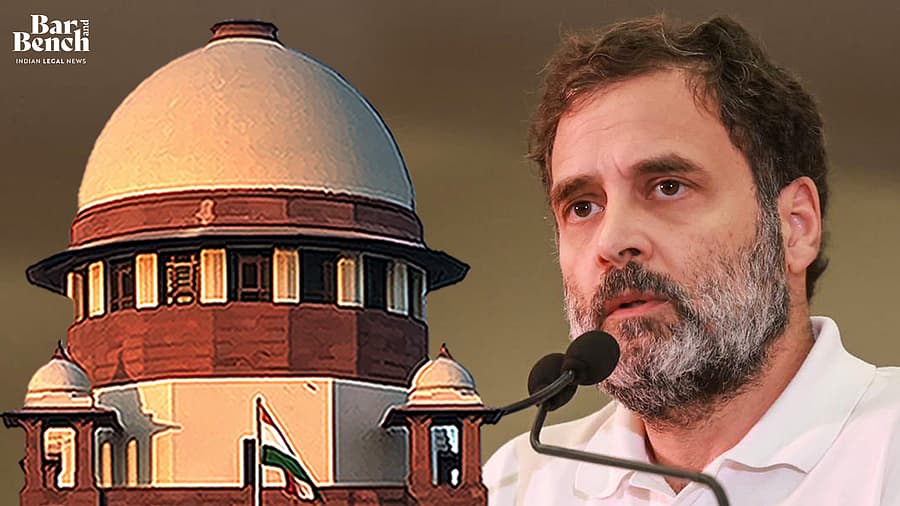
India Supreme Court: Stays Rahul Gandhi Defamation Trial
Summary
- The Supreme Court has stayed a defamation trial against Rahul Gandhi.
- The case stems from Gandhi's 2018 "commander-in-thief" remarks about Prime Minister Modi regarding the Rafale deal.
- BJP member Mahesh Shrishrimal filed the complaint before the Girgaon Magistrate Court.
- Justices Vikram Nath and Aparesh Kumar Singh issued the stay and sought a state response within four weeks.
- Gandhi had challenged the magistrate's summons in the High Court after receiving it in July 2021.
Supreme Court Stays Defamation Trial
Lawyers advising public speakers on defamation risks should note this willingness of the Supreme Court to intervene and stay trials, as it could influence strategies in similar future cases.
The Supreme Court of India recently intervened in a defamation case involving prominent political figure Rahul Gandhi, issuing a stay on the ongoing trial. On a Tuesday, a bench comprising Justices Vikram Nath and Aparesh Kumar Singh ordered a halt to the proceedings against Gandhi, which were being heard in a Maharashtra court. This significant development means the defamation trial against Rahul Gandhi is temporarily suspended, pending further review by the apex court.
The Court's directive specifically stated, "Issue notice. Returnable in 4 weeks. Stay on trial," indicating a temporary pause in the legal process while the State is given time to respond. This action by the India Supreme Court defamation stay provides a crucial reprieve for Gandhi in a case that stems from his public comments regarding Prime Minister Narendra Modi. The Supreme Court's decision to stay the trial underscores its role in overseeing judicial processes, particularly in high-profile cases involving political speech.
Genesis of the Defamation Claim
The defamation proceedings against Rahul Gandhi originated from remarks he made in 2018 concerning the Rafale fighter jet deal. During this period, Gandhi publicly used phrases such as "commander-in-thief" and "Choron Ke Sardar" in reference to Prime Minister Modi, which became the basis for the legal challenge. These statements were made in the context of a rally held in Rajasthan in September 2018, where Gandhi allegedly made defamatory statements against the Prime Minister.
The complaint was lodged by Mahesh Shrishrimal, a member of the Bharatiya Janata Party (BJP), before the Girgaon Magistrate Court. Shrishrimal contended that Gandhi's "commander-in-thief" remark and other statements led to Prime Minister Modi being trolled across various news channels and social media platforms, causing alleged reputational harm. This complaint initiated the legal journey that has now reached the Supreme Court, seeking a Rafale deal defamation case stay.
Legal Progression and Supreme Court Intervention
Following the filing of the Mahesh Shrishrimal complaint, the Girgaon Magistrate Court issued a summons to Rahul Gandhi in August 2019. However, Gandhi only received this summons in July 2021, nearly two years after it was issued. Upon receiving the summons, Gandhi challenged the magistrate's order before the High Court, seeking to quash the proceedings. The current Supreme Court stay on Rahul Gandhi defamation trial comes as a direct result of Gandhi's plea challenging the defamation case itself.
The decision by Justices Vikram Nath and Aparesh Kumar Singh to issue a stay, while also seeking a response from the State within four weeks, highlights the Supreme Court's careful consideration of the matter. This intervention by the India Supreme Court defamation stay signals a potential avenue for relief in politically sensitive cases, particularly those arising from public remarks by political figures. Lawyers advising public speakers on defamation risks should note this willingness of the Supreme Court to intervene and stay trials, as it could influence strategies in similar future cases.
Practical Implications
Lawyers advising political figures or public speakers on defamation risks should note the Supreme Court's willingness to intervene and stay trials in politically sensitive cases, particularly those stemming from public remarks. This development indicates a potential avenue for relief against ongoing proceedings, though the specific grounds for the stay will be crucial to monitor.
Source
How does this affect you?
Get an AI analysis of this article grounded in your jurisdictions, practice areas, and any policy documents you've uploaded to Wansom.
Finish Reading the Full Story and the Expert Analysis.
Get the latest legal & regulatory intelligence in India
Wansom is AI and can make mistakes.