
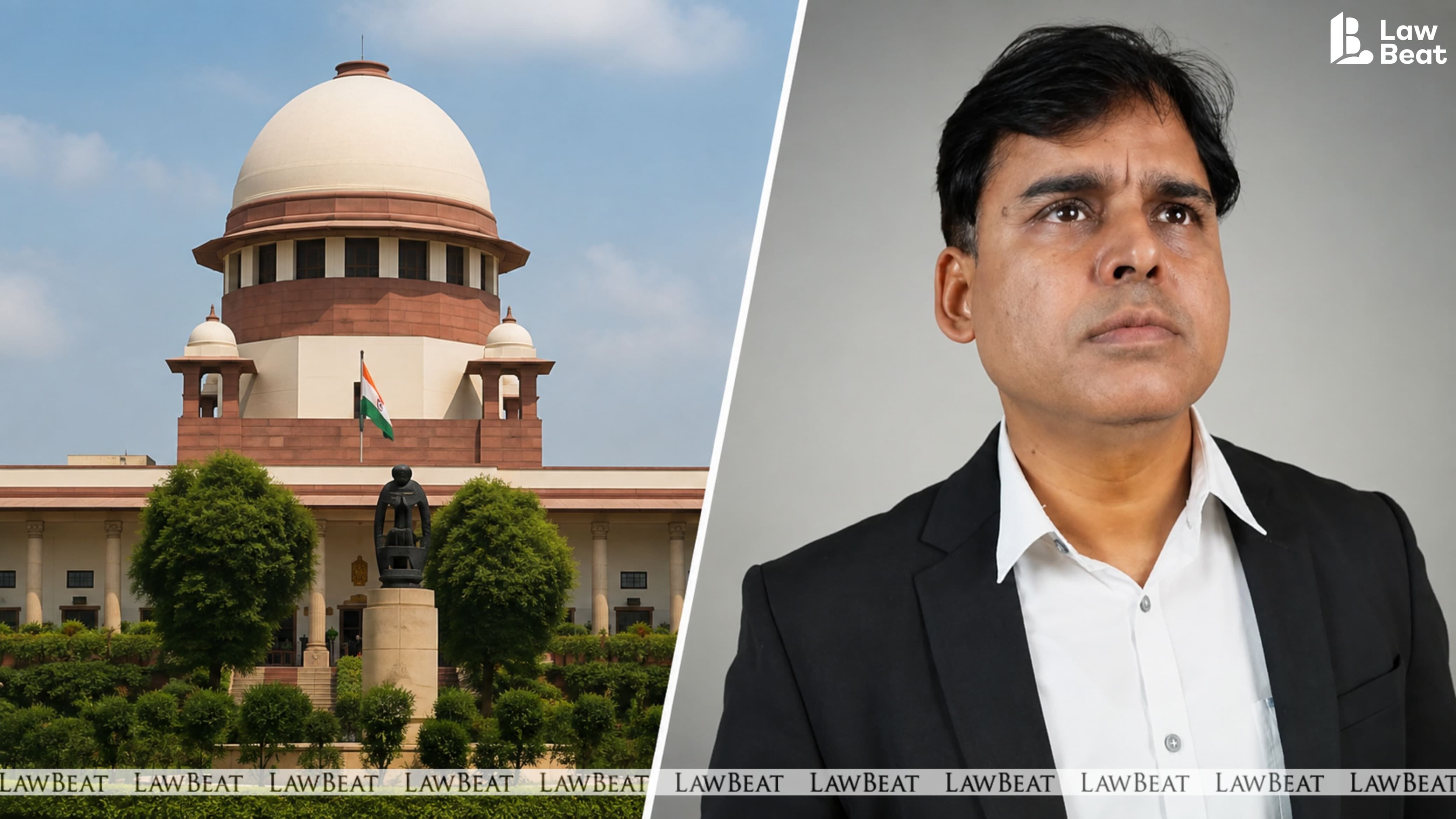
Supreme Court Stays Abhishek Upadhyay Arrest In Ghaziabad
Summary
- The Supreme Court has stayed the arrest of journalist Abhishek Upadhyay in connection with an FIR filed in Ghaziabad.
- Upadhyay directly approached the Supreme Court under Article 32, alleging the case was fabricated in retaliation for his investigative reporting on Uttar Pradesh irregularities.
- The FIR, registered on August 18, involves an alleged road-rage incident and invokes provisions of the Bharatiya Nyaya Sanhita, SC/ST Act, and IT Act.
- The Court directed Ghaziabad police to supply a copy of the FIR to Upadhyay, after which he can approach the Allahabad High Court for further relief.
- Upadhyay denies the road-rage allegations, claiming the incident was staged and that police actions at his residence lacked due process, including initial denial of the FIR copy.
Supreme Court Stays Journalist's Arrest in Ghaziabad Case
This intervention by the Supreme Court underscores its critical role in safeguarding fundamental rights, particularly for journalists facing allegations of retaliatory charges.
The Supreme Court has issued a stay on the arrest of journalist Abhishek Upadhyay, who faces an FIR in Ghaziabad. Upadhyay had directly approached the apex court under Article 32 of the Constitution, seeking both the quashing of the First Information Report and protection from arrest. His petition alleges that the case against him is a fabricated response to his investigative reporting on alleged irregularities within Uttar Pradesh.
The FIR, numbered 678/2026, was lodged at the Indirapuram Police Station in Ghaziabad on August 18. It stems from an alleged road-rage incident near Shipra Mall and invokes provisions from the Bharatiya Nyaya Sanhita, 2023, the SC/ST (Prevention of Atrocities) Act, 1989, and the Information Technology Act. Upadhyay's legal challenge highlights discrepancies in the sections reflected across different parts of the FIR record itself.
The Supreme Court bench, comprising CJI Surya Kant, Justice Joymalya Bagchi, and Justice V Mohana, agreed to hear the writ petition. In its order, the Court instructed the police to provide a copy of the registered FIR to Upadhyay, clarifying that he could then seek appropriate remedies from the Allahabad High Court. The Ghaziabad Police Commissioner has been mandated to submit a compliance report regarding the FIR's supply by the subsequent hearing date.
Allegations of Retaliation and Staged Incident
Abhishek Upadhyay, who operates the independent news portal “Top Secret,” asserts that the Ghaziabad FIR was filed in direct retaliation for his journalistic work. He claims to have published investigative reports exposing alleged corruption and various irregularities across Uttar Pradesh, including sensitive matters related to the Ram Janmabhoomi premises and the conduct of senior government officials.
The complaint forming the basis of the FIR was filed by Nikki Gautam, who alleged that his motorcycle was struck from behind by a Baleno vehicle near Shipra Mall on August 18. Gautam further claimed that the driver verbally abused and threatened him following the collision, identifying Abhishek Upadhyay as the owner of the vehicle.
Upadhyay, however, vehemently denies these road-rage allegations, contending that the entire incident was staged specifically to target him because of his reporting. He points to alleged inconsistencies, stating that the motorcycle registration number cited in the complaint does not correspond with the vehicle described by the complainant and does not belong to Gautam. Furthermore, his petition alleges that police personnel attempted to coerce establishments near the purported incident site into deleting or withholding CCTV footage, though these specific claims remain part of the petitioner's case and have not been independently verified.
Direct Supreme Court Intervention and Procedural Concerns
Upadhyay's decision to approach the Supreme Court directly under Article 32 was driven by a stated apprehension of arrest and potential physical harm should he attempt to seek relief from the Allahabad High Court. He sought the quashing of the FIR, arguing that the circumstances surrounding its registration and subsequent police actions warranted immediate intervention from the highest court.
His petition details a late-night visit by a police team, numbering approximately a dozen personnel, to his Ghaziabad residence around 10:30 pm on August 20. Upadhyay was not home at the time, but his wife and two daughters were present. He alleges that the police entered the premises without prior notice, causing distress, and subsequently informed him of their intent to take him into custody in connection with the FIR. Crucially, he claims he was initially denied a complete copy of the FIR despite his requests.
An application was subsequently filed, demanding the provision of the FIR copy and information regarding the release of the vehicle purportedly involved in the incident. This application specifically referenced the Supreme Court's judgment in `Youth Bar Association of India v. Union of India`, which emphasizes the right of an accused to receive a copy of the FIR. The Supreme Court's directive for the Ghaziabad police to supply the FIR copy directly addresses this procedural concern.
Safeguarding Journalistic Freedom and Due Process
This intervention by the Supreme Court underscores its critical role in safeguarding fundamental rights, particularly for journalists facing allegations of retaliatory charges. The direct approach under Article 32, seeking both a stay on arrest and the quashing of an FIR, highlights a mechanism for individuals to bypass lower courts when there is a credible apprehension of injustice or abuse of process, especially in cases perceived as attempts to stifle investigative reporting.
The Court's order, mandating the immediate supply of the FIR copy and directing the Ghaziabad Police Commissioner to file a compliance report, reinforces the importance of procedural transparency and adherence to due process. This development serves as a significant precedent for `journalist protection from arrest in India`, signaling that the judiciary remains vigilant against potential misuse of legal provisions to harass or intimidate those engaged in reporting on alleged corruption and irregularities. It emphasizes that even when an `Abhishek Upadhyay Ghaziabad FIR quash` request is made, proper legal procedures, including access to the FIR, must be followed.
Practical Implications
This development is crucial for lawyers advising clients, particularly journalists, on seeking direct Supreme Court intervention under Article 32 for protection from arrest and quashing of FIRs, especially when allegations of retaliatory or fabricated charges are involved. It underscores the Court's role in safeguarding fundamental rights against potential abuse of process and sets a precedent for procedural compliance by police in such cases.
Source
How does this affect you?
Get an AI analysis of this article grounded in your jurisdictions, practice areas, and any policy documents you've uploaded to Wansom.
Wansom is AI and can make mistakes.