
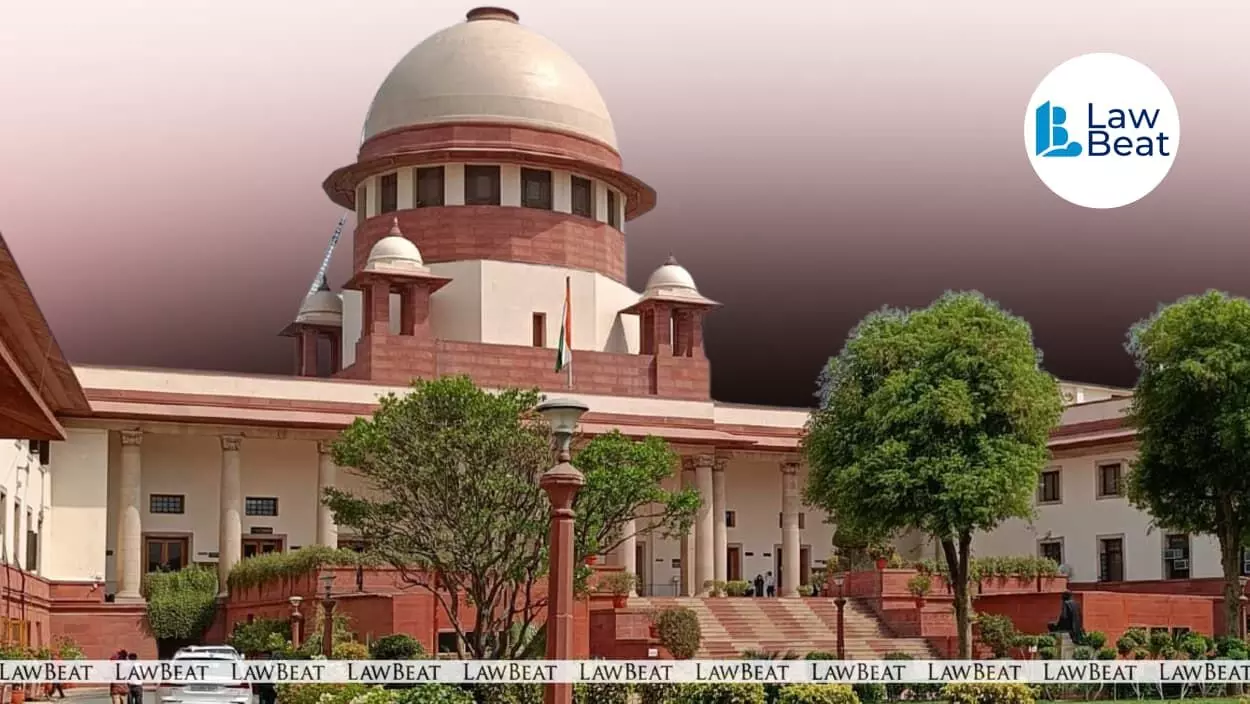
Supreme Court Slams APTEL: Judicial Discipline Breached on Settled Issue Review
Summary
- The Supreme Court strongly condemned the Appellate Tribunal for Electricity (APTEL) for reviewing an issue already settled by a prior Supreme Court judgment.
- APTEL's 2024 decision to review a 2019 order was deemed a "breach of judicial discipline" and a clear violation of Article 141 of the Constitution.
- The settled issue concerned the recovery of Sinking Fund contributions through electricity tariffs, which had been permitted under the Damodar Valley Corporation Act, 1948.
- The Supreme Court emphasized that its precedents are binding under Article 141, ensuring finality in litigation and preventing judicial "mayhem."
- A penalty of ₹3.5 Lakh was imposed on APTEL for its actions, underscoring the seriousness of the judicial overreach.
Judicial Rebuke and Case Details
The Apex Court underscored that the judicial system relies on the sanctity of decisions from higher courts, with Article 141 serving as a constitutional mandate to ensure the highest court's rulings are followed, thereby preventing chaos.
The Supreme Court recently issued a stern condemnation against the Appellate Tribunal for Electricity (APTEL) in New Delhi, criticizing its decision to review an order from 2019 in 2024. This action was deemed a flagrant disregard for judicial discipline, particularly as the underlying issue had already been definitively settled by the Supreme Court itself. The Apex Court characterized APTEL's conduct as having gone "haywire" by permitting such a review, highlighting a significant breach of established legal protocols.
The specific matter under scrutiny involved an appeal lodged by the Damodar Valley Corporation (DVC). The DVC challenged an APTEL order that had allowed a petition to review a prior 2019 directive. This review was granted more than five years after the initial order, despite the core subject being covered by a binding Supreme Court judgment from 2018. The Court underscored that such a review was not only illegal and misplaced but also a direct violation of the principles governing judicial conduct. As a consequence of this judicial overreach, the Supreme Court imposed costs of ₹3.5 Lakh.
The Settled Legal Principle
The controversy centered on the `APTEL review settled issue` regarding the recovery of contributions to a Sinking Fund through electricity tariffs. The Supreme Court had previously addressed this precise matter in its 2018 ruling, `Bhaskar Shrachi Alloys Limited & Ors v. Damodar Valley Corporation & Ors`. This judgment established a binding precedent under `Article 141 of the Constitution of India`, which mandates that all courts and tribunals within India are bound by the decisions of the Supreme Court.
In that earlier decision, the Supreme Court had clarified that the provision for a Sinking Fund could legitimately be treated as an item of expenditure and recovered via tariff, alongside depreciation. Both these elements were explicitly permitted under Section 40 of the `Damodar Valley Corporation Act, 1948` (DVC Act), a central statute that established the DVC as a statutory body. The Central Electricity Regulatory Commission (CERC) had initially allowed the Sinking Fund as an expenditure, a decision subsequently affirmed by APTEL, making the Supreme Court's 2018 pronouncement the final word on the subject. The Court also noted the fourth proviso to Section 14 of the Electricity Act, 2003, which preserves the DVC Act's application where not inconsistent, thereby giving it overriding effect.
Upholding Judicial Discipline
The Supreme Court emphasized that APTEL's decision to revisit an issue already resolved by the highest court constituted a blatant disregard for `Article 141 Constitution India`. Justices J B Pardiwala and K Vinod Chandran expressed serious concerns about the independence and accountability of tribunals, stating that such orders raise doubts in their minds. They highlighted that the judicial system's integrity hinges on the sanctity of decisions from appellate, revisional, and supervisory jurisdictions.
The Apex Court underscored that the judicial system relies on the sanctity of decisions from higher courts, with Article 141 serving as a constitutional mandate to ensure the highest court's rulings are followed, thereby preventing chaos. While acknowledging that the Supreme Court's decisions are supreme not due to infallibility but because it is the final court of appeal, the Bench stressed the critical need for finality and closure in litigation. This ruling serves as a powerful reminder to all judicial and quasi-judicial bodies about the imperative of adhering to established precedents and maintaining judicial discipline.
Practical Implications
Lawyers and compliance officers should note the Supreme Court's strong reaffirmation of judicial discipline and the binding nature of its precedents under Article 141, particularly concerning tribunal review powers. This ruling clarifies that tribunals cannot revisit issues already settled by the Supreme Court, providing a critical precedent for challenging or defending against such reviews and ensuring finality in litigation.
Source
How does this affect you?
Get an AI analysis of this article grounded in your jurisdictions, practice areas, and any policy documents you've uploaded to Wansom.
Finish Reading the Full Story and the Expert Analysis.
Get the latest legal & regulatory intelligence in India
Wansom is AI and can make mistakes.