
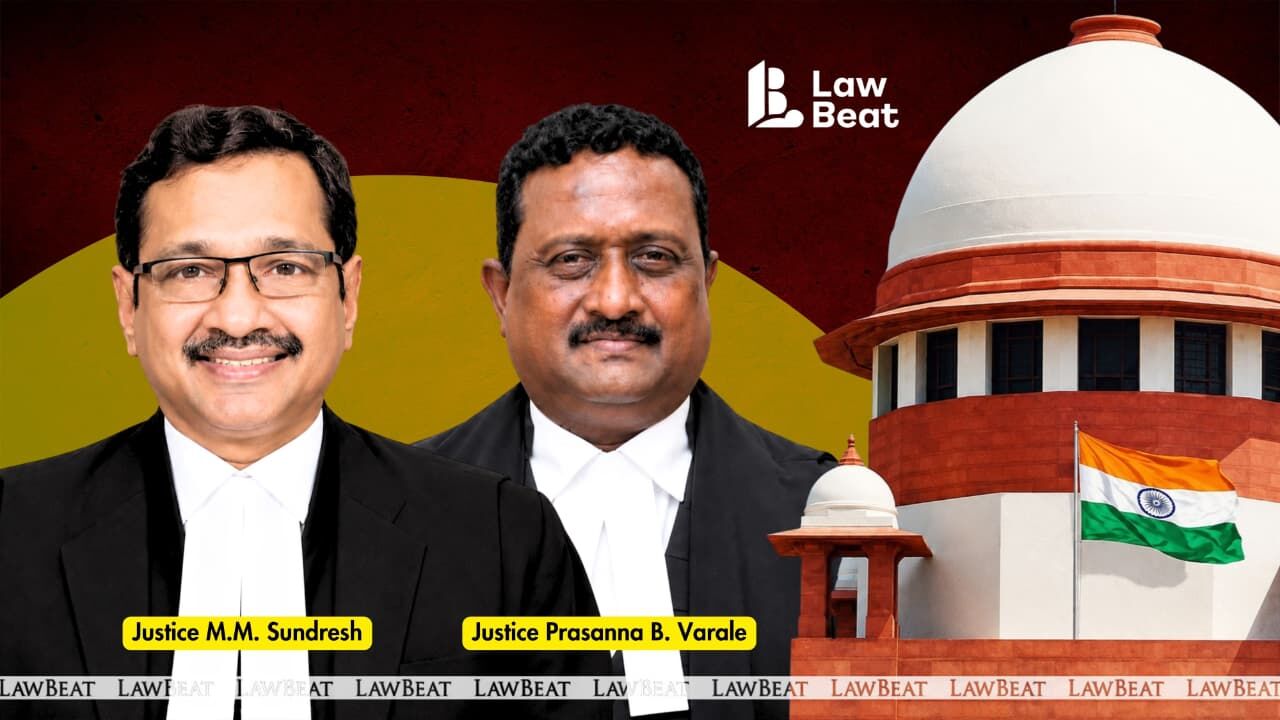
Supreme Court Sets Aside Nitin Garg LOC in Vivo Case
Summary
- The Supreme Court set aside a Lookout Circular (LOC) against Chartered Accountant Nitin Garg, an accused in the Vivo money laundering case.
- The court ruled that Mr. Garg is not a flight risk and has consistently cooperated with the investigation.
- Mr. Garg is accused of helping incorporate 19 companies allegedly used by Vivo India to transfer over Rs 20,000 crore out of India.
- The Supreme Court imposed a condition requiring Mr. Garg to inform authorities 15 days in advance of any foreign travel, providing his itinerary.
- This judgment, delivered on August 25, 2026, by Justices M M Sundresh and Prasanna B Varale, highlights the importance of assessing actual flight risk over technicalities in maintaining LOCs.
Supreme Court Quashes Lookout Circular
The Supreme Court explicitly stated its unwillingness to "stand on technicalities," focusing instead on the substantive issue of whether the restrictive measure was truly necessary.
The Supreme Court of India has set aside a Lookout Circular (LOC) issued against Chartered Accountant Nitin Garg, a key accused in the high-profile Vivo money laundering investigation. The apex court determined that Mr. Garg does not pose a flight risk and has consistently cooperated with the ongoing inquiry, thereby negating the necessity for such a restrictive measure. This significant ruling, delivered by a Bench comprising Justices M M Sundresh and Prasanna B Varale on August 25, 2026, mandates that Mr. Garg must now provide authorities with 15 days' advance notice of any international travel plans, including a detailed itinerary and destinations.
Mr. Garg is implicated as one of four primary accused in the extensive Rs 20,000-crore money laundering case linked to Chinese smartphone manufacturer Vivo. The Enforcement Directorate (ED) alleges that Vivo India, purportedly acting under directives from its Chinese parent company, established a network of 19 Indian entities. This intricate structure was allegedly designed to obscure ownership and control, facilitating the illicit transfer of funds out of India and generating proceeds of crime exceeding Rs 20,000 crore. Mr. Garg is accused of playing a pivotal role as the "first limb" in the incorporation of these 19 companies.
Background of the Vivo Investigation
The Enforcement Directorate's investigation into the Vivo money laundering case centers on allegations that the smartphone giant orchestrated a sophisticated scheme to siphon off vast sums of money. The agency claims that the network of 19 Indian companies was instrumental in concealing the true beneficiaries and moving the alleged proceeds of crime. While Mr. Garg is identified as having assisted in the incorporation of these entities, he has vehemently denied the allegations against him.
Mr. Garg's defense maintains that his involvement was limited to providing professional services for the incorporation of the 19 companies, for which he received a fee of Rs 19 lakh. He asserts that he was not a beneficiary of any alleged proceeds of crime. This stance underscores a critical distinction between providing professional services and direct involvement in illicit financial activities, a point that likely resonated with the Supreme Court in its assessment of his flight risk.
Arguments and Judicial Rationale
The Supreme Court's decision followed a challenge by Mr. Garg against a Delhi High Court order from September 25, 2025, which had declined to intervene with the existing Lookout Circular. Representing Mr. Garg, his counsel argued that the CA's professional commitments necessitated frequent international travel, citing visits to referral firms in three different countries. Counsel emphasized that Mr. Garg, who operates a firm with approximately 200 associates, had consistently cooperated with the investigation and inquiries, thus making an LOC unwarranted as he was not a flight risk.
Conversely, the respondents contended that Mr. Garg's frequent foreign travel had raised suspicions and that there was no compelling necessity for him to travel abroad. They also highlighted that the High Court had rejected his plea primarily on jurisdictional grounds. However, the Supreme Court explicitly stated its unwillingness to "stand on technicalities," focusing instead on the substantive issue of whether the restrictive measure was truly necessary. The bench concluded that a Lookout Circular against a Chartered Accountant with his own firm, who is not a flight risk, was not required, ultimately setting aside the LOC while imposing specific conditions for future travel.
Implications for Lookout Circulars
This Supreme Court judgment, in the case of Nitin Garg vs Union of India & Ors, establishes a significant precedent regarding the conditions under which Lookout Circulars can be maintained, particularly for professionals. The ruling reinforces the principle that an LOC should not be sustained against an individual who demonstrates consistent cooperation with an investigation and is not deemed a flight risk, even in serious cases like the Enforcement Directorate's Vivo investigation.
The court's emphasis on assessing actual flight risk and cooperation, rather than adhering strictly to procedural technicalities, provides a crucial legal pathway for individuals, especially those whose professions demand international travel, to challenge such restrictive orders. The imposition of conditions for future travel, such as advance notification and itinerary submission, offers a balanced approach, allowing authorities to monitor movement while respecting an individual's professional obligations and fundamental rights. This decision clarifies that while investigations proceed, an individual's liberty to travel, under reasonable restrictions, can be upheld if they are not considered a genuine threat to the investigative process.
Practical Implications
This Supreme Court ruling provides a significant precedent for challenging Lookout Circulars (LOCs), particularly for professionals who require international travel for work. Lawyers can cite this judgment to argue that an LOC should not be maintained against a client who is not a flight risk and has consistently cooperated with investigations, even if conditions for future travel are imposed.
Source
How does this affect you?
Get an AI analysis of this article grounded in your jurisdictions, practice areas, and any policy documents you've uploaded to Wansom.
Finish Reading the Full Story and the Expert Analysis.
Get the latest legal & regulatory intelligence in India
Wansom is AI and can make mistakes.