
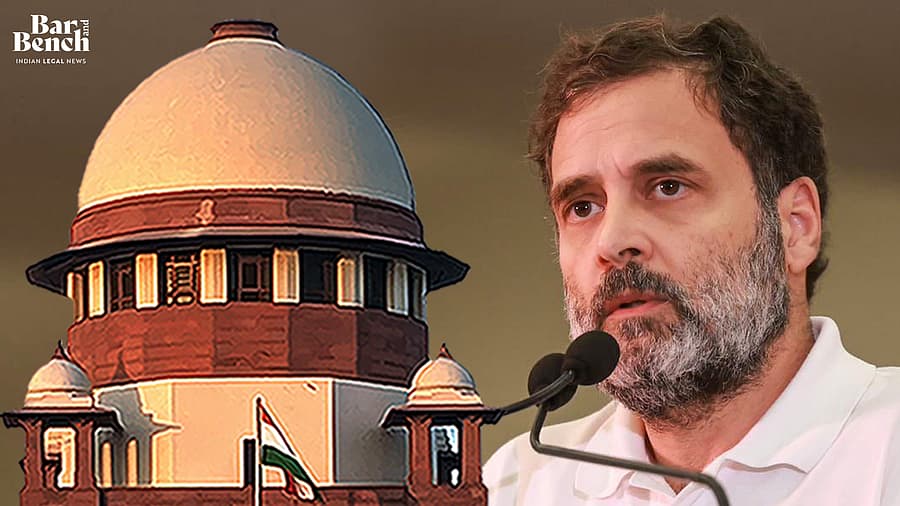
Supreme Court: Sets Aside Allahabad HC Order for Rahul Gandhi Probe
The Supreme Court of India, on Wednesday, set aside an Allahabad High Court order that had directed the Central Bureau of Investigation (CBI) and Enforcement Directorate (ED) to probe allegations of disproportionate assets against Leader of Opposition Rahul Gandhi, remitting the matter back to the High Court for fresh consideration and directing Gandhi be made a party.
This decision underscores the Supreme Court's role in overseeing lower court proceedings, particularly concerning fundamental principles of natural justice and due process. The directive to make Rahul Gandhi a party and hear him before passing orders highlights the importance of ensuring all affected parties have an opportunity to be heard, even in preliminary investigative stages. For practitioners, it reinforces the procedural safeguards against ex parte orders that can have significant implications for individuals, especially high-profile public figures, ensuring that due process is meticulously followed.
The case involves the interplay between the investigative powers of agencies like the CBI and ED, the supervisory jurisdiction of High Courts under Article 226 of the Constitution of India, and the appellate jurisdiction of the Supreme Court under Article 136. The Supreme Court's emphasis on hearing the affected party aligns with the principle of *audi alteram partem*, a cornerstone of natural justice. The High Court's initial order stemmed from a petition by a BJP worker, S Vignesh Shishir, seeking a probe into Gandhi's assets, and the High Court had expressed dissatisfaction with the CBI's initial response, noting its counter affidavit was not satisfactory.
Key parties involved include the Supreme Court of India (Bench of CJI Surya Kant, Justice Joymalya Bagchi, and Justice V Mohana), the Allahabad High Court (Bench of Justice Brij Raj Singh and Justice Rajesh Singh Chauhan), Rahul Gandhi (Leader of Opposition), the Central Bureau of Investigation (CBI), the Enforcement Directorate (ED), and BJP worker S Vignesh Shishir, who initiated the original petition. The Supreme Court's intervention ensures that all relevant parties are heard before any potentially impactful orders are issued.
Attorneys should note the Supreme Court's firm stance on procedural fairness, particularly the requirement to hear affected parties before issuing directives that could impact their rights or reputation. This serves as a reminder to challenge orders where due process has been circumvented and to ensure that clients are properly impleaded and heard in proceedings, even those initiated by public interest litigation or similar mechanisms. The outcome of the fresh consideration by the Allahabad High Court is not yet reported and will be crucial to monitor for its implications on investigative powers and individual rights.
How does this affect you?
Get an AI analysis of this article grounded in your jurisdictions, practice areas, and any policy documents you've uploaded to Wansom.
Finish Reading the Full Story and the Expert Analysis.
Get the latest legal & regulatory intelligence in India
Wansom is AI and can make mistakes.