
Supreme Court: Affirms 2-Year Section 56(2) Electricity Dues Limitation
Summary
- The Supreme Court ruled that electricity charges become 'first due' when a bill is issued, quantifying the amount payable.
- Section 56(2) of the Electricity Act, 2003, imposes a strict two-year limitation on recovering old electricity dues, preventing power disconnection for bills older than two years unless continuously shown as arrears.
- The court dismissed an appeal by Dakshinanchal Vidyut Vitran Nigam Limited, rejecting a 2007 demand for 1998 Minimum Consumption Guarantee Charges (MCGC) as time-barred.
- The consumer had not consented to the additional electricity load for which the MCGC was claimed, and the dues were not continuously shown as arrears.
- This decision emphasizes timely billing by utilities and provides consumers a defense against stale, unbilled demands.
Supreme Court Upholds Two-Year Limit on Electricity Dues
The court unequivocally stated that charges are considered 'first due' only when the licensee issues a bill that quantifies the amount payable by the consumer.
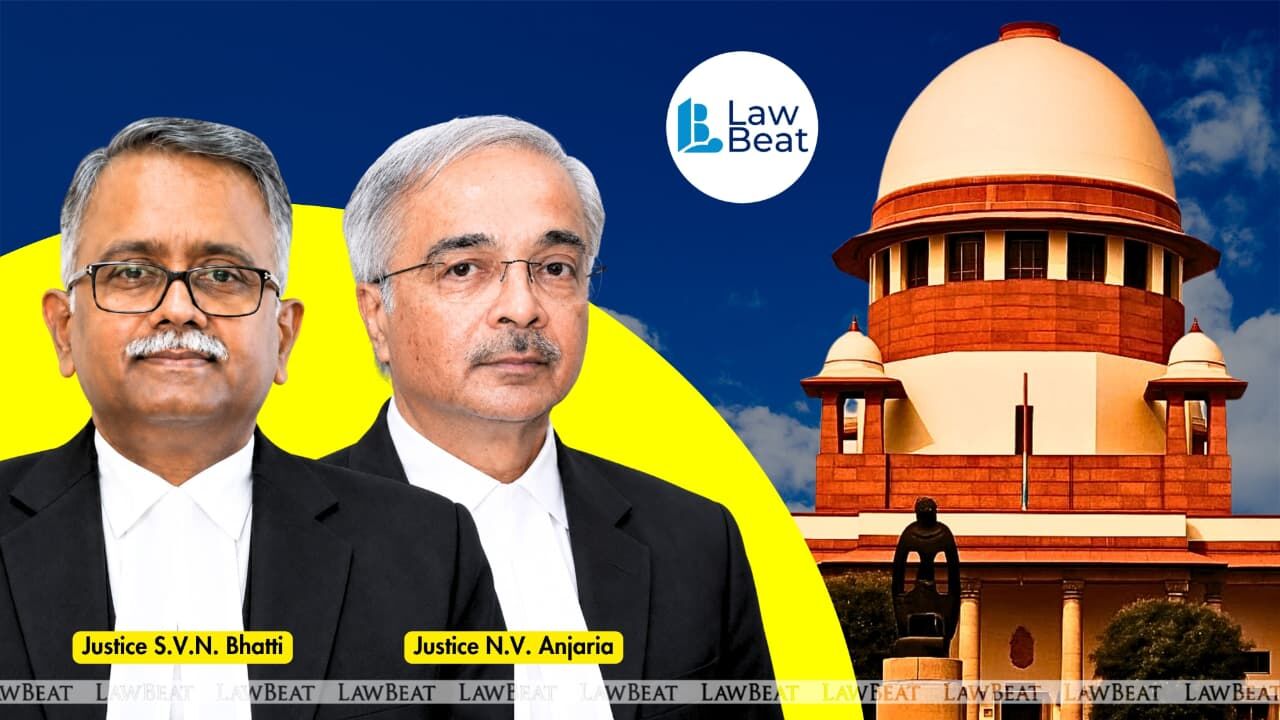
India's Supreme Court recently affirmed a strict two-year limitation period for the recovery of old electricity dues, clarifying the application of Section 56(2) of the Electricity Act, 2003. The ruling came in a case involving Dakshinanchal Vidyut Vitran Nigam Limited, where the utility's appeal was dismissed by a bench comprising Justices S V Bhatti and N V Anjaria. Justice S.V. Bhatti took oath as a Judge of the Supreme Court of India on July 14, 2023, and Justice N.V. Anjaria took oath as a Judge of the Supreme Court of India on May 30, 2025. The court specifically addressed a demand for Minimum Consumption Guarantee Charges (MCGC) that pertained to the year 1998 but was first raised nearly a decade later in 2007.
The dispute originated from a consumer's application for an electricity connection with a 4000 KVA load. While an agreement was signed on February 24, 1997, only 2000 KVA was initially sanctioned due to existing limitations. The utility later offered the remaining 2000 KVA on January 31, 1998, citing improved power generation capacity. However, the consumer explicitly declined this additional supply load in a letter dated September 14, 1998. Despite this refusal, Dakshinanchal Vidyut Vitran Nigam Limited issued a demand on February 13, 2007, for Rs 57,74,164, representing MCGC for the period of February to September 1998, based on an assumption that the contracted capacity was 4000 KVA.
Clarifying 'First Due' Under Electricity Act 2003 Section 56(2)
The Supreme Court's decision hinged on its interpretation of when electricity charges become 'first due' for the purpose of the two-year limitation under Section 56(2) of the Electricity Act, 2003. The Electricity Act, 2003, is currently in force in India. The court unequivocally stated that charges are considered 'first due' only when the licensee issues a bill that quantifies the amount payable by the consumer. This interpretation is crucial because Section 56(2) explicitly prohibits electricity companies from disconnecting power supply for unpaid bills that are older than two years, unless those specific dues have been continuously displayed as pending arrears in the consumer's regular bills.
In the Dakshinanchal Vidyut Vitran Nigam Limited case, the court found that the consumer had neither consented to nor accepted the additional 2000 KVA electricity load offered by the distribution licensee. More critically, the demand for 1998 dues, raised in 2007, was deemed time-barred under Section 56(2) because no bill had been issued for these specific charges during the relevant billing cycles, nor was the amount continuously shown as recoverable arrears. This upheld earlier decisions by the Electricity Ombudsman, which had set aside the 2007 demand, and the Allahabad High Court's Lucknow Bench, which affirmed the Ombudsman's order on January 6, 2012. The utility's appeal also sought to quash Clause 8 of the U.P. Electricity Regulatory Commission (Consumer Grievance Redressal Forum and Electricity Ombudsman) Regulations, 2007, which have since been amended in 2019 and 2020, arguing it was ultra vires Sections 42(5) and 42(6) of the Electricity Act, 2003.
Implications for Electricity Bill Arrears Limitation
This landmark ruling by the Supreme Court of India significantly clarifies the strict application of the two-year limitation period for recovering old electricity dues under Section 56(2) of the Electricity Act, 2003. It underscores that a demand for electricity charges, even if genuinely owed, cannot be sustained if it is raised years after the fact without proper billing or continuous representation as arrears. The decision reinforces the principle that utilities must be diligent in their billing practices and transparent in displaying outstanding amounts.
The ruling has profound implications for both electricity licensees and consumers. For licensees, it mandates timely billing and continuous display of any outstanding arrears to ensure that demands are not time-barred. Failure to do so means they forfeit the right to recover such dues or disconnect power. For consumers, this judgment provides a strong precedent to challenge stale, unbilled claims, particularly where there is no evidence of continuous arrears being shown on their regular electricity bills. It also highlights the importance of consumer consent for any changes or additions to their contracted electricity load.
Practical Implications
This ruling clarifies the strict two-year limitation under Section 56(2) of the Electricity Act, 2003, for recovering old electricity dues. Lawyers advising electricity licensees must ensure timely billing and continuous display of arrears to prevent demands from being time-barred, while those representing consumers can use this precedent to challenge stale, unbilled claims.
Source
Source: Original reporting via Live Law
How does this affect you?
Get an AI analysis of this article grounded in your jurisdictions, practice areas, and any policy documents you've uploaded to Wansom.
Finish Reading the Full Story and the Expert Analysis.
Get the latest legal & regulatory intelligence in India
Wansom is AI and can make mistakes.