
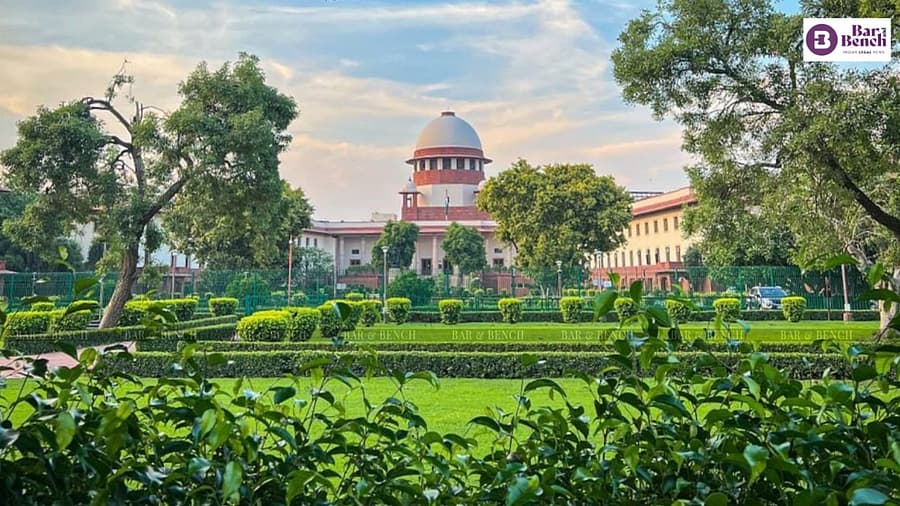
Supreme Court: Shaan E Hind vs Muft Mohammad Ismail Abdul Khalique Election Petition
Summary
- The Supreme Court affirmed a Bombay High Court ruling that a Muslim prayer (Dua) for election success is not considered soliciting votes in the name of religion.
- The ruling on September 25 dismissed an appeal against the election of AIMIM MLA Mufti Mohammad Ismail Abdul Khalique from Malegaon Central.
- Khalique won the 2024 Maharashtra Assembly election by a narrow margin of 72 votes.
- The election petition alleged corrupt practices, specifically citing Khalique's invocation of Islam and Islamic texts during campaigning, including a Dars-e-Quran event.
- The Bombay High Court had previously upheld Khalique's election on June 8, rejecting claims that the prayer constituted undue influence or religious solicitation.
The Contested Election in Malegaon Central
The Supreme Court's decision reinforced the principle established by the Bombay High Court: that merely saying a 'Dua' for electoral success does not fall under the purview of soliciting votes in the name of religion, nor does it amount to exercising undue influence over the electorate.
The 2024 Maharashtra Assembly election in the Malegaon Central constituency concluded with an exceptionally narrow victory, prompting a legal challenge that ultimately reached India's highest court. Mufti Mohammad Ismail Abdul Khalique, representing the All India Majlis-e-Ittehadul Muslimeen (AIMIM), secured his seat with 1,09,563 votes. His closest contender, Shaikh Asif Shaikh Rashid, garnered 1,09,491 votes, resulting in a slim margin of just 72 votes separating the two candidates. A third candidate, Shaan-e-Hind Nihal Ahmed, who ran on a Samajwadi Party ticket, received 9,624 votes in the November 2024 contest.
Following the declaration of results, Shaikh Asif Shaikh Rashid initiated legal proceedings by filing an election petition before the Bombay High Court. His petition alleged that corrupt practices had been employed during Khalique's campaign, seeking to overturn the election outcome. The High Court, however, ultimately rejected this election petition, upholding Khalique's victory. Subsequently, Shaan-e-Hind Nihal Ahmed, the Samajwadi Party candidate, escalated the matter further by appealing the Bombay High Court's decision to the Supreme Court of India.
Allegations of Religious Solicitation
Central to the challenge against Mufti Mohammad Ismail Abdul Khalique's election was the accusation that his campaign extensively utilized religious references, which the petitioners contended amounted to corrupt practices. The election petition specifically highlighted Khalique's conduct during the campaign, noting that he was described as an Imam and was alleged to have repeatedly invoked Islam and Islamic religious texts in his appeals to voters. A particular event cited in the petition was a Dars-e-Quran, a religious discourse, held at Malegaon’s Jama Masjid on October 16, 2024, which was presented as evidence of these alleged religious solicitations.
The legal question at the heart of the dispute revolved around whether such actions constituted "soliciting votes in the name of religion" or amounted to "undue influence," both of which are prohibited under Indian election law. The Bombay High Court, in its judgment delivered on June 8, carefully considered these allegations. After reviewing the evidence and arguments, the High Court concluded that the act of offering a 'Dua' (a Muslim prayer) for success in an election did not, in itself, constitute either undue influence or an appeal for votes based on religion. This ruling paved the way for the subsequent appeal to the Supreme Court.
Supreme Court Upholds High Court's Stance
On September 25, the Supreme Court of India delivered a definitive ruling in the case of Shaan E Hind vs. Muft Mohammad Ismail Abdul Khalique, affirming the Bombay High Court's earlier decision. A bench comprising Justices Vikram Nath, Augustine George Masih, and Sandeep Mehta presided over the appeal. The apex court's judgment unequivocally dismissed the appeal, thereby upholding the election of AIMIM MLA Mufti Mohammad Ismail Abdul Khalique from the Malegaon Central Assembly constituency.
The Supreme Court's decision reinforced the principle established by the Bombay High Court: that merely saying a 'Dua' for electoral success does not fall under the purview of soliciting votes in the name of religion, nor does it amount to exercising undue influence over the electorate. This ruling provides crucial clarity on the interpretation of what constitutes corrupt practices related to religious appeals in Indian elections. By dismissing the appeal, the Supreme Court solidified the legal precedent that a general prayer for victory, without further specific religious inducement, is not a violation of electoral conduct.
Practical Implications
This Supreme Court ruling provides a crucial precedent for interpreting what constitutes 'soliciting votes in the name of religion' under Indian election law, specifically clarifying that a general prayer (dua) for success is not a corrupt practice. Lawyers advising political candidates or handling election petitions must consider this judgment when evaluating the legality of religious references in campaign activities.
Source
How does this affect you?
Get an AI analysis of this article grounded in your jurisdictions, practice areas, and any policy documents you've uploaded to Wansom.
Finish Reading the Full Story and the Expert Analysis.
Get the latest legal & regulatory intelligence in India
Wansom is AI and can make mistakes.