
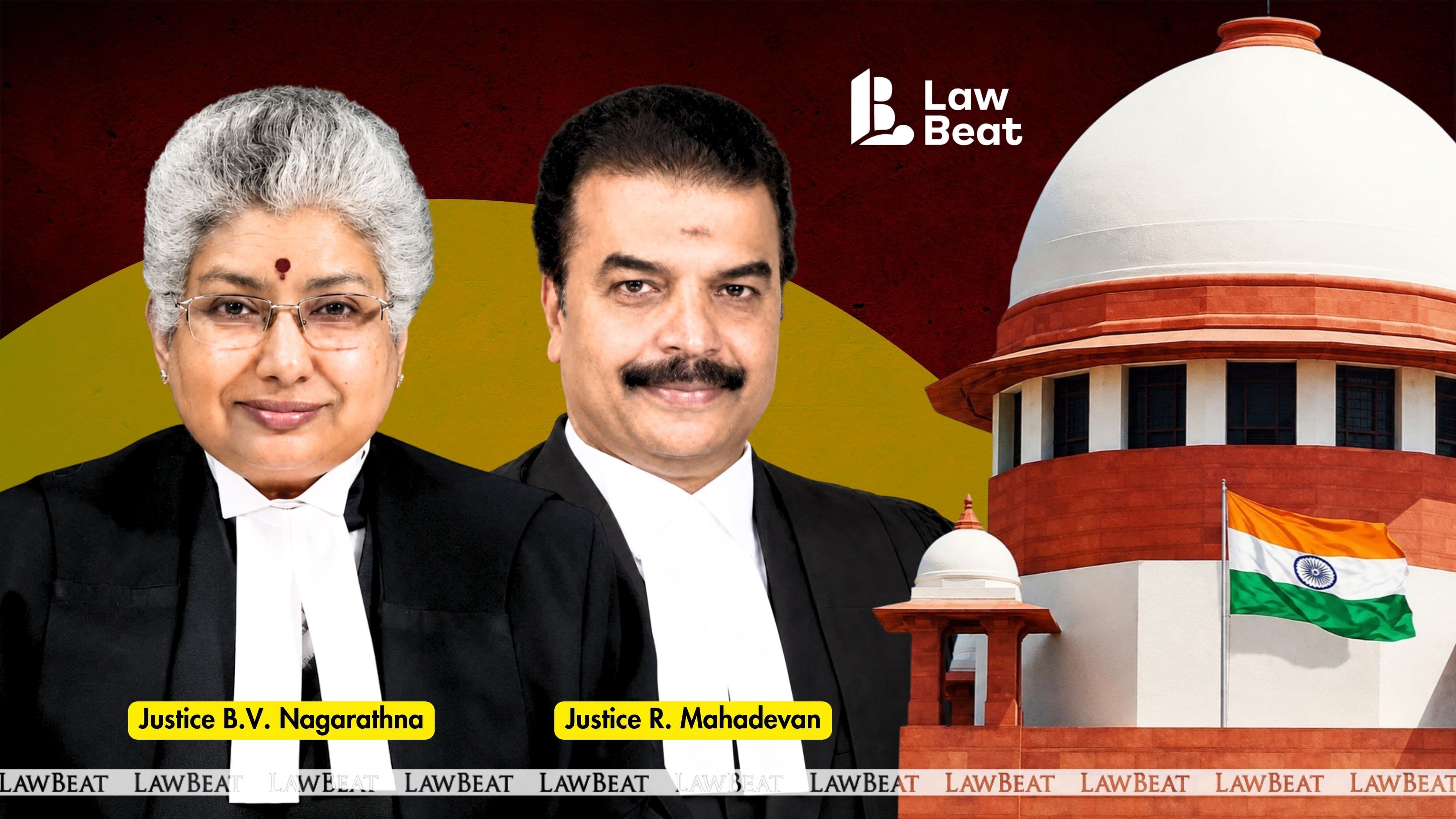
Supreme Court: Prolongs Rupnarayan Ekka Interim Protection
Summary
- The Supreme Court extended interim protection for social worker Rupnarayan Ekka until December 4 in a case involving a Facebook post.
- Justices BV Nagarathna and R Mahadevan questioned the Chhattisgarh Police's registration of an FIR over a post about the historical "breast tax."
- The FIR invokes Section 299 and Section 353(2) of the Bharatiya Nyaya Sanhita (BNS) concerning outraging religious feelings and promoting enmity.
- Advocate Prashant Bhushan argued that Ekka's post, which attributed the tax to Brahmins instead of Aurangzeb, did not constitute an offense.
- The Court emphasized that police should focus on significant cases rather than those like Ekka's social media post.
Supreme Court Extends Protection
This judicial stance signals a cautious approach to prosecuting alleged 'outraging religious feelings' based on social media posts.
The Supreme Court of India has prolonged the interim protection granted to social worker Rupnarayan Ekka, who faces a criminal case stemming from a Facebook post. A bench comprising Justices BV Nagarathna and R Mahadevan extended the order preventing coercive action against Ekka until December 4. This decision came after the State of Chhattisgarh requested additional time and had not yet submitted its response to Ekka's application for anticipatory bail. The initial protection, which stipulated no coercive steps be taken against Ekka provided he cooperated with the investigation, was first issued in September.
During the proceedings, the Supreme Court bench critically questioned the Chhattisgarh Police's decision to register a First Information Report (FIR) against Ekka. The case revolves around a social media post concerning the historical "breast tax," which Ekka's post attributed to Brahmins rather than the Mughal emperor Aurangzeb. Advocate Prashant Bhushan, representing Ekka, contended before the court that the Facebook post did not constitute any recognizable offense. He characterized the post as merely suggesting that people be taught that the tax on women covering their breasts was imposed by "some Brahmin" and not Aurangzeb, asserting that this content did not amount to a crime.
Judicial Scrutiny of FIRs
The Supreme Court's bench, led by Justice BV Nagarathna and Justice R Mahadevan, expressed significant reservations about the necessity of the FIR in this particular instance. Justice R Mahadevan explicitly advised the State to focus on more substantial cases, stating, "What is there to file an FIR for? Concentrate on big cases. Not cases like this." Justice Nagarathna further underscored the Court's concern, remarking, "That is why we have entertained it," and adding, "That means people have a lot of time to waste," highlighting the perceived triviality of the matter in the context of judicial resources. This judicial stance signals a cautious approach to prosecuting alleged 'outraging religious feelings' based on social media posts.
The FIR, lodged at Kunkuri police station in Jashpur district, invokes Section 299 of the Bharatiya Nyaya Sanhita (BNS), which addresses deliberate and malicious acts intended to outrage religious feelings by insulting religion or religious beliefs. Additionally, Section 353(2) of the BNS, pertaining to statements carrying false information or rumors made with intent to promote enmity or hatred between groups, has also been applied. The Court's questioning of the FIR's registration, particularly under new criminal provisions like BNS Section 299, indicates a heightened scrutiny of police action in such cases, especially those involving anticipatory bail social media post India. The State's counsel noted that Ekka had not appeared at the police station since a notice was issued on September 9, to which the Bench simply responded, "You summon him. He will appear," with the State confirming a notice would be issued that very day.
Background of the Case and Allegations
The genesis of the criminal complaint against Rupnarayan Ekka traces back to a grievance filed by Deepak Mishra, identified as the president of the Sarva Brahman Samaj, Jashpur. Mishra's complaint alleged that on April 13, 2025, Ekka, a social worker and member of the Bahujan Mukti Party, published a Facebook post asserting that "Peshwai Brahmins," rather than Aurangzeb, were responsible for imposing a tax on Hindu women for covering their breasts. The complainant contended that this post had achieved widespread circulation, causing offense and wounding the sentiments of both Hindus and Brahmins. Furthermore, the prosecution has alleged that the content of the post was derogatory towards Hindu women.
This is not Ekka's first attempt to secure anticipatory bail. His initial application was rejected on its merits by the Chhattisgarh High Court on December 15, 2025. Subsequently, Ekka filed a second application, arguing that the High Court's previous order had erroneously presumed he committed the alleged offense while already out on bail in an unrelated case. This second application was rejected by the Chhattisgarh High Court on July 3, 2026, leading to his appeal before the Supreme Court. He maintained that the Facebook post in question predated the FIR in the other matter. Ekka also put forward the argument that he was being unfairly targeted due to political rivalry, adding another layer of complexity to the ongoing legal battle surrounding the Rupnarayan Ekka breast tax Facebook FIR. The Supreme Court's decision to grant interim protection to Rupnarayan Ekka signals its ongoing engagement with the nuances of free speech and police discretion in social media cases.
Practical Implications
This development signals the Supreme Court's scrutiny of police action in registering FIRs for social media posts, particularly under new criminal provisions like BNS Section 299. Lawyers should note the Court's emphasis on prioritizing significant cases and its cautious approach to prosecuting alleged 'outraging religious feelings,' which could influence future anticipatory bail applications and defense strategies in free speech cases.
Source
How does this affect you?
Get an AI analysis of this article grounded in your jurisdictions, practice areas, and any policy documents you've uploaded to Wansom.
Finish Reading the Full Story and the Expert Analysis.
Wansom is AI and can make mistakes.