
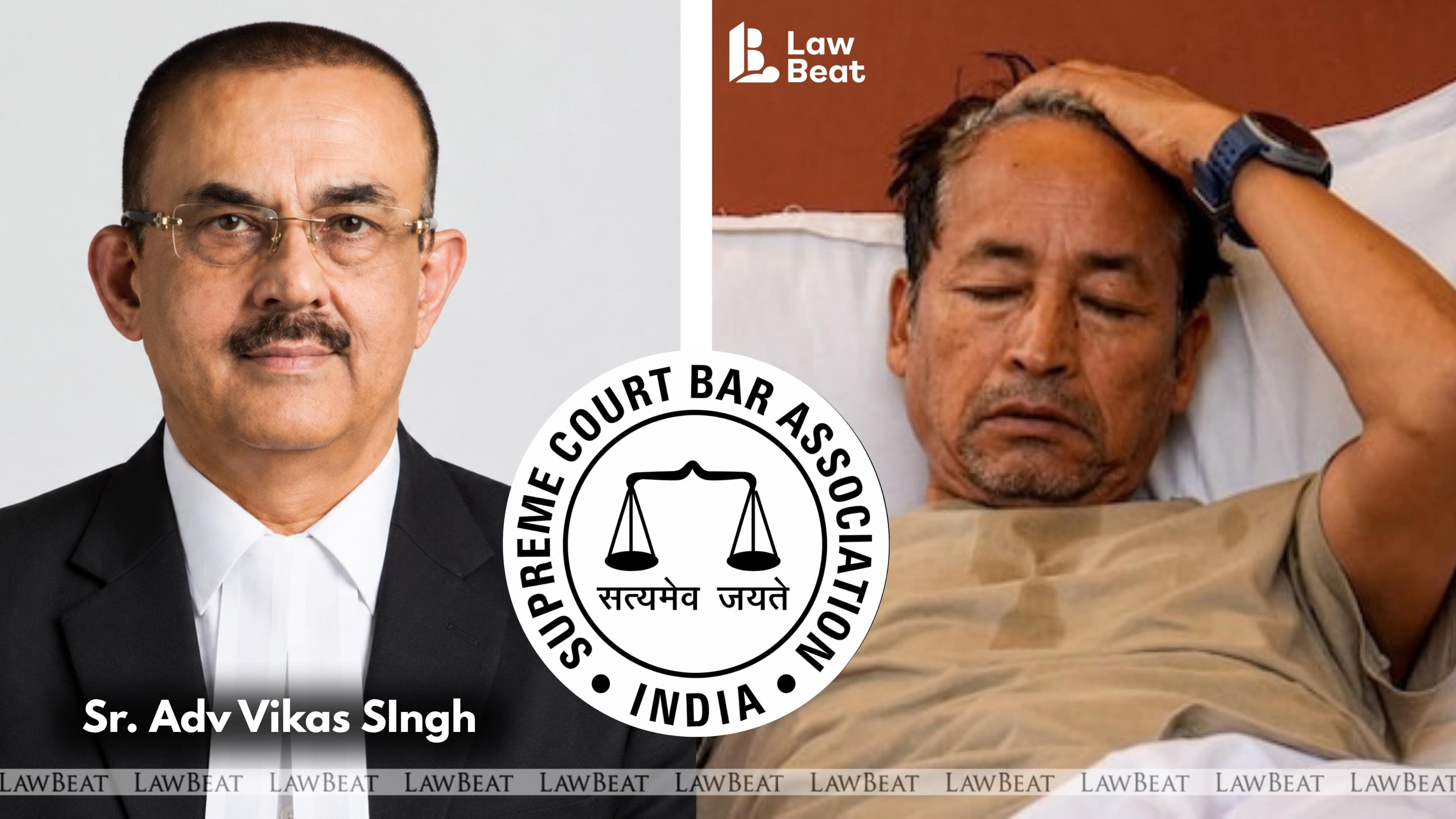
Supreme Court Rejects Petition Against SCBA Resolution Supporting Sonam Wangchuk
Summary
- The Supreme Court Bar Association passed a resolution supporting climate activist Sonam Wangchuk's hunger strike and education reforms.
- A petition challenging the SCBA resolution was rejected by the Supreme Court, which emphasized the importance of resolving disputes through democratic mechanisms.
- The ruling may set a precedent for future disputes over resolutions passed by professional associations, highlighting the limits of judicial intervention in bar association decision-making.
SCBA Resolution Sparks Hunger Strike Support
The Supreme Court Bar Association (SCBA) recently passed a resolution expressing solidarity with climate activist Sonam Wangchuk, who has been on an indefinite hunger strike to highlight concerns surrounding the NEET examination system and education reforms. The resolution was adopted by the SCBA Executive Committee after deliberations on Wangchuk's fast, which drew national attention to issues affecting millions of young citizens. The Committee noted that Wangchuk had placed 'his health and life at risk for the future of our children' and acknowledged his longstanding contribution to education, innovation, and community-based learning. The resolution also pledged legal and research support within the framework of its mandate to initiatives seeking greater transparency and accountability in processes determining educational opportunities.
Supreme Court Rejects Petition Challenging SCBA Resolution
A petition filed by Ashish Gopal Garg challenging the SCBA resolution was recently rejected by the Supreme Court. The bench of Chief Justice Surya Kant, Justice Joymalya Bagchi, and Justice V. Mohana observed that disagreements over resolutions passed by a Bar Association must be resolved through its own democratic mechanisms. The court noted that if an individual believes a decision is undemocratic, they can gather the requisite strength under the Rules and seek a General Body Meeting. However, the bench warned against interfering in the democratic process of a Bar Association, where there can always be a view, a counter-view, and healthy democratic debate.
Implications of SCBA Resolution and Supreme Court Ruling
The SCBA resolution and the Supreme Court's ruling on the petition have significant implications for lawyers and compliance officers. The ruling may set a precedent for future disputes over resolutions passed by professional associations, highlighting the limits of judicial intervention in bar association decision-making. The SCBA's support for education reforms and its pledge to extend legal and research support to initiatives seeking greater transparency and accountability in educational processes are also noteworthy. These developments underscore the importance of understanding the role of bar associations in shaping public policy and their potential impact on individual rights.
Practical Implications
Lawyers and compliance officers should watch for the implications of this ruling on the limits of judicial intervention in bar association decision-making, which may set a precedent for future disputes over resolutions passed by professional associations.
Source
Source: Original reporting via LawBeat
How does this affect your business?
Get an AI analysis of this article grounded in your jurisdictions, practice areas, and any policy documents you've uploaded to Wansom.
Wansom is AI and can make mistakes.