
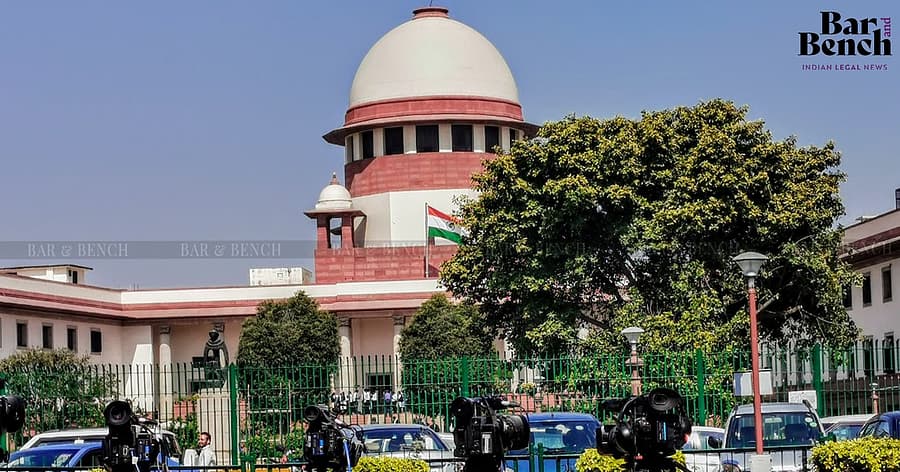
Supreme Court: Demands Registry Causelist Deletion Explanation After Judicial Order
Summary
- The Supreme Court sought an explanation from its registry after a batch of contempt petitions was removed from the causelist despite a judicial order for its listing.
- The case, *Mahendra Singh Deo v. Govind Mohan*, concerns the deputation of 46 IPS officers to CAPFs and alleges disobedience of a May 2025 judgment in *Sanjay Prakash & Ors. v. Union of India*.
- Justices Ujjal Bhuyan and AS Chandurkar ordered the case to be relisted for Wednesday, September 30, 2026, at 2:00 PM, demanding a note from the registry explaining the deletion.
- Chief Justice of India Surya Kant subsequently formed a new special bench, including Justices Manoj Misra and Ujjal Bhuyan, to hear the relisted contempt petitions.
- This incident highlights the importance of judicial oversight over administrative processes and the need for lawyers to diligently monitor court schedules.
Unexplained Causelist Deletion Prompts Supreme Court Inquiry
The demand for a Supreme Court registry causelist deletion explanation highlights the judiciary's commitment to accountability within its administrative functions.
The Supreme Court of India has initiated an inquiry into the unexpected removal of a series of contempt of court petitions from its causelist, despite a clear judicial directive for their listing. The matter, identified as *Mahendra Singh Deo v. Govind Mohan*, involves allegations of contempt related to the deputation of 46 Indian Police Service (IPS) officers to various Central Armed Police Forces (CAPFs).
A bench comprising Justices Ujjal Bhuyan and AS Chandurkar was scheduled to hear these petitions on a Tuesday afternoon. However, the court was informed at 2:00 PM that the case had been struck off the causelist during the lunch recess. This administrative action directly contravened an existing judicial order that specifically mandated the case's listing for that day at 2:00 PM.
The abrupt deletion of the case from the schedule has raised concerns regarding procedural integrity within the Supreme Court registry. The court's immediate response underscores the seriousness with which it views any deviation from its judicial orders, particularly those affecting the timely hearing of significant cases.
Judicial Mandate for Explanation and Relisting
In response to the unexplained causelist removal, the bench of Justices Ujjal Bhuyan and AS Chandurkar issued a directive for the immediate relisting of the case. They ordered that the batch of contempt petitions, along with all connected matters, be listed again on Wednesday, September 30, 2026, at 2:00 PM. This order explicitly reiterated the judicial command for the case to be heard without further delay.
Crucially, the Supreme Court also demanded a formal explanation from its registry. The order stipulated that the registry must provide a detailed note clarifying why the matter was removed from the causelist, especially given the presence of a binding judicial order for its listing. This demand for a Supreme Court registry causelist deletion explanation highlights the judiciary's commitment to accountability within its administrative functions.
Following this directive, Chief Justice of India Surya Kant took further action by constituting a new special bench. This reconstituted bench, comprising Justices Manoj Misra and Ujjal Bhuyan, was specifically assigned to hear the contempt petitions on the rescheduled date of Wednesday, September 30.
Context of the Contempt Petitions
The contempt proceedings at the heart of this incident stem from allegations of wilful disobedience of a significant prior judgment by the Supreme Court. These Indian Supreme Court contempt petitions specifically refer to a May 2025 ruling in the case of *Sanjay Prakash & Ors. v. Union of India*. The original judgment had addressed the status of CAPFs, declaring them as a particular category, though the full scope of that declaration was not detailed in the immediate context of the causelist deletion.
The current batch of petitions, *Mahendra Singh Deo v. Govind Mohan*, seeks to address the alleged non-compliance with the directives issued in the *Sanjay Prakash* judgment. The core issue revolves around the deputation of 46 IPS officers to CAPFs, which the petitioners contend is in violation of the Supreme Court's earlier pronouncement. The integrity of judicial orders and their enforcement is paramount, making these contempt petitions a critical aspect of the court's oversight.
Significance of Registry Oversight
This incident underscores the critical importance of diligent monitoring of court schedules by legal practitioners, even when specific judicial listing orders have been secured. The unexpected causelist removal, despite a clear judicial mandate, serves as a stark reminder that administrative errors or oversights can occur, potentially disrupting scheduled hearings and delaying justice. Lawyers must remain vigilant to prevent such administrative actions from impeding their cases.
Furthermore, the Supreme Court's swift and firm response to this administrative lapse highlights its commitment to maintaining procedural integrity and ensuring that judicial orders are respected and implemented without fail. The demand for a Supreme Court registry administrative oversight explanation reinforces the principle that even the highest court's administrative wing is accountable for its actions, especially when they impact the judicial process. This event reaffirms the judiciary's role in safeguarding the sanctity of its own directives and the smooth functioning of the legal system.
Practical Implications
This incident underscores the importance for lawyers to diligently monitor court causelists, even after obtaining specific judicial listing orders, as administrative errors or deletions can still occur and disrupt scheduled hearings. It also highlights the Supreme Court's commitment to ensuring procedural integrity within its own registry.
Source
How does this affect you?
Get an AI analysis of this article grounded in your jurisdictions, practice areas, and any policy documents you've uploaded to Wansom.
Finish Reading the Full Story and the Expert Analysis.
Get the latest legal & regulatory intelligence in India
Wansom is AI and can make mistakes.