
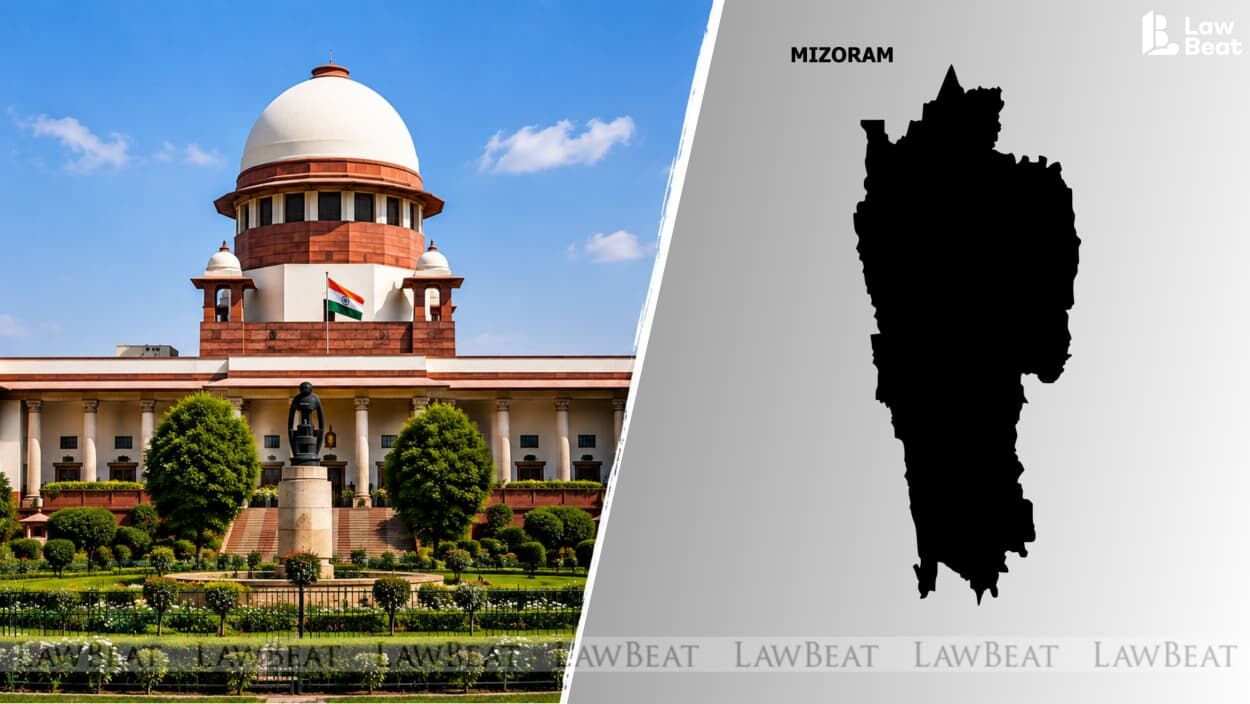
Supreme Court: Refuses Mizo Marriage Law Challenge, Directs High Court
Summary
- The Supreme Court has refused to directly hear a challenge against amendments to the Mizo Marriage, Divorce and Inheritance of Property Act, 2014.
- Petitioner Meriam L Hrangchal alleges the amendments discriminate against Mizo women marrying non-Mizo men, affecting property rights and tribal identity.
- The Supreme Court directed the petitioner to the Gauhati High Court, noting the issue requires preferential attention without commenting on the merits.
- The challenged amendments to Sections 2, 3(m), 25, and 26(1) are argued to violate Articles 14 and 15 of the Constitution.
- The Gauhati High Court will now review the constitutional validity of the Mizo law amendments, including concerns about inter-community marriages and women's property rights.
Supreme Court Directs Mizo Law Challenge to High Court
The Supreme Court refuses Mizo marriage law challenge at this stage, opting for a lower court review.
The Supreme Court of India has declined to directly intervene in a challenge against amendments to the Mizo Marriage, Divorce and Inheritance of Property Act, 2014. The nation's highest court, comprising CJI Surya Kant, Justice Joymalya Bagchi, and Justice V Mohana, instead directed the petitioner, Meriam L Hrangchal, to pursue her grievances before the jurisdictional Gauhati High Court. This decision, rendered on August 24, 2026, means the Supreme Court refuses Mizo marriage law challenge at this stage, opting for a lower court review.
CJI Surya Kant took oath as the 53rd Chief Justice of India on November 24, 2025, and will serve until February 9, 2027. Justice Joymalya Bagchi was elevated to the Supreme Court of India on March 17, 2025, and Justice V. Mohana was appointed directly from the Bar on June 2, 2026. This procedural directive underscores the Supreme Court's preference for matters to be heard at the appropriate judicial level, particularly when a High Court possesses the requisite jurisdiction and capacity to address complex legal questions.
Meriam L Hrangchal's petition specifically targeted amendments to the Mizo Marriage, Divorce and Inheritance of Property Act, 2014, which she alleges introduce discriminatory provisions. The Supreme Court's refusal to entertain the plea directly, while not an endorsement of the amendments, signifies a critical procedural step in the ongoing legal scrutiny of the Mizo law.
Allegations of Discrimination Against Mizo Women
The core of Meriam L Hrangchal's petition centers on allegations that the Mizo Marriage, Divorce and Inheritance of Property Act 2014 amendments discriminate against Mizo women, particularly those who marry outside their community. The petitioner contends that these legislative changes disadvantage Mizo women who marry non-Mizo men, while simultaneously continuing to protect Mizo men who enter into inter-community marriages. This alleged disparity forms the basis of the constitutional challenge.
Specifically, the amendments to Sections 2, 3(m), 25, and 26(1) of the Act are under scrutiny. These changes reportedly alter the definition of “Mizo,” impact the application of the Act to inter-community marriages Mizo law, and modify women's rights concerning both matrimonial and personal property. The petitioner argues that these revisions reshape how the law treats tribal identity and property rights after divorce, creating a framework that disadvantages Mizo women and their children.
The legal challenge asserts that these amendments violate fundamental constitutional principles, specifically Articles 14 and 15 of the Constitution. These articles guarantee equality before the law and prohibit discrimination on grounds of religion, race, caste, sex, or place of birth. The petitioner claims the amendments undermine the rights of Mizo women and their children by introducing discriminatory provisions related to property and identity.
Gauhati High Court to Address Constitutional Questions
The Supreme Court's directive ensures that the constitutional validity of the Mizo Marriage, Divorce and Inheritance of Property Act 2014 amendments will now be thoroughly examined by the Gauhati High Court. The bench acknowledged the petitioner's apprehension that the matter might not receive a fair hearing at the Aizawl Bench due to a perceived “charged atmosphere.” To address this concern, the Supreme Court suggested that the Chief Justice of the Gauhati High Court could be requested to list the case before the Principal Bench at Gauhati.
While declining to express any opinion on the merits of the case at this preliminary stage, the Supreme Court observed that the issue raised by the petitioner prima facie requires preferential attention. This indicates the court's recognition of the significant legal and social implications of the challenge to the Mizo law. The petition has been disposed of, granting Meriam L Hrangchal the liberty to approach the Principal Bench of the Gauhati High Court, where her writ petition is expected to be entertained in light of these observations.
This development means that the legal landscape surrounding Mizo women property rights discrimination and inter-community marriages in Mizoram remains uncertain. The Gauhati High Court Mizo law proceedings will be crucial in determining the future application and interpretation of these contentious amendments, particularly regarding their compliance with constitutional guarantees of equality.
Practical Implications
Lawyers advising clients on marriage, divorce, and inheritance in Mizoram, particularly concerning inter-community marriages and women's property rights, should note that the constitutional validity of the Mizo Marriage, Divorce and Inheritance of Property Act, 2014 amendments remains contested and will now be heard by the Gauhati High Court. This means the legal landscape for these matters in Mizoram is still uncertain, and the High Court's eventual ruling will be a critical development to monitor.
Source
Source: Original reporting via Live Law
How does this affect you?
Get an AI analysis of this article grounded in your jurisdictions, practice areas, and any policy documents you've uploaded to Wansom.
Finish Reading the Full Story and the Expert Analysis.
Wansom is AI and can make mistakes.