
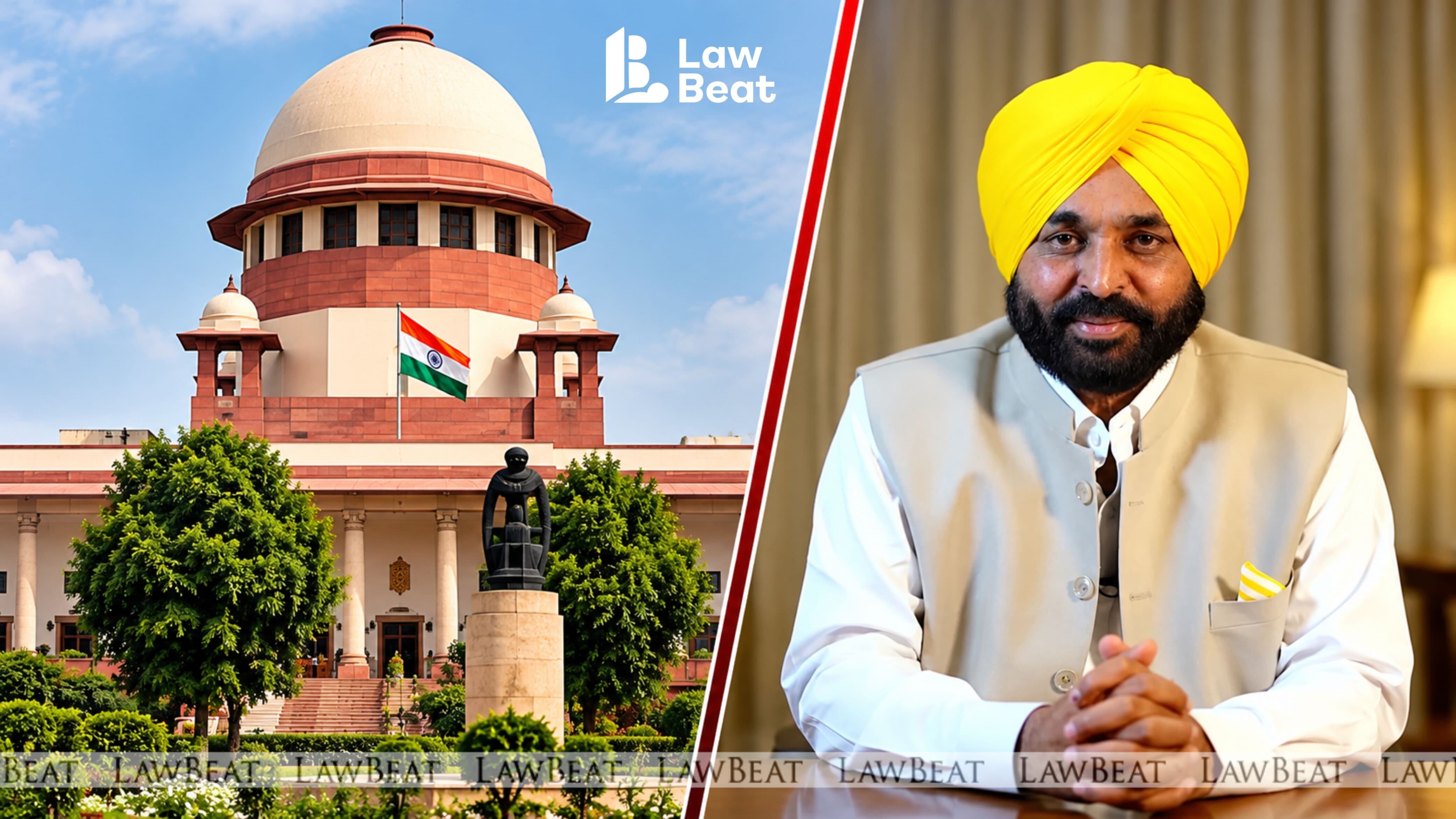
Supreme Court: No Stay on Punjab OSD Corruption CBI FIR, Orders No Coercive Action
Summary
- The Supreme Court refused to stay a CBI FIR in a corruption case linked to Punjab CM Bhagwant Mann's office.
- The Court, however, ordered that no coercive action be taken against the accused named in the FIR.
- The FIR names OSD Rajbir Singh Ghuman and others, following CBI searches at eight locations including the CM's camp office.
- The Punjab Government is challenging a Punjab and Haryana High Court order that directed the CBI probe into the allegations.
- Justice Sheel Nagu had previously recused himself from hearing the state's appeal in this matter.
Supreme Court's Ruling on Corruption Probe
The Supreme Court's decision to issue notice on the Punjab Government's plea while simultaneously refusing to stay the CBI FIR underscores a critical aspect of anti-corruption jurisprudence: the judiciary's reluctance to halt investigations at their initial stages.
The Supreme Court of India recently declined to halt a Central Bureau of Investigation (CBI) First Information Report (FIR) concerning alleged corruption linked to the office of Punjab Chief Minister Bhagwant Mann. While refusing to stay the FIR, a bench comprising Justices MM Sundresh and PB Varale did issue an order preventing any coercive action against the individuals named in the case. This decision came during the hearing of a plea filed by the Punjab Government, which seeks to challenge an earlier directive from the Punjab and Haryana High Court.
The CBI's investigation stems from allegations of corrupt practices, leading the agency to conduct searches at eight different locations. These locations included the camp office of Chief Minister Bhagwant Mann and the residence of his Officer on Special Duty (OSD), Rajbir Singh Ghuman, both situated in Chandigarh. The FIR specifically names Rajbir Singh Ghuman, who serves as OSD to Mann, alongside Nitin Gohal, Jitin Gohal alias Raja, Romi Raja Mahajan, Bir Devinder, and RS Nagra. Additionally, the FIR includes unnamed public servants and private individuals as part of the ongoing corruption probe. Senior Advocate Vikas Singh, representing the Punjab government, had specifically requested a stay on the FIR, to which the court responded by stating it would not stay the FIR but would ensure no coercive steps are taken.
Jurisdictional Challenge and Judicial Recusal
The Punjab Government initiated its challenge before the Supreme Court on October 6, contesting an order issued by the Punjab and Haryana High Court. This High Court order had mandated the Central Bureau of Investigation to register a criminal case and conduct an investigation into the corruption allegations. The State of Punjab has explicitly questioned the High Court's authority to assign the investigation to a central agency like the CBI, arguing that such a transfer should not occur without sufficient justification for entrusting the probe to an an independent central body. The state government is seeking relief from the Supreme Court against this specific directive, emphasizing that the allegations are connected to the Chief Minister's office, making the High Court's decision particularly significant for the state administration. The case is formally titled State of Punjab v. Nikhil Saraf, with a hearing date set for October 12, 2026.
Adding another layer to the legal proceedings, Justice Sheel Nagu recused himself from hearing the Punjab Government’s appeal just last week. The bench, led by Justice Dipankar Datta, subsequently directed that the matter be listed "NOT before Justice Nagu." Although no explicit reason for the recusal was provided, it is notable that Justice Sheel Nagu previously held the position of Chief Justice of the Punjab and Haryana High Court before his elevation to the Supreme Court. This recusal occurred prior to the current bench of Justices Sundresh and Varale taking up the matter and issuing notice on the state's plea.
Implications for State Autonomy and Anti-Corruption Efforts
The Supreme Court's decision to issue notice on the Punjab Government's plea while simultaneously refusing to stay the CBI FIR underscores a critical aspect of anti-corruption jurisprudence: the judiciary's reluctance to halt investigations at their initial stages. The grant of interim protection against coercive action, however, offers a temporary safeguard to the accused without impeding the investigative process itself. This approach balances the need for thorough inquiry into serious allegations, especially those involving high-ranking officials, with the protection of individual liberties.
Furthermore, this case highlights the ongoing tension surrounding the Central Bureau of Investigation's jurisdiction over matters within state purview. The Punjab Government's argument that the High Court lacked sufficient justification to transfer the investigation to the CBI raises fundamental questions about federalism and the autonomy of state governments in law enforcement. Given that the allegations directly involve the Chief Minister's office, the outcome of this legal challenge could set important precedents regarding the circumstances under which central agencies can intervene in state-level corruption cases, thereby shaping the future landscape of anti-corruption efforts and inter-governmental relations in India.
Practical Implications
Lawyers should advise clients that the Supreme Court is unlikely to stay corruption FIRs, but may grant interim protection from coercive action. Monitor the jurisdictional debate over CBI's power to investigate state government officials.
Source
How does this affect you?
Get an AI analysis of this article grounded in your jurisdictions, practice areas, and any policy documents you've uploaded to Wansom.
Finish Reading the Full Story and the Expert Analysis.
Get the latest legal & regulatory intelligence in India
Wansom is AI and can make mistakes.