
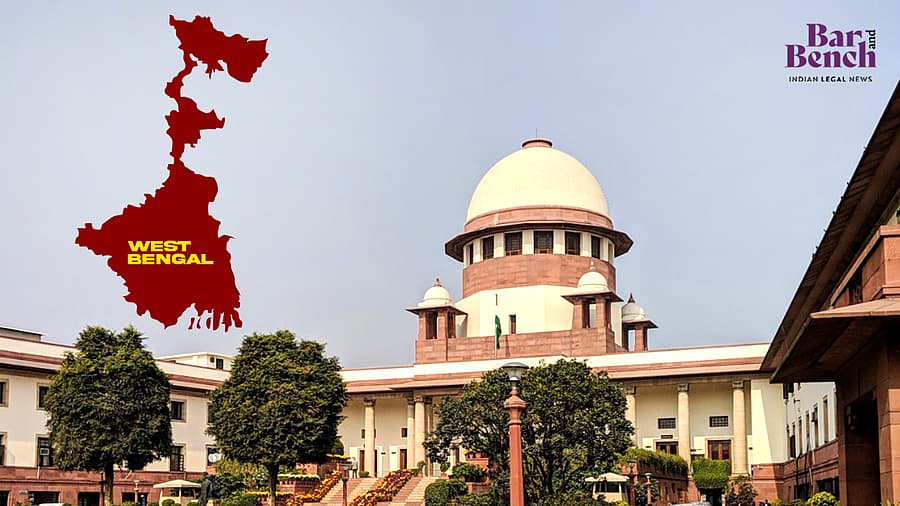
Supreme Court: Proposes Transfer of Kolkata Delimitation Challenge
The Supreme Court of India, on Wednesday, proposed staying a Calcutta High Court order that had halted the notification of Kolkata Municipal Corporation (KMC) elections due to a challenge against ward delimitation, suggesting the matter be transferred from a single-judge to a division bench of the High Court for fresh consideration.
This proposal by the Supreme Court is significant as it aims to balance the need for electoral processes to proceed with ensuring proper judicial review of administrative actions like delimitation. By suggesting a stay on the single-judge's order and transferring the matter to a division bench, the apex court is attempting to expedite a resolution while ensuring a more robust and authoritative review of the complex legal and factual issues involved. For practitioners, it highlights the Supreme Court's pragmatic approach to managing litigation that impacts public administration and electoral timelines, often seeking to find a middle ground that respects both judicial oversight and governmental functions.
The legal context involves the delimitation of municipal wards, an administrative exercise crucial for conducting local body elections, and its challenge before the High Court. This process is governed by constitutional and statutory provisions found in state municipal corporation acts and electoral laws. The Supreme Court's intervention, under its supervisory and appellate jurisdiction, demonstrates its role in guiding lower courts on procedural matters and ensuring efficient justice delivery, especially when public interest matters like elections are involved. The principle of transferring complex matters or those with significant public implications to a division bench is a common practice to ensure a more comprehensive judicial examination and a more authoritative pronouncement.
Key parties involved include the Supreme Court of India (Bench of CJI Surya Kant, Justice Joymalya Bagchi, and Justice V Mohana), the Calcutta High Court (single-judge and proposed division bench), the State of West Bengal, the Kolkata Municipal Corporation (KMC), and the respondent Dipu Das, who challenged the delimitation before the High Court. Senior Advocate Bikas Ranjan Bhattacharya represented the respondent, initially agreeing to the Supreme Court's suggestion.
Attorneys involved in public law, electoral law, or administrative law should closely monitor the outcome of this proposed transfer and the subsequent decision by the Calcutta High Court's division bench. This case underscores the procedural complexities and potential for judicial intervention in electoral processes, particularly concerning administrative actions like delimitation. It also serves as a reminder that the Supreme Court often seeks to streamline judicial review in matters of public importance, sometimes by directing higher benches to hear such cases. The ultimate decision on the delimitation and the KMC elections will set important precedents for similar challenges in other municipal bodies. The outcome of the matter is not yet reported, as the Supreme Court merely
How does this affect you?
Get an AI analysis of this article grounded in your jurisdictions, practice areas, and any policy documents you've uploaded to Wansom.
Finish Reading the Full Story and the Expert Analysis.
Get the latest legal & regulatory intelligence in India
Wansom is AI and can make mistakes.