
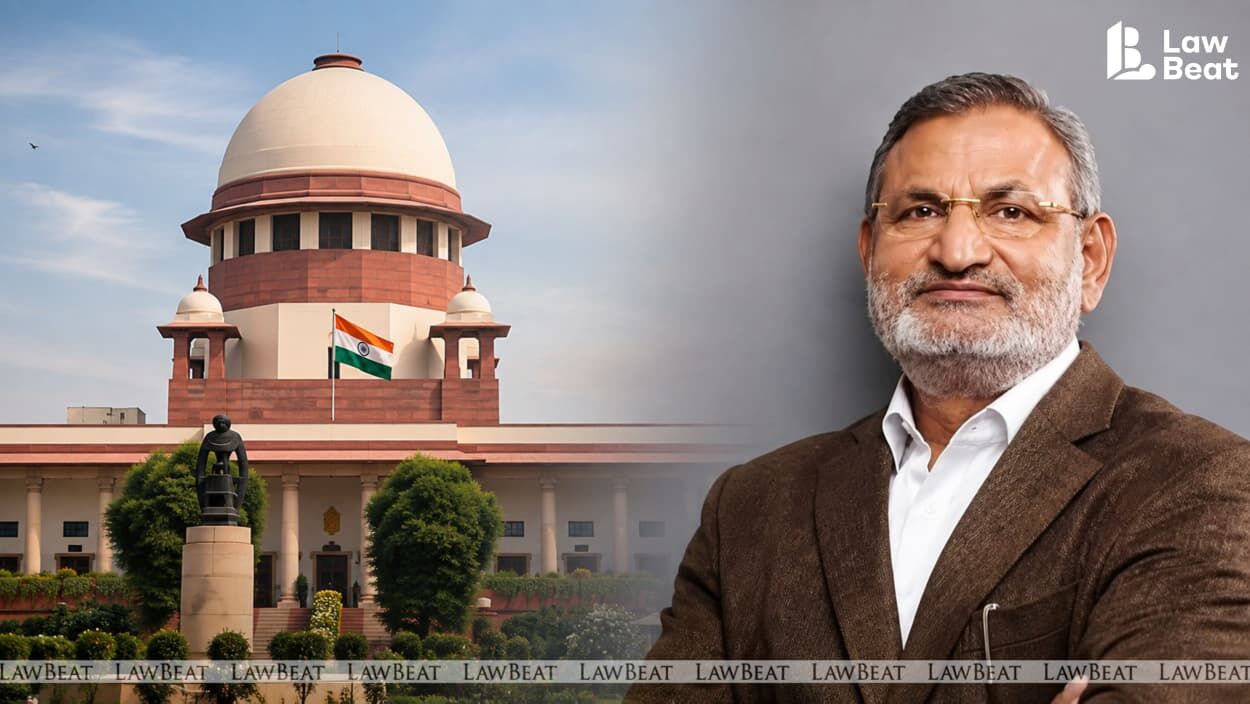
1995 Cheating Case: Supreme Court Asks Bombay High Court To Decide NCP Leader Manikrao Kokate's Plea
Summary
- The Supreme Court has extended its stay on NCP leader Manikrao Kokate's 1995 cheating conviction.
- This stay prevents his immediate disqualification as an MLA, a protection first granted in December 2025.
- Justice Joymalya Bagchi previously observed a "fundamental error" in the conviction, noting "false declaration does not make a document forgery."
- The Supreme Court has directed the Bombay High Court to decide Kokate's revision application within six months.
- Kokate was convicted for allegedly submitting false affidavits to secure government flats under a 1989-1992 housing scheme.
Background of the Conviction and Initial Appeals
During the proceedings, Justice Bagchi made significant prima facie observations regarding the conviction itself, noting that "false declaration does not make a document forgery" and suggesting there appeared to be a "fundamental error in the conviction."
NCP leader and former Maharashtra minister Manikrao Kokate has been embroiled in a long-standing legal battle stemming from a 1995 cheating and forgery case. The allegations against Kokate and his brother, Vijay, trace back to a government housing scheme implemented between 1989 and 1992, designed to provide flats for economically weaker sections. Eligibility for this scheme was strictly limited to individuals with an annual income not exceeding ₹30,000.
Prosecutors contended that the Kokate brothers submitted fraudulent affidavits, deliberately understating their income to secure two government flats under the program. It was alleged that Manikrao Kokate's actual earnings at the time significantly surpassed the stipulated income threshold, derived from both his legal practice and extensive agricultural activities. Specifically, the prosecution claimed his family possessed approximately 25 acres of farmland, and he generated substantial income from supplying sugarcane to local factories, none of which was disclosed in his application.
The trial court found Kokate guilty in February 2025. Subsequently, a sessions court in Nashik affirmed this conviction on December 16, imposing a two-year prison sentence. Following this judgment, Kokate resigned from his ministerial position, a resignation that was reportedly accepted by the Maharashtra government. Earlier, on December 12, a single judge of the Bombay High Court had granted a suspension of Kokate's sentence but declined to stay his conviction. The High Court rejected his argument that potential disqualification as an MLA constituted an “exceptional circumstance” warranting a stay, emphasizing the higher standards of accountability expected from public office holders and the need to maintain public confidence in democratic institutions.
Supreme Court's Interim Relief and Legal Scrutiny
Challenging the Bombay High Court's decision, Manikrao Kokate appealed to the Supreme Court, asserting that the failure to stay his conviction would result in irreversible consequences, including his removal as a Member of the Legislative Assembly. The apex court, acknowledging this contention to a degree, provided interim protection. In December 2025, a vacation bench comprising Chief Justice of India Surya Kant and Justice Joymalya Bagchi issued a notice to the Maharashtra government and, crucially, stayed Kokate's conviction. This action immediately shielded him from disqualification as an MLA.
The Supreme Court's directive explicitly stated that "the conviction of the petitioner shall remain stayed to the extent that there shall be no disqualification as a Member of the Legislative Assembly." However, the court also imposed a clear restriction, stipulating that Kokate "shall not hold any office of profit." During the proceedings, Justice Bagchi made significant prima facie observations regarding the conviction itself, noting that "false declaration does not make a document forgery" and suggesting there appeared to be a "fundamental error in the conviction." Senior Advocate Mukul Rohatgi represented Kokate, while Senior Advocate Maninder Singh appeared for the State during these hearings.
Ongoing Proceedings and Future Outlook
The legal proceedings in the case of MANIKRAO SHIVAJI KOKATE Vs STATE OF MAHARASHTRA continued on August 4, 2026, with the Supreme Court extending its previously granted stay on Kokate's conviction. A bench consisting of CJI Kant, Justice Bagchi, and Justice Mohana further directed the Bombay High Court to adjudicate Kokate's revision application within a six-month timeframe. This ongoing intervention by the Supreme Court underscores its willingness to provide interim relief, specifically a Manikrao Kokate 1995 cheating conviction stay, when a public official faces potential disqualification due to a conviction that may contain fundamental legal flaws.
The apex court's decision to extend the stay and refer the matter back to the Bombay High Court for a definitive ruling on the revision application highlights the procedural avenues available for challenging convictions, particularly when issues like the distinction between a false declaration and forgery are raised. This approach allows for a thorough re-examination of the legal basis of the conviction, ensuring that the consequences, such as MLA disqualification, are not prematurely enforced while substantive legal questions remain unresolved. The case thus serves as a significant precedent regarding the Supreme Court stay of conviction in circumstances where prima facie errors are identified.
Practical Implications
Lawyers advising public officials facing conviction should note the Supreme Court's willingness to grant interim stays on conviction to prevent disqualification, particularly when prima facie errors in the conviction itself are observed. This case highlights the importance of challenging the legal basis of convictions (e.g., distinguishing false declaration from forgery) and the procedural avenues for seeking relief from higher courts to protect a client's public office.
Source
How does this affect your business?
Get an AI analysis of this article grounded in your jurisdictions, practice areas, and any policy documents you've uploaded to Wansom.
Wansom is AI and can make mistakes.