
Supreme Court: PHED Scam Bail Granted After Prolonged Detention
Summary
- The Supreme Court granted bail to former Rajasthan minister Mahesh Chandra Joshi and co-accused Mukesh Pathak in the PHED scam case.
- The court ruled that prolonged pre-trial detention cannot become punishment, violating the right to personal liberty and a speedy trial.
- Bail was granted because the investigation was complete, evidence was seized, and the trial was unlikely to conclude soon.
- Joshi had been in custody for over five months in this case, following a previous seven-month detention in a related PMLA matter.
- The alleged scam involved two firms using forged documents to secure Rs 979.45 crore in tenders under the Jal Jeevan Mission.
Judicial Intervention in Prolonged Detention
This Supreme Court ruling establishes a significant precedent for challenging prolonged pre-trial detention, even in cases involving serious financial impropriety and institutional collusion.
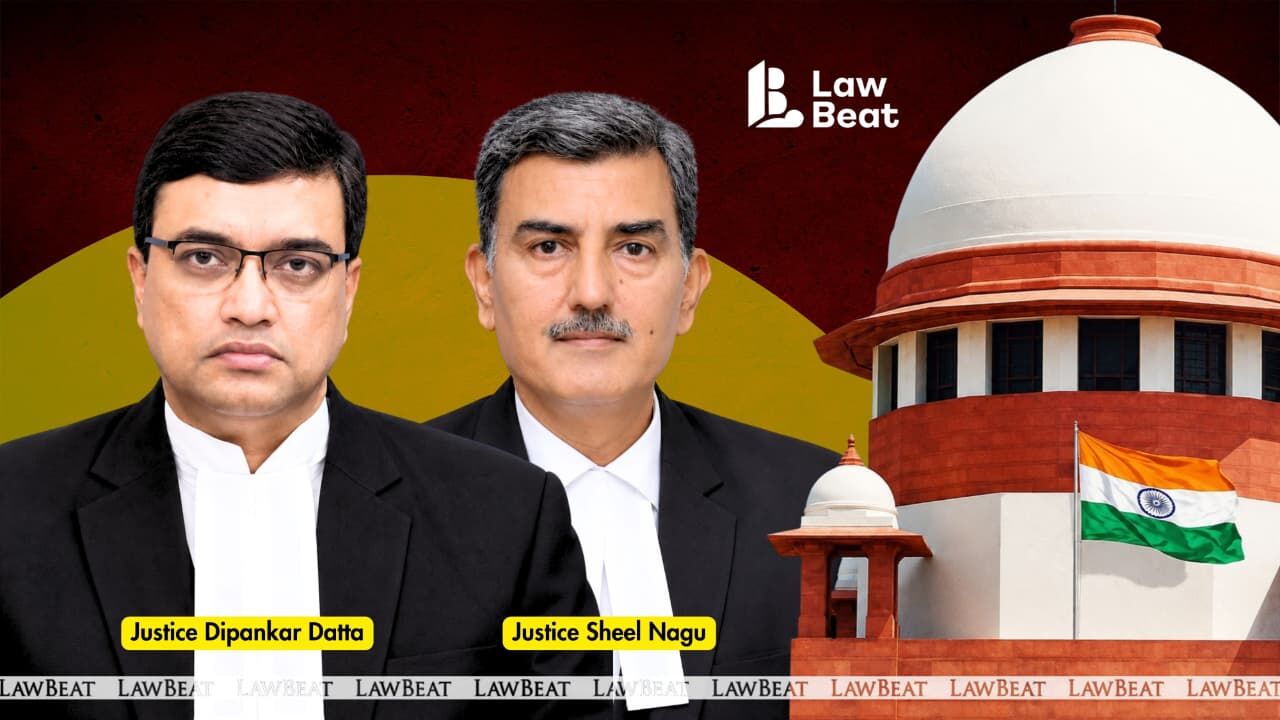
The Supreme Court of India recently intervened in a high-profile case, granting bail to former Rajasthan minister Mahesh Chandra Joshi and co-accused Mukesh Pathak. This decision, delivered by a bench comprising Justices Dipankar Datta and Sheel Nagu, underscored a critical legal principle: pre-trial detention must not transform into punishment without a formal conviction. The ruling specifically addressed the alleged irregularities within the Public Health Engineering Department (PHED) of Rajasthan, linked to the "Jal Jeevan Mission".
TheThe court emphasized that the fundamental right to personal liberty and a speedy trial, guaranteed to every undertrial, cannot be violated by indefinite incarceration. Mahesh Chandra Joshi, aged 72, had been in custody for over five months in connection with the current First Information Report (FIR) since May 7, 2026. Prior to this, he had spent more than seven months in custody in a related proceeding under the Prevention of Money Laundering Act, 2002, which stemmed from the same underlying allegations and involved a purported financial trail of Rs 50 lakh to M/s Sumangalam Landmark LLP. He had secured regular bail in that PMLA case on December 3, 2025. Similarly, Mukesh Pathak had been detained for nearly eight months in the present FIR, commencing February 18, 2026. This significant period of pre-trial detention, particularly given the advanced stage of the investigation, was a key factor in the Supreme Court's decision to grant bail.
Unraveling the Rajasthan PHED Scam
The case at the heart of this Supreme Court decision involves extensive allegations of corruption and institutional collusion within the Rajasthan PHED, specifically concerning tenders issued under the "Jal Jeevan Mission". Prosecutors contend that between 2021 and 2023, two proprietorship firms, M/s Shri Ganpati Tubewell Company, owned by Mahesh Mittal, and M/s Shree Shyam Tubewell Company, owned by Padam Chand Jain, conspired with public servants within the PHED and other private individuals.
These firms are accused of participating in a total of 237 tenders—68 by M/s Shri Ganpati Tubewell Company and 169 by M/s Shree Shyam Tubewell Company—by presenting forged and fabricated work completion certificates. These fraudulent documents, purportedly issued by IRCON International Limited, allowed the companies to emerge as the lowest bidders. Consequently, they secured work orders in 104 tenders, with a combined value of Rs 979.45 crore. This sum included 31 tenders valued at Rs 859.2 crore and 73 tenders valued at Rs 120.25 crore. The Supreme Court acknowledged the gravity of these allegations, recognizing the serious nature of large-scale financial impropriety in a public welfare project.
Legal Principles Guiding Bail Decisions
The Supreme Court's decision to grant bail in the PHED scam case was rooted in a careful balancing act between the severity of the alleged offenses and the fundamental rights of the undertrials. The bench articulated that while allegations of significant financial impropriety and institutional collusion are serious and demand thorough scrutiny, their gravity alone cannot justify indefinite pre-trial detention. This ruling reinforces India's pre-trial detention limits, particularly when the investigative process has largely concluded.
Several circumstances collectively swayed the court's decision in favor of granting bail to Mahesh Chandra Joshi and Mukesh Pathak. The investigation against both individuals was deemed complete, with all relevant documentary and electronic evidence already seized by the authorities. Furthermore, charge sheets had been filed, and the investigating agency was in possession of a vast array of evidence, including tender files, minutes from Bid Evaluation and Finance Committees, official notesheets, correspondence with IRCON International Limited, bank account statements, forensic reports of seized mobile devices, call detail records, and transcripts of intercepted conversations. Given the voluminous nature of the record and the unlikelihood of the trial concluding in the near future, the court determined that continued incarceration would infringe upon the right to a speedy trial.
Broader Implications for Pre-Trial Detention
This Supreme Court ruling establishes a significant precedent for challenging prolonged pre-trial detention, even in cases involving serious financial impropriety and institutional collusion. The judgment reinforces the principle that the severity of an offense, such as the Rajasthan PHED scam, cannot automatically override an individual's right to personal liberty and a timely judicial process. It provides crucial guidance for lower courts on how to assess bail applications where investigations are complete, evidence is secured, and the trial process is expected to be lengthy.
The emphasis on the right to speedy trial India, alongside the recognition that pre-trial detention cannot become punishment, offers a powerful tool for legal practitioners. Lawyers can leverage this judgment to argue for bail for clients whose investigations are complete and whose trials are unlikely to conclude in the near future, particularly in complex cases like the Jal Jeevan Mission scam bail applications. This decision serves as a vital reminder that while accountability for alleged crimes is paramount, it must always be balanced against the constitutional rights of the accused, preventing indefinite incarceration from becoming a de facto penalty.
Practical Implications
This Supreme Court ruling establishes a significant precedent for challenging prolonged pre-trial detention, even in cases involving serious financial impropriety and institutional collusion. Lawyers should leverage this judgment to argue for bail for clients whose investigations are complete and trials are unlikely to conclude in the near future, emphasizing the fundamental right to personal liberty and a speedy trial.
Source
How does this affect you?
Get an AI analysis of this article grounded in your jurisdictions, practice areas, and any policy documents you've uploaded to Wansom.
Finish Reading the Full Story and the Expert Analysis.
Wansom is AI and can make mistakes.