
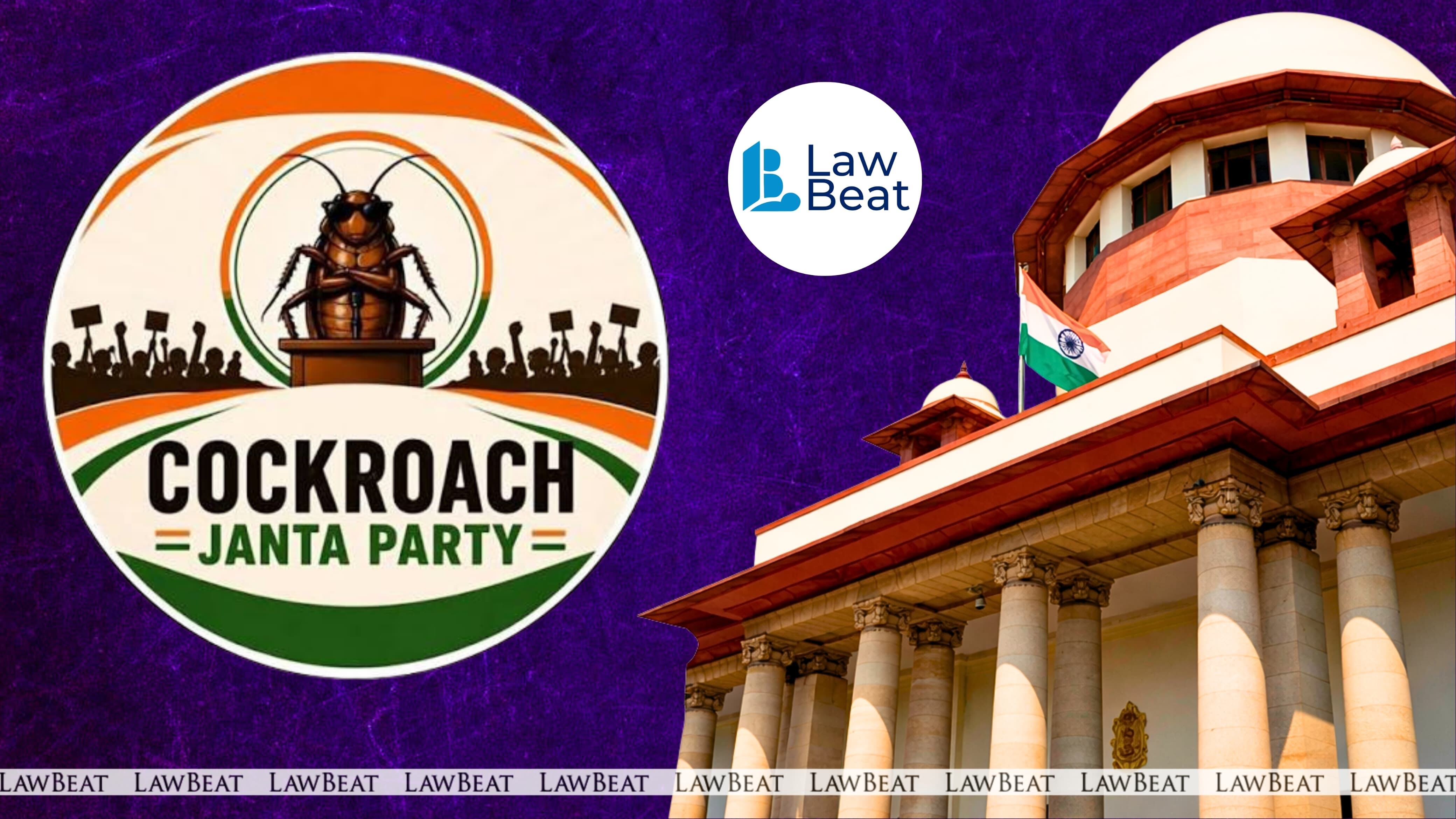
Supreme Court Issues Notice in PIL Against 'Cockroach Janta Party' Campaign
Summary
- The Supreme Court has issued notice in a PIL raising concerns over commercial exploitation of courtroom proceedings.
- Oral observations are being converted into 'digitally marketable content, political symbolism and viral commodities' without considering judicial context.
- The PIL argues that constitutional courts derive legitimacy from public confidence, institutional neutrality, and procedural seriousness, not popularity or 'algorithmic approval.'
Commercial Exploitation of Courtroom Proceedings
The constitutional issue before this Court is not criticism of judiciary, but the organised commercial appropriation of oral courtroom proceedings through branding campaigns, meme pages, trademark-commercialisation, and monetised digital circulation.
The Supreme Court has issued notice in a Public Interest Litigation (PIL) that raises concerns over the commercial exploitation of courtroom proceedings, particularly in the age of social media. The PIL argues that oral observations made by judges are being converted into 'digitally marketable content, political symbolism and viral commodities' without considering the surrounding judicial context. This trend is not only distorting the judicial context but also impacting institutional dignity. The plea specifically refers to activities allegedly associated with a so-called 'Cockroach Janta Party,' which claims that courtroom exchanges are being used as 'viral spectacles detached from procedural context and constitutional seriousness.'
Legal Context
The PIL draws from literature and constitutional theory, invoking Franz Kafka's The Metamorphosis to highlight the historical use of metaphorical references involving animals or insects to symbolise institutional anxiety. It also cites Indian constitutional discourse, which has employed symbolic expressions such as 'Jungle Raj,' 'watchdog,' 'marketplace of ideas,' and 'fraud on the Constitution' to communicate institutional concerns. The petitioner argues that constitutional courts derive legitimacy not from popularity or 'algorithmic approval' but from public confidence, institutional neutrality, and procedural seriousness. This is in line with Dr. B.R. Ambedkar's statement that 'constitutional morality is not a natural sentiment. It has to be cultivated.'
Why It Matters
The PIL raises broader sociological concerns, warning that constitutional office holders and institutions are increasingly vulnerable to 'organised digital humiliation' and outrage-driven online culture. The petitioner argues that vernacular and non-metropolitan styles of institutional speech are often subjected to ridicule within elite digital ecosystems. This trend has significant implications for the legitimacy of constitutional courts and the rule of law in India. As the Supreme Court examines this issue, it will need to balance the right to free speech with the need to protect the dignity and integrity of the judicial process.
Practical Implications
Lawyers should watch for the potential implications of this case on the commercial use of courtroom remarks, including the risk of organised digital humiliation and outrage-driven online culture affecting constitutional office holders and institutions.
Source
How does this affect you?
Get an AI analysis of this article grounded in your jurisdictions, practice areas, and any policy documents you've uploaded to Wansom.
Wansom is AI and can make mistakes.