
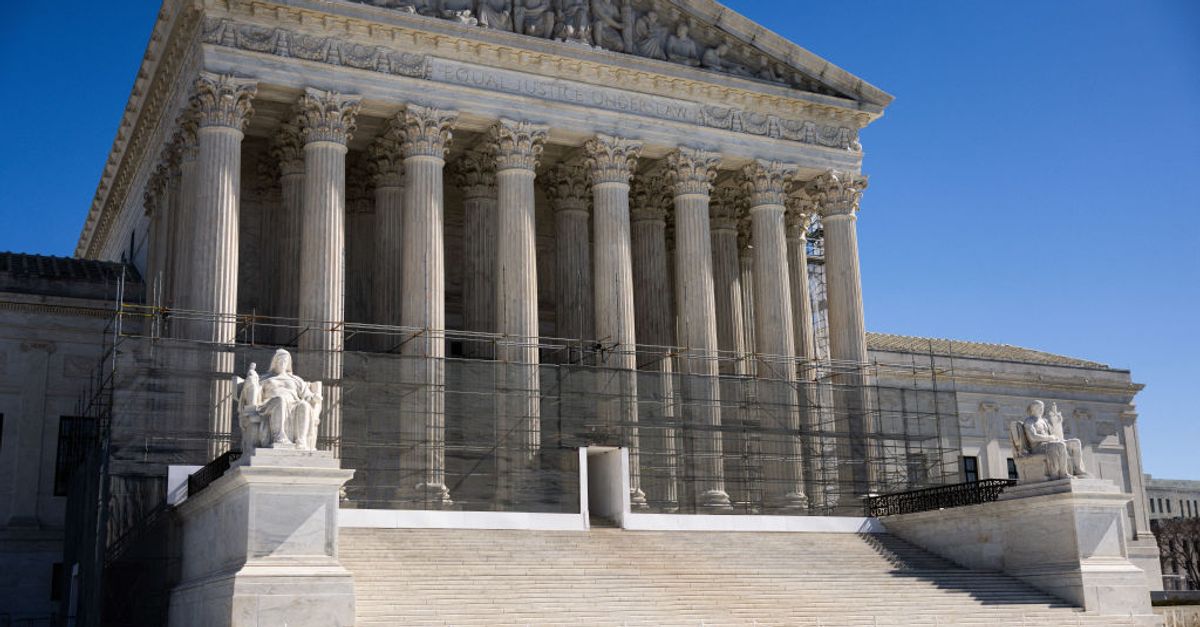
Supreme Court: New Hampshire Student ID Voting Restrictions Allowed
Summary
- The Supreme Court permitted New Hampshire to restrict the use of student IDs for voting.
- This decision paused a lower federal court's ruling that had partially blocked a state directive on student ID use.
- New Hampshire's HB 323, enacted in April, removed student IDs as valid forms for obtaining a ballot.
- The Supreme Court cited the "Purcell principle," cautioning against altering election rules close to an election.
- Justice Ketanji Brown Jackson dissented, arguing the lower court's order was targeted, not a broad change in law.
The Supreme Court's Intervention on Student IDs
The Supreme Court's intervention means that the state is now permitted to fully enforce its policy regarding student IDs, including the directive that election officials should not consider them as proof of identity.
The Supreme Court on Thursday afternoon issued a brief, unsigned order, effectively allowing New Hampshire to proceed with restrictions on the use of student IDs for voting. This decision paused a federal judge's ruling that had partially blocked the implementation of a state directive. New Hampshire's HB 323, enacted by legislators in April and becoming effective in June, specifically removed student identification cards from the list of forms expressly deemed valid for obtaining a ballot.
While U.S. District Judge Joseph Laplante had earlier this month declined to block this core provision of HB 323, he had issued an injunction against a separate directive. This directive, issued in April by Secretary of State David Scanlan, had prohibited or discouraged election officials from considering student IDs as evidence of a voter's identity. The Supreme Court's intervention means that the state is now permitted to fully enforce its policy regarding student IDs, including the directive that election officials should not consider them as proof of identity.
Legal Rationale and Dissenting Views
The high court's rationale for its decision rested on the well-established "Purcell principle," which advises lower federal courts against altering election rules too close to an upcoming election. This principle aims to prevent last-minute changes that could disrupt the electoral process. However, Justice Ketanji Brown Jackson registered a lone dissent, arguing against the application of the Purcell principle in this instance.
She contended that Judge Laplante's order was not a broad alteration of election law but rather a "targeted order" specifically "designed to address alleged misinformation." In her view, the lower court's action was a precise remedy for a specific issue, not a sweeping change that would warrant intervention under the Purcell principle.
The Underlying Challenge to Voter Access
The legal challenge to HB 323 was initiated by the Coalition for Open Democracy, a nonprofit organization known for its efforts in promoting voter registration, particularly through high school initiatives. The Coalition's lawsuit in federal court asserted that the New Hampshire law unconstitutionally burdens the right to vote and was specifically intended to discriminate against young voters.
Their arguments centered on the impact of HB 323's provision that explicitly removed student ID cards from the accepted forms of identification for ballot access, thereby increasing student voter identification restrictions. The Supreme Court's decision to allow the state to fully implement these measures, including the directive regarding election officials' consideration of student IDs as evidence of identity, has significant implications for voter access. This outcome particularly affects the student population in New Hampshire, who may now find it more challenging to use their institutional identification for voting purposes, reinforcing a stricter approach to voter identity verification in the state.
Practical Implications
Lawyers advising clients on election law, particularly in New Hampshire, must note the Supreme Court's validation of restrictions on student IDs for voting under HB 323. This ruling reinforces the Purcell principle, making it crucial for litigators to consider its impact on challenges to election rules close to an election, and educational institutions should review their voter information policies.
Source
How does this affect you?
Get an AI analysis of this article grounded in your jurisdictions, practice areas, and any policy documents you've uploaded to Wansom.
Finish Reading the Full Story and the Expert Analysis.
Get the latest legal & regulatory intelligence in United States
Wansom is AI and can make mistakes.