
Supreme Court: Multiple PMLA Adjudicating Authorities Urged
Summary
- The Supreme Court urged the Central government to consider establishing multiple PMLA adjudicating authorities.
- This recommendation addresses the high caseload and pressure on the current single authority regarding provisional property attachments by the Enforcement Directorate.
- The Court suggested repealing the 2009 amendment to the PMLA, which had removed the provision for multiple authorities.
- A key ruling clarified that a single non-judicial member cannot confirm provisional property attachments under the PMLA.
- The decision mandates that any confirmation of attachment requires a judicial member on the adjudicating authority.
Supreme Court Urges Structural Reform in PMLA Adjudication
The Supreme Court's ruling that a single non-judicial member cannot confirm provisional property attachments under the PMLA carries substantial implications for ongoing and future cases.
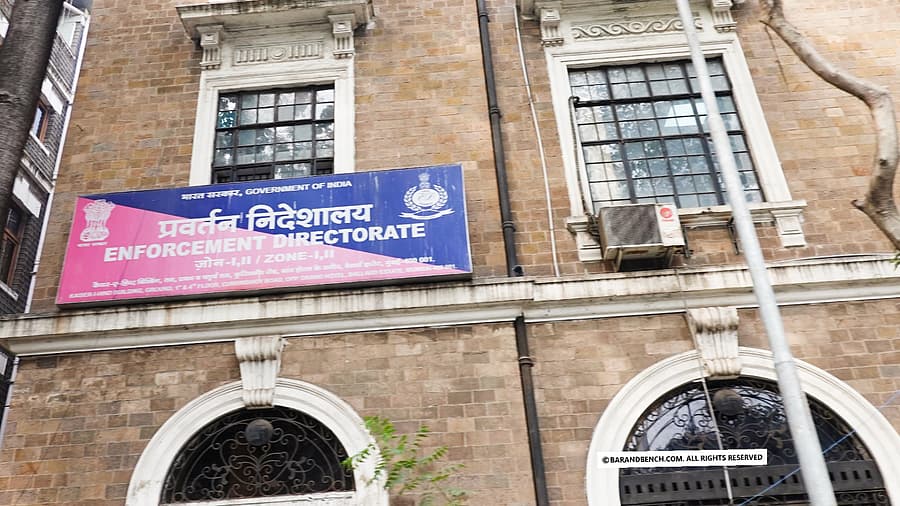
India's highest court recently called upon the Central government to consider establishing additional adjudicating authorities under the Prevention of Money Laundering Act (PMLA). This recommendation aims to address the increasing volume of cases related to the confirmation of provisional property attachments initiated by the Enforcement Directorate (ED). The Supreme Court highlighted the significant strain placed on the current single adjudicating authority due to a growing number of complaints and applications, coupled with the statutory deadlines for case resolution.
A bench comprising Chief Justice of India Surya Kant, alongside Justices Joymalya Bagchi and V Mohana, observed that the existing framework creates immense pressure on the members responsible for these critical adjudications. Their suggestion points towards a potential overhaul of how PMLA cases are processed, emphasizing the need for a more robust and efficient system to handle the complexities of financial crime enforcement. The court's intervention underscores a recognition of the operational challenges faced by the current PMLA adjudicatory mechanism.
Historical Precedent and Judicial Mandate
The Supreme Court's recommendation is rooted in the legislative history of the India Prevention Money Laundering Act. The bench specifically noted that prior to a 2009 amendment, the PMLA originally allowed for the establishment of more than one adjudicating authority. The Court explicitly advised the Union of India to assess the feasibility and desirability of repealing the 2009 amendment and reverting to this initial structure, thereby taking the necessary steps to implement such a change.
This significant observation was made during the delivery of a landmark decision concerning the functional capacity of the adjudicating authority when operating with a single non-judicial member. In its ruling, the Court unequivocally stated that a provisional property attachment cannot be legally confirmed if the decision is made by an adjudicating authority composed solely of a non-judicial member. This establishes a crucial precedent regarding the composition and powers of the adjudicatory body. During the proceedings, the Enforcement Directorate had also provided information to the Court regarding the case.
Impact on Provisional Attachments and Future Adjudications
The Supreme Court's ruling that a single non-judicial member cannot confirm provisional property attachments under the PMLA carries substantial implications for ongoing and future cases. This decision clarifies the necessary judicial expertise required for such confirmations, ensuring a higher standard of review for actions taken by the Enforcement Directorate. It effectively invalidates past confirmations made under such circumstances and mandates a judicial presence for future decisions of this nature.
Furthermore, the call for multiple PMLA adjudicating authorities could fundamentally reshape the landscape of PMLA provisional property attachment proceedings. Should the Union of India act on the Supreme Court's recommendation to repeal the 2009 amendment, it would likely lead to a more distributed and potentially faster adjudication process. This move would alleviate the current backlog and pressure, enhancing the overall efficiency and perceived fairness of the PMLA enforcement regime. The legal community will be closely observing the government's response to these judicial directives, as they promise to significantly impact the operational aspects of the India Prevention Money Laundering Act.
Practical Implications
Lawyers should monitor the Union of India's response to the Supreme Court's recommendation for establishing multiple PMLA adjudicating authorities, as this could significantly impact the efficiency and structure of PMLA provisional attachment proceedings. The ruling on the invalidity of attachment confirmations by a single non-judicial member also provides a crucial precedent for challenging or understanding the validity of past and future adjudications.
Source
How does this affect you?
Get an AI analysis of this article grounded in your jurisdictions, practice areas, and any policy documents you've uploaded to Wansom.
Finish Reading the Full Story and the Expert Analysis.
Get the latest legal & regulatory intelligence in India
Wansom is AI and can make mistakes.