
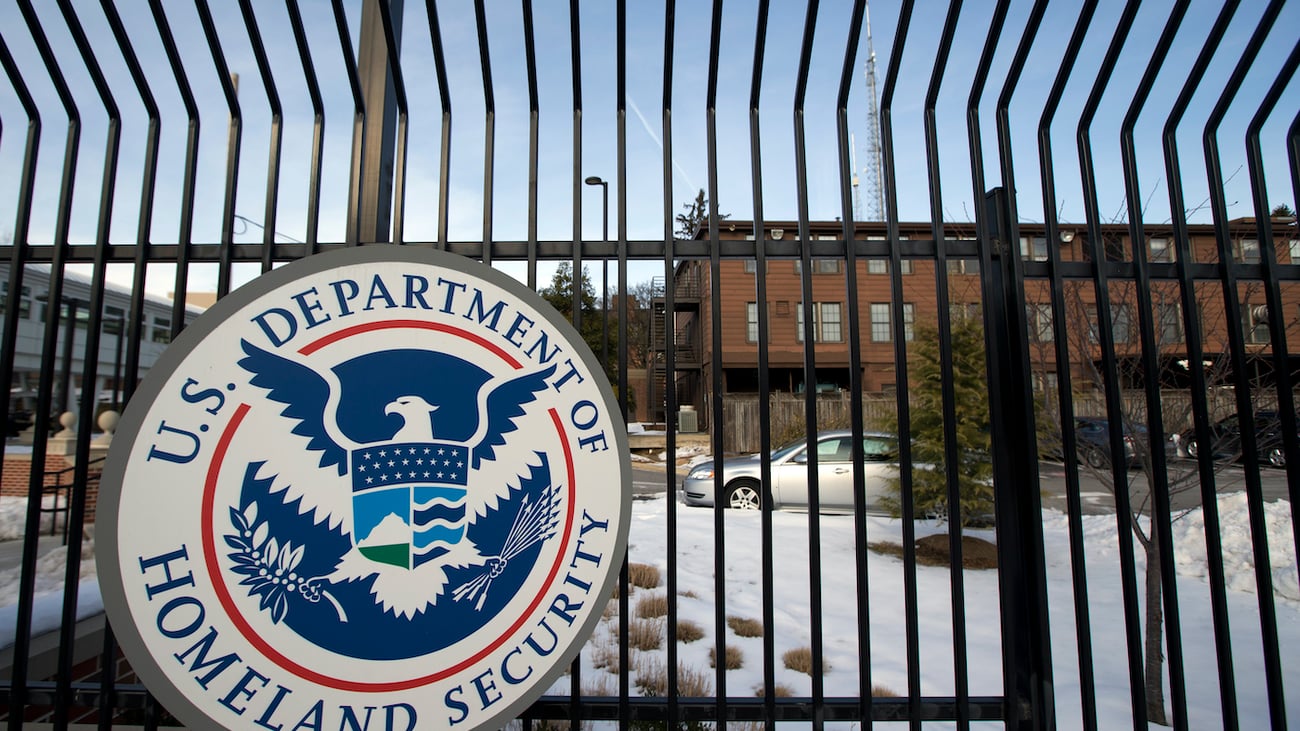
US Supreme Court: Lifts Third-Country Deportation Restrictions
Summary
- The Supreme Court has temporarily lifted restrictions on the Trump administration's policy of deporting immigrants to countries other than their origin.
- This decision allows the Department of Homeland Security to resume third-country deportations without requiring immigrants to first make fear-based claims, overturning a Massachusetts court ruling.
- The DHS had argued the lower court's injunction caused logistical problems, including the cancellation of a flight carrying 70 immigrants.
- Tens of thousands of migrants have already been deported to third countries, including Mexico and 35 other nations, some of which are considered dangerous.
- The Supreme Court will hear the full merits of the case in December, with Justices Sotomayor, Kagan, and Jackson dissenting from the immediate stay.
Supreme Court Lifts Deportation Restrictions
The high court's action came in response to an emergency application filed by the Department of Homeland Security (DHS).
The U.S. Supreme Court recently lifted existing restrictions on the federal government's controversial policy of deporting immigrants to countries other than their nation of origin. This decision, issued on a Tuesday, represents a significant victory for President Donald Trump's administration, which has championed the expansion of these so-called third-country deportations as part of a broader crackdown on immigration.
The high court's action came in response to an emergency application filed by the Department of Homeland Security (DHS). The DHS sought to block a lower court ruling from Massachusetts that had effectively halted the policy, mandating that immigrants be allowed to present fear-based claims before being removed to a third country. The DHS argued that this injunction created substantial logistical challenges for ongoing removal operations, citing a specific instance where a flight carrying 70 immigrants with criminal convictions to three different countries had to be canceled.
Policy Background and Legal Context
Federal law explicitly prohibits the government from deporting individuals to countries where they would face persecution or torture. However, the Trump administration, in 2025, directed a review of individuals who had been granted such protections, instructing agents to assess whether these individuals could instead be removed to a third country. Following this directive, the DHS issued guidance authorizing the removal of immigrants who could not be sent back to their home countries to a third country.
This guidance stipulated that such removals could proceed without prior notice or any formal process, provided the government secured diplomatic assurances that the individuals would not be subjected to persecution or torture in the receiving nation. Immigrant advocates have voiced serious concerns, alleging that the Trump administration's third-country deportation policy has subjected their clients to prolonged and arbitrary detention, physical abuse, sexual assault, and even disappearance.
Scale and Destinations of Deportations
Since the implementation of this policy, the Trump administration has deported tens of thousands of migrants to third countries. While the vast majority of these individuals have been sent to Mexico, thousands more have been deported to 35 other nations through a series of costly agreements. Some of these destinations include highly dangerous regions, such as Libya, El Salvador's notorious mega-prison, and the Central African Republic—a country the Department of State explicitly warns U.S. citizens not to travel to due to extreme danger.
Reports have highlighted specific incidents, including one from earlier this month by the Associated Press, detailing how lawyers for two men deported to Equatorial Guinea claimed their clients were beaten and held at gunpoint in a hotel repurposed as a detention center. This occurred as part of a $7.5 million agreement with the African nation. The government had previously cited a Supreme Court decision allowing the Trump administration to send noncitizens to war-torn South Sudan as justification for blocking the Massachusetts court order, though immigrant advocates contended that this unreasoned emergency decision was not applicable to the current dispute.
Future of the Policy
While the Supreme Court granted the Trump administration's request to lift the restrictions on third-country deportations for the time being, the justices also agreed to hear the merits of the underlying case. They opted to treat the emergency application as a petition for certiorari, scheduling the appeal to be argued during December of the upcoming term. This indicates that the legality and scope of the DHS third-country removal policy will be subject to further judicial review.
Not all justices were in agreement with the immediate lifting of the lower court's injunction. Justices Sonia Sotomayor, Elena Kagan, and Ketanji Brown Jackson publicly stated their dissent, indicating they would not have put the Massachusetts court's ruling on hold. Justices Sotomayor and Kagan were appointed by former President Barack Obama, while Justice Jackson is an appointee of President Joe Biden.
Practical Implications
Immigration lawyers must advise clients that the Supreme Court's stay allows immediate third-country deportations without prior fear-based claims, increasing the urgency of challenging removal orders. This ruling impacts the strategy for defending clients facing removal to countries other than their origin.
Source
How does this affect you?
Get an AI analysis of this article grounded in your jurisdictions, practice areas, and any policy documents you've uploaded to Wansom.
Finish Reading the Full Story and the Expert Analysis.
Get the latest legal & regulatory intelligence in United States
Wansom is AI and can make mistakes.