
Colorado AG: Challenges Big Horn Detention NEPA Compliance
Summary
- Colorado Attorney General Phil Weiser has filed a federal lawsuit against the U.S. Department of Homeland Security (DHS) to block a new 1,200-bed immigration detention facility in Hudson, Colorado.
- The lawsuit alleges that DHS failed to conduct a mandatory environmental review under the National Environmental Policy Act (NEPA) for the proposed Big Horn Detention Facility.
- The facility, planned to be operated by GEO Group in a renovated former state prison, would nearly double Hudson's population and poses risks to local environmental resources and community infrastructure.
- Weiser's action follows similar lawsuits by local residents and advocacy groups, and cites concerns about air quality, water availability, traffic, and impacts on wildlife habitats.
- The Attorney General argues that federal funding for detention centers does not exempt the government from its NEPA obligations, seeking to vacate the contract with GEO Group.
Colorado Challenges Federal Detention Plan
This legal challenge by the Colorado Attorney General underscores a growing trend where state attorneys general are employing environmental statutes like NEPA to scrutinize and contest federal immigration infrastructure projects.
Colorado Attorney General Phil Weiser has initiated a federal lawsuit against the U.S. Department of Homeland Security (DHS), seeking to halt plans for a new 1,200-bed immigration detention facility in Hudson, Colorado. The legal action, filed on a Tuesday, specifically targets the federal agency's alleged failure to conduct a mandatory environmental review before proceeding with the project. The proposed facility, known as the Big Horn Detention Facility, would involve the renovation and operation of a former state prison by government contractor GEO Group.
The DHS had announced its intention to contract with the GEO Group over the summer for this project. In July, the GEO Group confirmed a five-year, $500 million agreement with U.S. Immigration and Customs Enforcement (ICE) to manage the Hudson site. This former state prison, constructed in 2008, operated between 2009 and 2013, housing a maximum of 871 inmates, but has remained vacant for over a decade. The planned capacity of 1,200 detainees at the Big Horn facility would nearly double the population of Hudson, raising significant questions about its potential impact on the local environment and community, according to Weiser.
This lawsuit marks Colorado as the third entity to challenge the legality of the proposed Big Horn Detention Facility. Earlier, in July, local residents filed a lawsuit against the Hudson town council to block construction. More recently, advocacy organizations GreenLatinos and the Colorado Immigrant Rights Coalition brought their own legal challenge, also citing environmental concerns against the federal government. Weiser indicated that his office received 6,000 complaints from residents expressing worries about air quality, water availability, and traffic, which prompted the state's intervention.
Environmental Review at the Core of the Dispute
The crux of Attorney General Weiser's complaint centers on the federal government's obligations under the National Environmental Policy Act (NEPA). Weiser asserts that neither DHS nor ICE undertook the necessary public review process, which includes a thorough analysis of environmental impacts stemming from the facility's construction, renovation, or ongoing operation. He emphasized that the state is unaware of any exemption that would relieve the federal government from this crucial environmental assessment. Weiser's complaint further highlights that the federal government has previously completed environmental reviews for other immigration facilities, specifically citing the El Paso Service Processing Center and a joint processing center in Laredo, Texas.
The lawsuit alleges violations not only of the National Environmental Policy Act but also the Administrative Procedure Act (APA) and the Immigration and Nationality Act (INA). Weiser is petitioning the court to vacate the federal government's contract with the GEO Group, arguing that the substantial congressional appropriation of $45 billion for ICE detention centers through 2029, authorized by the One Big Beautiful Bill Act, does not absolve the government of its NEPA responsibilities. The state's concerns extend to specific ecological impacts, including a nearby mule deer migration corridor, a designated conservation area vital for native aquatic life, and habitat considerations for black-tailed prairie dogs, burrowing owls, and the Preble’s meadow jumping mouse.
Broader Implications and State Authority
This legal challenge by the Colorado Attorney General underscores a growing trend where state attorneys general are employing environmental statutes like NEPA to scrutinize and contest federal immigration infrastructure projects. Attorney General Weiser, who won the Democratic nomination for Governor in June 2026 and is on the ballot for the November 2026 election to succeed term-limited Governor Jared Polis, after serving two terms as Attorney General, framed the lawsuit as a critical exercise of state authority. Both Weiser and Polis are Democrats. Weiser stated, "We represent the state of Colorado. That gives us a special and important role," emphasizing the state's responsibility to its citizens and environment.
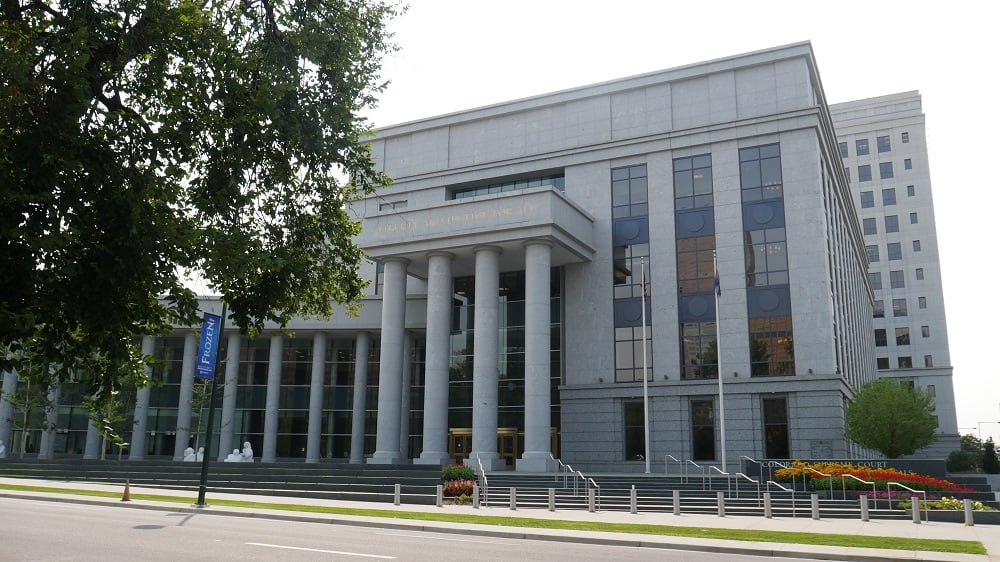
Beyond the environmental aspects, Weiser also characterized the proposed facility as supporting "the largest domestic deportation campaign in American history." This lawsuit is part of a broader pattern of legal engagement by Weiser's office; since January 2025, he has reportedly filed or joined 83 lawsuits challenging Trump administration policies. The Attorney General also drew a historical parallel during his press conference, noting he was livestreaming from the Ralph L. Carr Colorado Judicial Center, named after a World War II-era governor who opposed the establishment of a Japanese internment camp in Granada, Colorado. The GEO Group, which would operate the Big Horn facility, currently manages Colorado's sole operational immigration detention center in Aurora and is facing a separate lawsuit concerning allegations of blocking a state investigation into tuberculosis reports there.
Practical Implications
This case demonstrates how state attorneys general are leveraging environmental laws like NEPA to challenge federal immigration infrastructure projects. Lawyers should monitor this litigation for precedent on state-federal environmental disputes, and compliance officers involved in federal contracts must ensure rigorous environmental impact assessments are completed to avoid similar legal challenges.
Source
How does this affect you?
Get an AI analysis of this article grounded in your jurisdictions, practice areas, and any policy documents you've uploaded to Wansom.
Finish Reading the Full Story and the Expert Analysis.
Get the latest legal & regulatory intelligence in United States
Wansom is AI and can make mistakes.